Online Reporter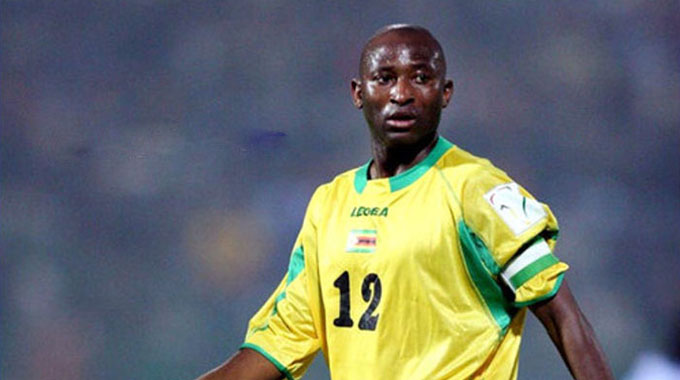
Inside ZIFA
Nqobile Magwizi
THERE is a unique stillness just before kickoff in international football. The stadium quietens. The players line up and the first notes of the national anthem rise.
In those few moments, patriotism is not a slogan or a chant; it is a quiet fire, burning in the hearts of the players and the thousands who sing with them.
It is a reminder that beyond contracts, transfers or match bonuses, there is the privilege of representing one’s country.
For Zimbabwean football, this kind of patriotism has always been the invisible ingredient behind our greatest moments. Yet it is important to clarify what patriotism in the national team truly means. It is not about waving the flag aggressively or shouting slogans after matches.
Real patriotism is a deep respect for the jersey, a commitment to the team and an understanding that every appearance for the Warriors is not just another game; it is history in motion.
Peter Ndlovu: The benchmark
No conversation about patriotism in Zimbabwean football can begin without the story of Peter Ndlovu.
Long before the advent of instant news updates and the growth of the internet or live tracking of flights, fans would arrive at the National Sports Stadium with one pressing question: Is Peter here?
Having played for Coventry City, Huddersfield, Sheffield United or Birmingham City in the English leagues on Saturday afternoon, Peter would take the long-haul flight, arriving in Harare on Sunday. The players would run out for the warm-up, but there was no sign of him. Then, minutes later, Peter would jog out of the tunnel, and the entire stadium would erupt.
For fans, his arrival was not just the entrance of a star. It was the embodiment of loyalty.
Peter did not just show up. Once the game began, he dazzled. He always gave his all.
His sacrifice went beyond the field. He often dipped into his own funds to make national duty possible.
He would pay for his own meals, even buy air tickets, just to ensure he could wear the Warriors jersey. That level of sacrifice went far beyond football. It was patriotism in its purest form.
It is important to say clearly that such financial sacrifices should not happen today. Structures must ensure that no player is burdened for choosing to serve the national team.
But the love Peter showed for his country, the willingness to stretch himself beyond reason, must always be respected, honoured and, above all, emulated in spirit.
Attitude is everything
When we speak of patriotism in football, we are also speaking of attitude. Talent wins games, but attitude wins tournaments.
The best national teams in the world are built not only on skill, but also on discipline, humility and a shared sense of purpose.
We have seen Warriors squads where players fully embraced this. In those moments, the jersey meant everything and the badge was more important than the name on the back.
Fans still remember the AFCON qualifying campaigns where the unity in the squad was so strong that even giants of African football were unsettled when they met Zimbabwe.
Players from the local league and from abroad, united in a love for Zimbabwe, and their collective passion shook all they faced.
This attitude is not about self-denial. Playing for the national team should not mean ignoring personal ambitions. Players have every right to pursue contracts to secure their futures, to benefit from their careers.
But it is about balance. National duty and personal benefit are not rivals; they are partners. Playing for Zimbabwe raises the value of every player, just as individual growth adds quality to the national team.
Lessons for the new generation
For today’s players, the lesson is clear: Patriotism is not just in the anthem; it is in the choices you make.
Do you arrive on time? Do you give your best in training? Do you respect your teammates and the coaches? Do you carry yourself as an ambassador of your country on and off the field? These are the daily expressions of patriotism.
When young players look back at Peter Ndlovu, they should not only admire his goals or his dribbling. They should see the bigger picture — the determination to be present, the readiness to sacrifice, the pride in the badge.
That mindset is as valuable today as it was in his time.
A shared responsibility
Of course, patriotism in football is not only a player’s responsibility. Administrators and fans have roles to play.
Players can only show their best when they are properly supported. Fair allowances, good preparation and welfare systems are not luxuries; they are necessities.
Patriotism thrives when players know their sacrifice is matched by those who manage the game. The emphasis is on fairness and sustainability. The decisions we make for one team should leave room and resources to raise the next team to their best level.
And these engagements should be done in an honest and transparent manner.
Fans, too, carry this responsibility. Patriotism is in the way we support the team even in difficult times, the way we salute young players after a loss because we see their effort and their growth.
The scenes from Norton during the just-ended COSAFA U-17 tournament, where fans stayed behind to applaud the boys despite a defeat, are proof that true supporters understand the long road of football.
The bigger vision
The dream is that one day, when a Warriors team walks onto the field, be it in Harare, Bulawayo, Johannesburg or Cairo, every player will carry both the pride of wearing the jersey and the assurance that they are supported by a whole nation.
That balance between patriotism and professionalism will unlock our potential.
Patriotism is not naïve. It does not ignore the modern realities of football. But it insists that when all is said and done, representing Zimbabwe must always mean something beyond money or career.
It must be about belonging, about contribution, about legacy.
Closing reflection
When Peter Ndlovu ran out onto the National Sports Stadium pitch, he carried more than just a football career; he carried the dreams of a nation.
Today’s players must carry the same spirit, but with stronger structures behind them, so that their patriotism is expressed in performance, not in financial sacrifice.
As President of ZIFA, I believe this balance is the foundation of the Warriors’ future. We will continue to build systems that support our players. We will continue to ensure that patriotism is honoured, not exploited.
And we will continue to remind every player that the jersey they wear is not just fabric; it is a symbol of Zimbabwe, a nation’s pride stitched into every seam.
Patriotism, in its truest form, is not a burden. It is a privilege. And when combined with talent, discipline and support, it will make the Warriors a force to be reckoned with on the continent and beyond.
Nqobile Magwizi is the president of the Zimbabwe Football Association (ZIFA).