admin
admin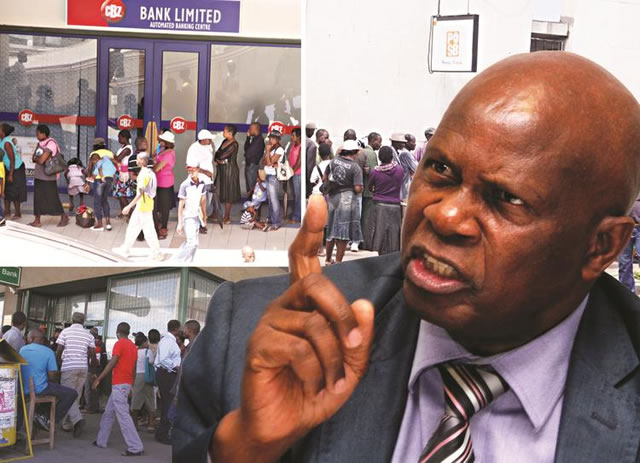

Deputy News Editor
PUBLIC sector workers’ unions have commended the government for releasing a seven-month pay date schedule, saying it clears uncertainty surrounding their salaries and allows them to plan ahead.But the unions are angry over the December pay schedule which would see most of the 230,000 workers getting paid on Christmas Eve or after Christmas.
Unions predict banking chaos and say they were not consulted.
Finance Minister Patrick Chinamasa pushed back pay dates for civil servants and pensioners for the period June to December this year, citing a poorly-performing economy, which has put pressure on government finances.
Civil servants gobble about $155 million per month, but over the last few months, the government has been forced to postpone pay dates of public sector workers owing to low receipts.
College Lecturers Association of Zimbabwe head David Dzatsunga said Chinamasa’s announcement raises “pessimism in terms of the government’s capacity to pay its workers.”
He added: “This was done without any consultation and we don’t know what it implies. It’s really alarming the way things are going. We had expected a mid-year salary review but now there is an unannounced freeze on dialogue and the prospects of this review seem unlikely.”
Dzatsunga said the shifting of pay dates was “very disturbing” to workers and demanded that government calls a meeting with them and explain the issue.
Progressive Teachers’ Union of Zimbabwe (PTUZ) Bulawayo provincial coordinator Vusumuzi Mahlangu stormed: “To us it’s a clear indication that our employer is not taking our welfare seriously. They should have first consulted.”
With teachers set to receive their December pay on Christmas Eve, Mahlangu said it would be difficult for workers to plan their holiday. He also questioned why the government was always paying the army first.
“Every time they give priority to the army and other departments and pensioners are paid last,” said Mahlangu. “As a major employer, the government is setting a wrong example in the manner it handles its workers. Very soon, the private sector will follow suit. We are very worried about this precedence. It’s an infringement of our rights as workers.”
But Richard Gundane, the president of the Apex Council, which brings all civil servants unions together, struck an upbeat note insisting the new pay schedule would clear uncertainty regarding pay dates for public workers.
“This is a better arrangement because what was happening in the last few months was creating a situation of uncertainty,” he said.
“If the reasons are about the government’s cash inflows, we feel the new dates will assist workers to plan”.
Zimbabwe Teachers’ Association (Zimta) chief executive officer Sifiso Ndlovu said the shifting of dates was a response to civil servants’ concerns over earlier experiences on pay dates.
“That’s not wrong because the government is correcting a situation we had raised concern about. It’s not that every time what government does should be questionable,” he said.
The armed forces received their salaries yesterday and those in education will be paid on Thursday next week, according to the new schedule.
The rest of the government employees will get their salaries on June 26, while pensioners will be paid on June 30.
Next month, the armed forces will be paid on July 15 followed by the education sector (July 18), rest of the civil service (July 25) and pensioners (July 30).
In August, the civil servants will be paid as follows: army (August 15), education sector (August 19), rest of civil service (August 26) and pensioners (August 29), while in September the payment plan will be according to the following dates: army (September 12), education sector (September 18), rest of the civil service (September 25) and pensioners (September 30).
For October, members of the army will get their salaries on the 14th, those in education on the 21st, while the rest of the civil service and pensioners will be paid on the 24th and the 30th respectively.
In November, members of the army will be paid on the 14th, while those in the education sector will be paid on the 20th and the rest of the civil service and pensioners will be paid on the 26th and 28th respectively.
The new schedule indicates that in December, the army will be paid on the 18th followed by the education sector on December 24 with the rest to be paid on December 30 and pensioners on New Year’s Eve.
The least-paid civil servant earns $375 monthly after government reviewed salaries early this year with teachers now earning around $500.



 Online Reporter