admin
admin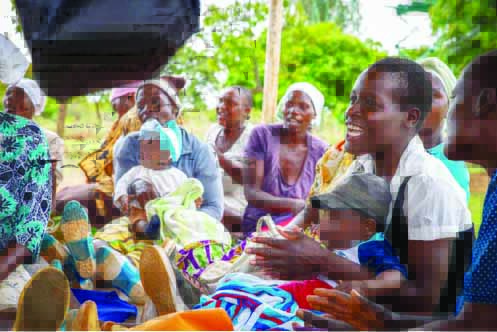
Sifelani Tsiko
Agric, Environment & Innovations Editor
FOR Ms Regina Hore (43) of Chikumbu Village on the edges of Osborne Dam site in Mutasa District, the pain of not knowing the whereabouts of her daughter was unbearable.
Her daughter vanished without a trace with a man who reportedly subjected the young school girl into a forced marriage.
Ms Hore and other villages scoured the whole village and other parts of Sherukuru, including across Odzi River in Makoni District, and couldn’t find her.
A man had abducted her daughter for a forced marriage.
“I suffered terribly for three months (September – December 2022) when I couldn’t find my daughter,” she said.
“I would wail uncontrollably and I prayed to God for her to be okay and to give me the chance to see her again. I told myself that I would rather die than stay alive to live my life with this agony.”
For several days before she enlisted the support of the Women’s Action Group (WAG), supported by UN Women in implementing the Peace Hut Model as part of the #Peace Begins at Home Campaign, the search for her 14-year-old girl yielded nothing.
The thoughts of a young girl being forcibly taken away for a marriage troubled her.
“This was horrific. Many things raced in my mind — rape, all forms of sexual abuse, the risk of getting HIV and ill-treatment,” Ms Hore said.
“I had big dreams for my daughter. I wanted her to finish school and study a good course to become someone important in life. But her disappearance brought pain and shattered all my dreams,” she added.
Support from WAG helped rescue her daughter from the jaws of child marriage.
“I am so grateful to WAG for the support they gave me in the search for my daughter. On December 24 last year, we found my daughter in Nyanga where a man who has since been brought to book had taken her,” she said.
“I thank WAG for giving me the opportunity to see my daughter again. They offered me and my daughter counselling support. They paid for my daughter’s school fees. They also helped me to take the man who was abusing my daughter to court.”
The rescued young girl is back at school and got medical help and treatment at hospital using referral pathways supported by WAG.
“It’s overwhelming,” Ms Hore said. “But at the same time, it’s the most wonderful feeling in the world, to find my daughter. I just couldn’t believe that I could be reunited with her after a three-month search. I thought I would never see her again.”
The disappearance of many young school girls for forced marriages plays out in most parts of Manicaland and across the country.
Ms Hore’s plight echoed similar concerns of parents about the ill-treatment of young girls who in most cases had babies after either being forced into marriage or losing hope of ever regaining their freedom.
WAG, with the support of UN Women, has established Peace Huts — safe spaces where women of the village come together to mediate and resolve community disputes.
At these huts, women gather to discuss matters that affect their day-to-day lives.
Peace huts are also places where the reconciliation and resolution of conflicts takes place, with rural women openly and safely discussing issues of inequality. Together they take decisions on peace and security.
From resolving cases involving pregnancy and abandonment, to counselling survivors of domestic violence or rape, the peace hut initiative has spread to Mutasa and Chipinge Districts.
WAG, with the support of UN Women, is supporting more than 15 Peace Huts in Mutasa District alone.
“The Spotlight Initiative under WAG has benefited our community a lot. It has been very useful in helping us to address problems of gender violence, child marriages, termination of pregnancies, school drop outs and even the growing problem of drug abuse,” said Mr Edmore Dziwa, a Village Head at Chinyami in the Sherukuru area of Mutasa District.
“Poverty is a major driver of gender violence and this initiative has helped us to support women to start their own income generating projects. I am a Village Head and I can tell you that cases of gender abuse are going down, thanks to the support from WAG.”
He said through the Taurai Group, they have managed to raise money through savings and lending schemes, chicken projects and selling air time.
“We are now empowered to support others. We are paying fees for two children at Sherukuru and Chikumbu Primary Schools. We want to support more children, we have five schools in our area and we are targeting to help two per school.”
At the peace huts, the complainant and accused get to air their respective grievances and defence, then the local leader helps them reach an agreement that both consider fair. Ultimately, peace is restored.
The role and participation of women in the peace hut is increasingly being appreciated and women in the communities now see themselves as crucial players in peace building and conflict resolution.
“We are grateful for being supported to start peace huts here,” said Mrs Catherine Kurewa (55), chairperson of the Chikumbu Village Peace Hut.
“We received a lot of training and I am happy that our community now appreciates the importance of ending gender violence and empowering women.
“Through the peace huts, we have reduced gender violence and traditional leaders and the police say we have reduced their work load too.”
Mrs Varaidzo Chigwenyati (50) of Mbasani Village in the Chinyamukwakwa area of Chipinge District said: “My daughter had gotten married, but with support from WAG, we took her back home and back to school. Child marriages are backward and we should stop them.
“They rob our daughters of their bright future. My daughter is back at school and it was the peace hut initiative that helped me a lot.
‘‘My daughter is happy and now understands why she has to stay in school to get a bright future.”
Mr Robert Khumbula, a Village Head at Rugare A Village in Chiyamukwakwa said the peace hut initiative has helped to reduce GBV cases and to rescue young girls from early marriages.
“We used to lose a lot of young girls to early marriages. Now, things are changing and cases are dropping. Men are now afraid of the consequences. People are better informed about GBV issues and peace huts have helped to save a lot of marriages and reduce domestic disputes,” he said.
“The cases are still there but there is a great change now. We are now resolving the cases on our own and in the worst circumstances we refer the cases to the police.”
He said to sustain the peace huts initiative, the communities supported the building of structures that are secure from rain, heat, dust and which could help them maintain confidentiality without passers-by hearing cases.
The shelters, he said, could help provide victims with safe spaces.
“We offer services for free,” he said. “Problems are still there. Some young girls resist but we try to convince them to go back to school. We warn them about complications related to giving birth, diseases and the pressures that come with marriage demands.”
Mr Khumbula said local communities need to be supported with bicycles and motorbikes for transport to help gender champions to reach out to far flung villages.
At Chinyamukwakwa Secondary School, a total of six young girls were re-admitted back at school after having been married off by their parents.
“At one point we enrolled a mother of four in Form Two. The young woman passed her ‘O’ Levels and later got seven points at Checheche High School.
“The woman is now working in South Africa after completing her courses. We have good examples of young girls who gave birth but returned to school and excelled in their studies,” said a villager.
Peace huts are also helping to stop the violence before it happens to women and young girls.
Women said they need mobile phones to help them in alerting the police in case of problems, including domestic violence and other types of violence against women and girls.


 Online Reporter