

 Chronicle Editor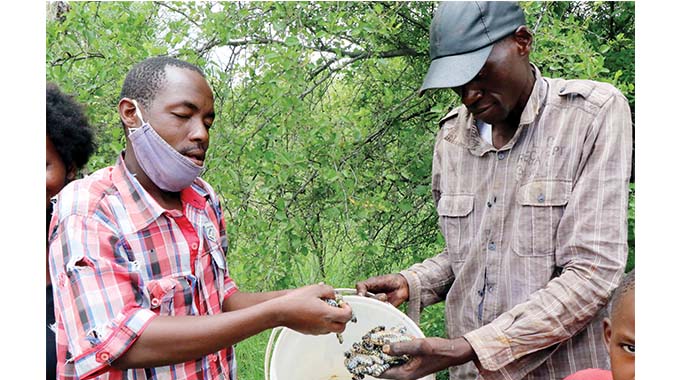
Mkhululi Ncube, Chronicle Reporter
THE rural Matabeleland provinces are a hive of activity due to a “gold rush” of sorts.
In stark contrast to the Bulawayo city centre that has been virtually deserted due to the 30-day Covid-19 level 4 national lockdown imposed last Saturday, scores of people- mostly women- spend days in the bush to harvest a nutritious natural delicacy.
As we drive along the Bulawayo-Solusi Road, two women are seated with two buckets by their side. Leafless mopane trees tell the women’s story to the experienced eye.
Down the road, a 16-seater Toyota Hiace kombi is parked by the side and some women dressed in “rags” emerge from the bush with 20-litre white containers.
Before we finally stop, we have seen three more empty kombis and a dozen private vehicles parked by the road side with no one in the vicinity.
Unlike the gold rush in the rich soils of Bubi district and other areas across the country this is a “peaceful rush” for the sumptuous mopane worms, amacimbi in IsiNdebele.
The above normal rains that have been received in most parts of the country have resulted in plenty of the protein-rich worms across many areas in Matabeleland South.
But Matabeleland North Province has also received plenty of the mouth-watering treat this year with Nyamandlovu, Nkayi and some parts of Tsholotsho having been blessed with their share.
The harvesting is on across the two provinces with people, especially urbanites feeling the economic pinch of the global pandemic, rushing for a catch to ensure nutritious relish for their families.
Hordes of people from Bulawayo have literally camped in the Solusi area to harvest amacimbi.
“This is my first time coming to harvest amacimbi this year. We organised ourselves as relatives and neighbours in Emganwini and hired this kombi so that we can harvest. We arrived here early in the morning around 7 am and as you can see I am now processing them so that when I get home I just cook. I am harvesting for home consumption,” said Miss Prisca Moyo.
Miss Moyo said even though she managed to get her share she was late as hundreds of people had already harvested those that were near the ground leaving those that are at the very top of trees which take time to harvest.
Mrs Zibusiso Ncube also from Emganwini Suburb said some plot owners charge between US$1 and US$5 for permission to harvest in their areas which is a challenge for some who are not harvesting for sale.
“I could not raise that amount so I had to just move around in the bush to fill this 20-litre bucket. The kombi operators are also charging exorbitant amounts. I paid US$4 return from Bulawayo to this place so raising the money for harvesting is a challenge. But I managed to get something for my family. We will eat this throughout the year,” she said.
Another resident, Mr Khulekani Moyo said he harvests every year for home consumption as doing it commercially is a hard job.
“Many people do not know the challenges that we go through when we harvest amacimbi. It is easy to collect them from tree branches but the processing part is the most difficult job. Amacimbi ayahlaba ngoba alameva. Look at my hands. So if am to fill just a 20-litre container it takes time because the hands will be pricked countless times,” said Mr Moyo.
He said some communities were hostile to strangers as they felt they were taking their God-given relish.

Mr Moyo said last week after harvesting a full bucket he was forced to empty it and leave everything by angry community members who accuse people from the city of taking what belongs to them.
“With the lockdown, we also have to evade police on the roads. On Tuesday my neighbour was forced to share her harvest with police so that she could be allowed to pass the roadblock as she did not have an exemption letter to move around,” he said.
Gogo Susan Bhule from Mpopoma, walking with the aid of a stick, took her nephew to the bush as she said she loved amacimbi so much.
“I grew up eating amacimbi and I love them too much.When I heard that this year they are plenty I could not resist pushing my body to come here. Meat is very expensive these days and amacimbi make a very good substitute. I know how to prepare them for relish and once you taste what I would have prepared you won’t eat amacimbi cooked by any other person,” she said with confidence.
Gogo Bhule said her ingredients for preparing amacimbi are cooking oil, tomatoes and onion. Chillies, she added, are her secret ingredient.
Mrs Primrose Ngwenya from Gwabalanda said she started harvesting the delicacy early December and already has 6 buckets ready for the market.
“This year has been good as the rains brought us plenty of amacimbi. If am able to get ten buckets that will be very good business for me. I will keep them home till the lockdowns are over and send some to my daughter who is in South Africa to sell for me. There is a huge market for them in South Africa among Zimbaweans based there,” she said.
Mrs Ngwenya said she sells a cup for a R25 in South Africa and would use the money to buy furniture for her house which she finished building last year.
She said amacimbi is a very lucrative business although it is labour intensive at the beginning.
While the harvesters rush back to the cities to cook and sell local communities are left fuming over the troubles left behind.
Mr Side Sibanda said Government must protect locals so that they benefit from their resources like it does with other sectors of the economy.
“We are overwhelmed by people coming to harvest amacimbi in our area. We can’t limit their numbers. They leave our environment littered with gloves, plastics and water bottles. What will happen if our livestock eat those things?
We will make losses while they will be busy making money,” he said.
“Some members of our community are missing their goats ever since the rush to harvest amacimbi started. We do not know what to do with them. Bayasidelela ngoba singabantu bemakhaya bona bavela edolobheni. We are not even able to harvest enough for sale because even before we start they will be here. Imagine ten kombis bringing people here almost every day while others use their private vehicles, bayasiqedela.”
True to his words, the Chronicle news crew observed that the environment is littered with various objects used by the amacimbi harvesters.
Some relieve themselves in the open and even leave the amacimbi dirt uncovered. The rain washes the waste into villagers` drinking water sources thus exposing them to diseases.
Forestry Commission Matabeleland South forest extension manager Mr Bekezela Tshuma said there was need for people to worry about the environment when harvesting amacimbi.
“I will advise that people harvesting amacimbi must only get those that will be on the ground instead of those on the trees. People who travel far to harvest usually don’t consider the environment; they are only pushed by profits. Once we cut trees we are also destroying the seed which will result in their extinction like in some areas in Umzingwane and Matobo,” he said.
Mr Tshuma said rural district councils must have by-laws that address the harvesting of amacimbi so that the communities do not suffer from forest destruction.
He said Gwanda and Beitbridge are in the process of coming up with such laws which will see harvesters leaving something for the communities to be used for development.
Mr Tshuma said the Covid-19 lockdown has reduced numbers of people who move from other provinces to camp while harvesting amacimbi.
“At the moment we have not yet recorded any serious issues of concern like in the past. I believe it is because of Covid-19 and the lockdown as people have restrictions in terms of movement. We have not seen buses bringing people from afar to camp in the province which always creates environmental problems,” said Mr Tshuma.
He warned people against cutting down mopane trees for firewood for sale in the cities as that will result in extinction of amacimbi in addition to other environmental problems.-@themkhust



 Online Reporter