malvernmugadzikwa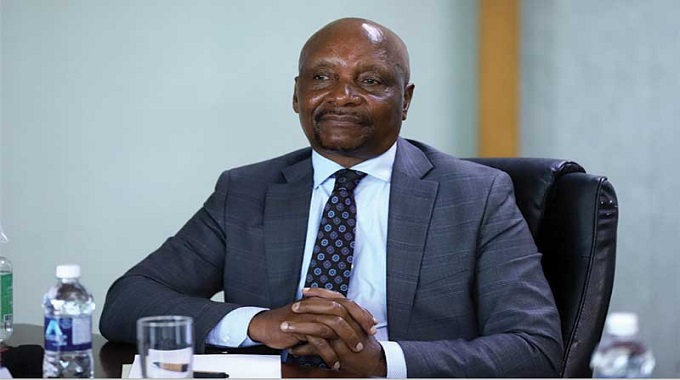
NSSA plays a significant role in the economy through, among other ways, the provision of social security, especially to pensioners. Over the years, it has been plagued by numerous cases of malfeasance, which negatively affected its ability to offer meaningful payouts to beneficiaries, most of whom are vulnerable. Dr Emmanuel Fundira (EF) was appointed board chairperson of the statutory body in May. Last week, he spoke to The Sunday Mail (SM) on his vision.
***************
SM: It’s been four months since you were appointed NSSA board chairperson. How has been the journey so far?
EF: I felt like I was drowning in a sea of negativity, as I found that staff morale was low and employees were being treated as commodities, rather than individuals.
At every level, staff were working under fear and intimidation and void of psychological safety, where gossip and backstabbing thrived, with the resultant adverse impact on teamwork and collaboration.
SM: You came in when NSSA was going through turbulent times due to several internal issues. Do you now have a roadmap towards stabilising the entity?
EF: Good question! It was humbling to realise that there was no quick fix to the malaise at NSSA, and, hence, my approach, together with the board, was to instil joint and collective ownership of the task at hand. Within a week of arrival, I received up to five anonymous letters on office gossip. Not knowing who was involved, I read the letters and did not act or engage anyone, and just parked them and watched, allowing sufficient time to understand the internal dynamics.
By so doing, I created boundaries with those around me and made sure they could not expect anything more than a neutral response when they attempt to plant seeds of negativity. In so doing, I realised that I could not control what employees said to me or what they were doing, as I knew I could only control my actions.
Accepting this helped me let go of their negative behaviour, while allowing myself to focus on the positive and help in stabilising NSSA.
SM: Among the issues that have affected NSSA for years are internal divisions. What are you doing to bring internal harmony?
EF: This is an elephant in the room, but one that is not insurmountable. The challenges are of a cultural nature, arising out of history and a host of administrative blips. For example, there are currently 36 senior, middle and junior management staff in acting positions for periods of more than six months, which is irregular, demotivating and requires urgent attention.
The urgent need for alignment will not always be supported by all, particularly poor performers, but, by necessity, it must be rectified in the best interest of NSSA.
Once achieved, employees in leadership roles will feel fully empowered and able to act confidently on the knowledge that the positions they take will not be unfairly judged.
In addition, the board’s priority is to break down silos at every level in the best interest of creating a seamless organisation that can contribute sustainably towards social security and national development.
There should be no room for bloated egos and unbridled personal ambitions that will derail NSSA’s prime mandate of delivering on the life-long promise.
SM: Government expects NSSA to contribute significantly towards Vision 2030, given its position as a major mobiliser of national savings. Are you happy with NSSA’s performance on that front?
EF: There will always be room for improvement, but I must give credit to what NSSA has accomplished to date. For one, to appreciate this, I will have to put things into context.
Our investment philosophy is focused on four strategic themes: income, growth, impact and sustainability.
By this, we mean our investments must: Generate sustainable income streams to cover benefit obligations and fund operating costs in the ordinary course of business through dividend income, loan interest and investment income.
Invest in assets that preserve value by providing for real growth that surpasses the inflation/exchange rate movements and growth in benefit obligations over time;
Create inflation-proof social dividends in a volatile macroeconomic environment; and
Contribute to the sustainability of the schemes operated under the NSSA pension and compensation schemes.
SM: What is NSSA doing to improve its investment income?
EF: Investment income contribution benefit remains pivotal in the way we measure and appraise the pension fund’s assets versus liabilities using investment, economic and demographic assumptions in determining the solvency status of the fund.
Upon arrival at NSSA in May 2023, the investment income contribution ratio on benefit payments was 6:94. It has now moved to 10:90 and is projected to settle around 40:60 within 24 months, in line with Vision 2030.
SM: What is your strategy towards improving benefits payouts?
EF: The new board’s objective is to ensure the pensioner receives a living and sustainable benefit above the US$60 per month, as recommended by the ILO (International Labour Organisation).
It is our collective desire, as the board and management, to sustain and exceed the above target by 2025.
SM: The issue of occupational safety and health (OSH) is often understated. How do you see NSSA contributing towards engendering a safe working environment for all?
EF: The main purpose of the OSH division is to prevent occupational accidents, injuries and diseases, and ensure no worker suffers material health impairment or functional capacity due to work.
The main purpose of the social security division is to pay adequate benefits to all beneficiaries, including compensation for work-related injuries/illnesses.
Thus, OSH and social security departments complement each other in mitigating work-related injuries and offering compensation and rehabilitation to injured workers when occupational hazards occur.
NSSA has delegated authority from the Ministry of Public Service, Labour and Social Welfare to manage OSH in Zimbabwe.
We cover workers largely in the formal sector, except civil servants, who have their scheme.
In the event of workers being injured, contracting diseases or dying in work-related accidents, NSSA provides compensation in the form of medical aid, rehabilitation and monetary benefits for residual disability.
The NSSA OSH division has some departments with the following key areas of strategic focus: inspectorate — enforcement of legislation; OSH promotions and training; research and development; occupational health services; rehabilitation centre; and medical services.
The key areas drive national preventive action against accidents in the workplace.
SM: Of late, you have been accused of abusing NSSA resources by commandeering a vehicle for personal use, even though you are not an executive chairperson. What is your response to this?
EF: The accusations are both frivolous and totally without basis.
It is a standard practice that the office of the chairperson of the board has authorised and unfettered access to an executive pool vehicle whilst on duty, and be rest assured that such unfounded allegations will not deflect the board from carrying out the overdue, necessary and qualitative transformational adjustments at the authority.
SM: Finally, where do you see NSSA this time next year?
EF: The old NSSA is soon going to be something of the past, as the new trajectory is to encourage and inspire all employees to innovate and develop new ways to grow and improve the organisation to greatness.



 Online Reporter