Online Reporter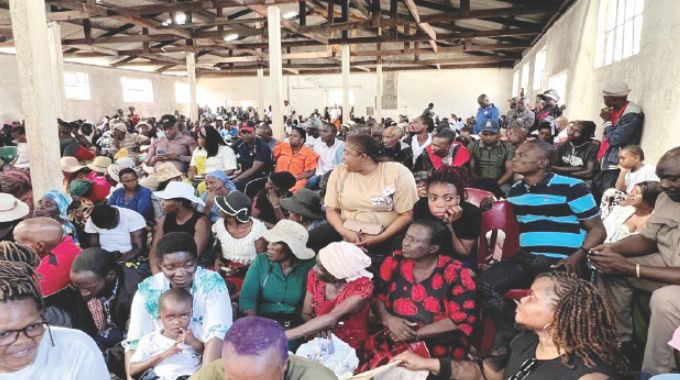
Zimbabwe’s Constitutional Amendment Bill No. 3 has been presented as a landmark measure that embodies the collective will of the people.
Emerging from extensive consultations across provinces and districts, the Bill is framed as a product of dialogue between citizens and their government, rather than a unilateral imposition.
Supporters argue that the process of public hearings and outreach meetings gave ordinary Zimbabweans a voice in shaping the country’s constitutional trajectory, ensuring that the reforms reflect national aspirations.
The Bill introduces significant changes to governance, including the extension of presidential, parliamentary and local authority terms from five to seven years, the election of the President by Parliament rather than direct vote, and the enlargement of the Senate with additional presidential appointees.
These provisions are defended as pragmatic steps towards stability, efficiency and inclusivity.
By lengthening terms of office, the Government contends that leaders will have more time to implement long-term development strategies without the disruption of frequent elections.
The expansion of the Senate is presented as a way to broaden representation and strengthen legislative oversight, while the new presidential election mechanism is described as aligning Zimbabwe with practices in other jurisdictions that emphasise parliamentary democracy.
Critics have raised concerns about the concentration of power and the dilution of direct electoral choice.
Yet proponents insist that the legitimacy of the Bill lies in the consultative process itself.
Citizens were invited to speak, debate and contribute, and their input shaped the final proposals.
In this sense, the Bill is portrayed as a mirror of the people’s will, a reflection of voices gathered from villages, towns and cities across the nation.
The Government has emphasised that the reforms are not merely technical adjustments but part of a broader constitutional evolution under the Second Republic, aimed at refining institutions to better serve development priorities.
The narrative surrounding Bill No. 3 is therefore one of continuity and consensus.
It is positioned as a response to the people’s call for stronger governance frameworks, greater stability and more inclusive representation.
Supporters argue that the amendments will help consolidate food security, economic growth and rural development, anchoring Zimbabwe’s progress in structures that are both resilient and responsive.
While debate continues, the Bill is ultimately presented as a testament to democratic engagement, a constitutional milestone shaped by the voices of Zimbabweans themselves.
In this framing, Bill No. 3 stands as a reflection of the will of the people, embodying their aspirations for a stable, inclusive and forward-looking nation. —O. Gutu