Alice Tagwira-Beyond Boundaries
Every man, it seems, has had an unreasonable ex.
When chasing new love, he will argue, his former partner was abusive, unreasonable, ungrateful, and incapable of appreciating the extraordinary gift that was him. He was the innocent victim who gave everything and received nothing in return.
Then, when you become the ex and he begins courting someone else, you inherit the title.
And sometimes, with a flexibility that would embarrass a contortionist, the same man who described his ex as the devil’s cousin will suddenly remember what a wonderful, saintly, practically canonised woman the ex was — but only when he wants to make you feel inadequate.
“My former wife never behaved like this.”
“My former wife knew how to respect a man.”
One is left to wonder: when exactly did the villain become a saint?
It is strategy. If a man can convince a new woman that the old woman was the problem, he does not have to account for his own conduct. He does not have to explain infidelity, neglect, violence, or broken vows. He simply changes the woman and keeps the script.
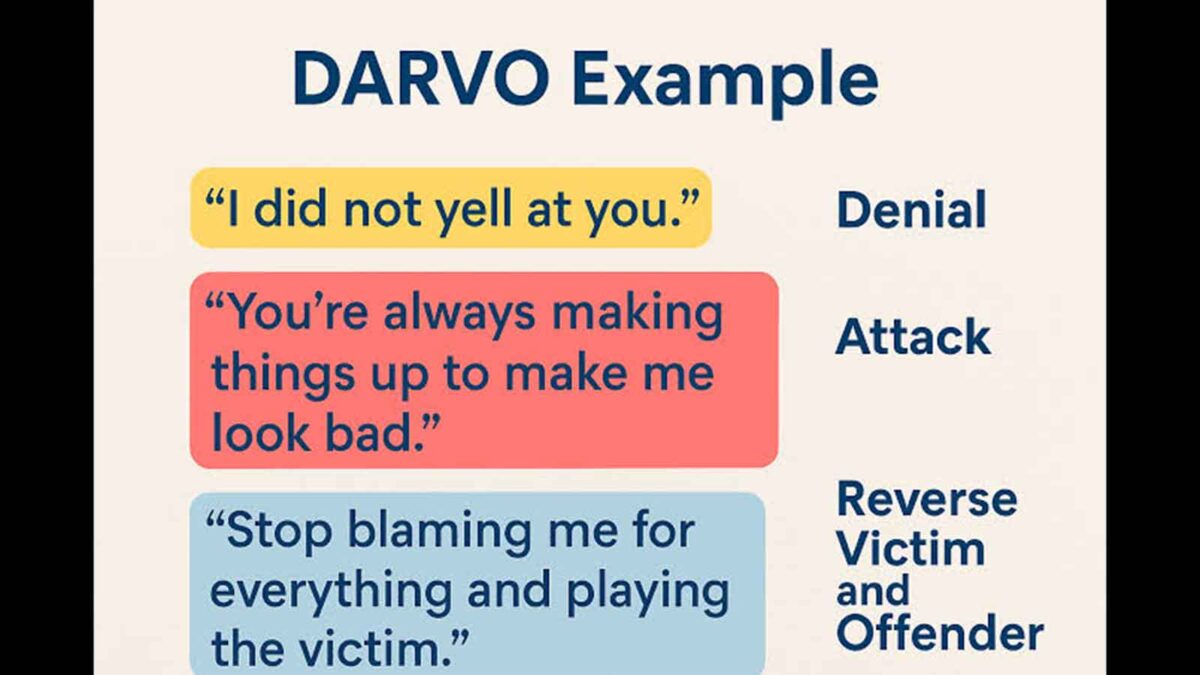
Psychologists call this DARVO — Deny, Attack, and Reverse Victim and Offender. Our grandmothers called it something simpler: “He is lying to get a new wife.”
Women have been warned for generations to listen carefully to how a man describes his previous relationships. Not because every complaint is a lie, but because a man who presents himself as a perpetual innocent while every woman in his past was supposedly bad deserves serious scrutiny.
If all his exes were bad, perhaps the common denominator is not them.
And yet, in our communities, in our churches, in our WhatsApp groups, and now with increasing regularity on our television screens, we watch the same scene play out. A man introduces a new wife. Or a new partner. And with her, he introduces a story. The first wife, we are told, was difficult. She was cold. She was barren. She was ungrateful. The new woman nods. She repeats it. She defends it. Sometimes, with great confidence and even greater volume, she prosecutes it in public as if she were an eyewitness, when in truth her only source of information is the man himself.
This is not about one family. This is about a pattern so old, so rehearsed, so normalised, that we have mistaken it for culture.
Let us call it by its proper name: the manufacture of consent for polygamy through character assassination.
We live in a culture that teaches women to see other women as competition rather than as fellow human beings. From a young age, a girl learns that securing a man’s affection, approval, resources, or commitment makes her exceptional.
She believes she is different. She believes she is special. She believes the first wife must have done something terribly wrong to lose the man’s affection. She believes she possesses some extraordinary wisdom, beauty, patience, submission, or charm that the first woman lacked.
And so she gladly accepts the man’s version of events because it confirms what she desperately wants to believe: that he is a good man who was simply unfortunate enough to marry a bad woman before meeting her.
This is what is often called “pick-me” behaviour, but let us be more precise and more compassionate. It is internalised misogyny.
It is tragically, a form of self-betrayal. Because when you defend a man’s right to mistreat another woman, you are helping to preserve the very standard by which your own mistreatment may one day be justified.
The same accusations she enthusiastically repeats today may become accusations against her tomorrow. The same man whose stories she believed without question may one day tell another woman an equally convincing story about her.
We have seen it. The confident second wife becomes the weeping ex-wife. The defender becomes the defendant. The woman who said “my husband would never” writes a long post two years later explaining how he did.
In many African households, childlessness is still treated, almost reflexively, as a woman’s failure. People can spend years interrogating a woman’s womb without ever considering that her husband might be the one experiencing fertility difficulties.
This is not just unfair. It is also medical illiteracy.
According to the World Health Organisation, approximately 1 in 6 adults worldwide experience infertility in their lifetime. Male factors are solely responsible for about 20-30 percent of cases, and contribute to around 50 percent of cases overall, either alone or in combination with female factors.
However, it is the woman who is taken to prophets, to herbalists, to hospitals, to prayer mountains. It is the woman whose past is excavated for abortions, for boyfriends, for sins she may or may not have committed decades ago.
And this is where age and power become relevant. Consider the data: UNICEF reports that one in three girls in Zimbabwe is married before the age of 18. The 2023-24 Zimbabwe Demographic and Health Survey confirms the same figure, with 23 percent of girls aged 15 to 19 having already begun childbearing.
So, what do we do?
First, we must teach women to verify, not just to trust.
Second, we must teach men accountability. Polygamy cannot be defended as culture while its consequences — jealousy, neglect, poverty, disease, and violence — are blamed on women. If a man chooses polygamy, he must be prepared to be judged by its fruits, not by its slogans.
Third, we must stop rewarding women for defending men against other women. The woman who stands up for another woman is not a traitor to marriage. She is its conscience.
Finally, we must centre the law. Zimbabwe’s Constitution guarantees the right to dignity, to equality, to freedom from violence, and to bodily integrity. The Marriages Act sets 18 as the minimum age for marriage. The Domestic Violence Act provides protection. These are not Western imports. They are our laws.