

 dyton mupawaenda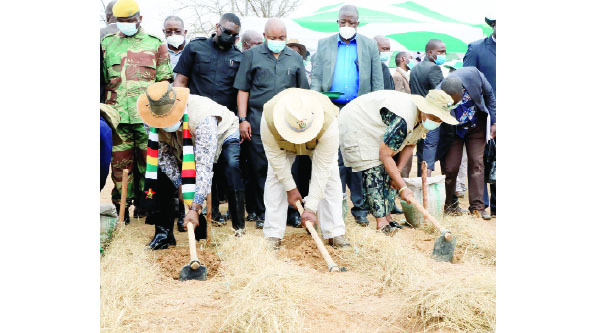
The Government adopted the Pfumvudza/Intwasa concept to address problems of low production and low profitability in farming, which had in recent years been negatively affecting national food security.
The concept has also come in handy as a way of mitigating the harsh effects of climate change that have caused severe food shortages in the wake of successive crop failures.
More than 3,5 million farmers and 5 294 agricultural extension workers and supervisors across the country had been trained on the climate-proofed Pfumvudza/Intwasa farming concept.
Out of the farmers trained, 1 772 183 were women, which logically means the figures have since increased and so should the efficiency with which farmers are now going about their Pfumvudza/Intwasa farming in situ.
Pfumvudza/Intwasa is a form of conservation agriculture that has been practised for centuries and the concept has now returned coupled with a business a motive.
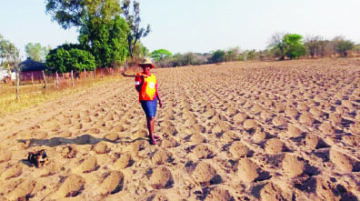
Pfumvudza/Intwasa does not require vast land, yet it yields good quantities of grain, hence the need for farmers to have started preparations for next season because the planting holes need to be ready for planting with the first effective rains.
Essentially, it answers to a number of factors, among them, poor agronomic practices, poor soils, the impact of climate change and failure to approach agriculture from a business perspective by both farmers and the extension system that have been contributing to the country’s dip in agricultural productivity and production.
This has prompted Government to look for simple, but effective ways such as Pfumvudza/Intwasa where the farmer pays close attention to the number of planting stations, plants per station and the average yield versus domestic requirements and the quantities targeted for the market.
Pfumvudza/Intwasa does not require vast land, yet it yields good quantities of grain, hence the need for farmers to have started preparations for next season because the planting holes need to be ready for planting with the first effective rains.
Besides the training, the extension workers and supervisors are on the one hand expected to track and monitor farmers’ progress until harvest.
This has no doubt increased production and subsequently improved national family food security.
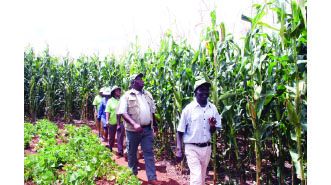
The beauty of Pfumvudza/Intwasa is that it can be used for many crops other than maize with very good results.
Operationally the system has been oiled enough to produce better harvests. Targets for provinces are set, based on their household populations and communicated to ministers of provincial affairs and devolution who in turn should keep liaising with Agritex and monitoring progress as the country marches towards meeting both national and household food security targets.
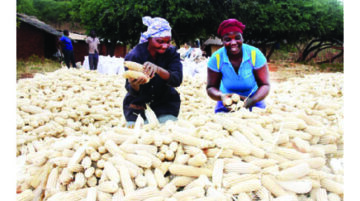
It is, however, exciting to note that the nation has scored bumper harvests following its adoption of the concept and looks set to consolidate those gains given the amount of resources it has committed to training personnel and equipping extension workers.
Extension workers have been provided with motor cycles to take care of mobility challenges that made it difficult for them to provide advisory services to all those farmers needing them.
They have also been given tablets and data to improve communication with farmers in the areas they cover.
This move will enable them to communicate with big groups of farmers at once, especially at a time like this when the Government is pushing for the country to achieve 100 percent extension and farmer reach systems.
The current 1:575 extension worker-to-farmer ratio is of course too high to be effective, hence the need for active communication devices.
The country boasts 1 600 agricultural wards across all its 60 agricultural districts that need to be manned by at least two extension officers to be effectively serviced. This is currently being done by one extension worker.
Also, there are about 2,7 million farming households and 4 700 agricultural extension officers, which gives birth to the current farmer to extension officer ratio of about 575:1.
It is fast becoming apparent that human dynamics such as these have also been playing their part in the low productivity and production challenges that have been characterising the country’s agricultural sector in recent times.
The organic matter deposited into the planting stations needs to have decayed to reasonable levels for newly established plants to tap into it for nutrients.
The Pfumvudza/Intwasa concept is based on conservation agriculture principles that will naturally help climate-proof agricultural production, and in particular the food production sub-sector hence the need for every farmer to have at least a portion committed to the concept regardless of their farming category — commercial, communal, A1 or A2 — unless they have irrigation facilities that guarantee a full production cycle for their crops.
One advantage of the planting stations is that they trap rain water and allow plant roots to use it effectively, which conventional tillage methods do not always do.
It is fast becoming apparent that human dynamics such as these have also been playing their part in the low productivity and production challenges that have been characterising the country’s agricultural sector in recent times.
Planting stations also enable farmers to apply fertilisers for direct use by plants without risks of them being washed away in the event of rains coming immediately after the fertiliser application.
There is also minimal soil disturbance during the digging of the planting stations with the mulch that is added after planting also helpful in conserving moisture.
The farmer is guaranteed of meeting targeted timelines and the successful adoption of good agronomic practices as dictated in the roll out of the Pfumvudza/Intwasa concept.
The beauty of Pfumvudza/Intwasa is that it can be used for many crops other than maize with very good results.
Government has since extended the programme to include traditional grain crops, soya beans and even cotton with the sole objective of improving yields.
This will boost household and national food security while improving people’s socio-economic reality as well.



 Online Reporter