Online Reporter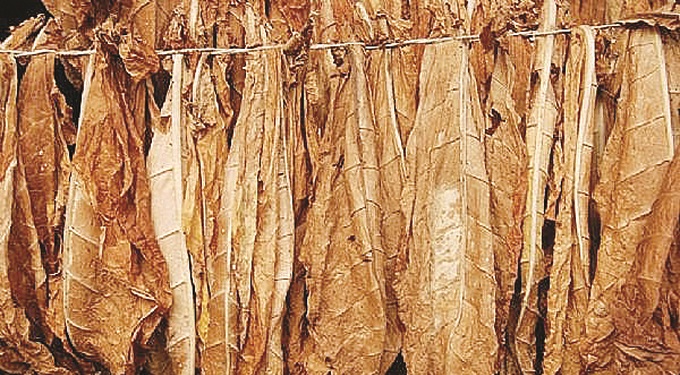
Sifelani Tsiko
Fact Check Editor
FOR Boydho Gwaze (52) a farmer from the Kadzimwenje Ward 20 of Guruve District, tobacco farming is life.
As a farmer all his life, he started growing tobacco because it’s more profitable than other crops.
But as a tobacco farmer, the future of his main source of livelihood now faces pressure from all directions.
And one ideal recipe for a burnout for Gwaze now is where to find wood for tobacco curing.
Tobacco curing is a major driver contributing to massive deforestation in Guruve, the second largest tobacco producing district in Zimbabwe.
Without taking a different path to tobacco curing, the future for both forests and farmers is bleak.
Tobacco curing accounts for some 15 percent of deforestation in Zimbabwe and experts say for every kg of tobacco as much as 10kg of wood is used for curing.
Experts say if this is left unabated, tobacco production will significantly contribute to the disappearance of miombo woodlands and shatter the livelihoods of thousands of tobacco farmers.
Stress and a worry for the future, sharpened Gwaze’s mind to be on alert for potential solutions.
And when he heard about the Capacitating One Health in Eastern and Southern Africa (Cohesa) programme by the University of Zimbabwe and Cirad to find alternative energy solutions for curing tobacco, his heart cheered up.
It brought a spark of hope.
“Tobacco farming here is now a problem. Firewood is becoming scarce as year in, year out we cut more trees to cure our tobacco,” he said.
“The cost of getting firewood is rising as we pay more to transport wood from faraway places. This season alone I spent more than $1200 to get firewood to cure my tobacco crop.
“It’s chewing into my earnings and very soon, tobacco farming will not be profitable if we do not find new sources of energy.”
COHESA is co-funded by the OACPS Research and Innovation Programme, a programme implemented by the Organisation of African, Caribbean and Pacific states (OACPS) with the financial support of the European Union.
The consortium is made up of the International Livestock Research Institute (ILRI), CIRAD – a French agricultural research and cooperation organisation, and the International Service for the Acquisition of Agri-biotech Applications (ISAAA).
The Cohesa project aims to effectively protect the health of people, animals, plants and the shared environment.
Zimbabwe is among 12 African countries that are benefiting from a Euros 9, 3 million (US$10 million) Cohesa project.
Implementing partners in Guruve, Chinhoyi University of Technology and Harare Institute of Technology, are establishing a pilot project that uses a biodigester to produce methane gas for tobacco curing at Mr Gwaze’s tobacco barns.
All this, is part of efforts by Cohesa redouble efforts to work with smallholder farmers and explore alternatives to wood for curing tobacco.
“Deforestation here in Guruve is rampant and is threatening the future of tobacco farming,” Prof Kudakwashe Chitindingu of CUT said.
“The golden leaf is a high-earning cash crop that creates employment and earns the country the much needed foreign currency.
“However, tobacco production is associated with tree cutting. Deforestation is leading to wood scarcity and pushing up the cost for tobacco production.”
Deforestation is driven by barn construction and flue-curing of tobacco. Farmers particularly in Guruve will continue to use firewood to cure tobacco because there are no cost-effective alternatives. As such, natural forests will continue to disappear, Prof Chitindingu said.
Deforestation leads to loss of vegetation and biodiversity, soil erosion, siltation of rivers and habitat fragmentation.
It also contributes to global warming because trees play an important role in carbon sequestration.
Solutions have not been easy.
Some experts have proposed the planting of fast growing tree species for tobacco curing, use of alternative fuels, designing energy efficient barns and encouraging farmers to shift to alternative cash crops.
But for Gwaze, this is not as easy.
Use of solar energy is expensive for many farmers and use of ethanol failed to work out well in terms of cost effectiveness.
For Gwaze, exploring the use of biogas gives him some measure of hope.
“The results of cutting trees recklessly is catching up with our community,” Gwaze said.
“Firewood is getting scarce and the cost of transporting it is expensive. I am grateful to the Cohesa project for starting the biogas project for curing tobacco on my homestead.
“We want easy and cheaper alternative energy sources to cure our tobacco. If this works, other farmers will not hesitate to embrace the biogas system.”
Gwaze has a herd of 10 cattle which he can use to sustain his biodigester.
Cow dung from the cattle is deposited into a biodigester buried underground.
Bacteria break down this waste and gas is produced as a by-product of this process.
A pipe transfers the gas from the digester to the tobacco barns a few metres away.
Temperature control devices are being installed on the barns including an air inflow system. A burner will be set up for heating the air which then cures the tobacco.
The process is delicate.
The biogas tobacco curing method has to bring the leaf to a desired state without sacrificing its potential quality present at harvest.
The curing process takes between 5 to 7 days while at the same time, the crop cycle is moving in the field. Uniformity of the harvested crop is important to ensure the whole batch of tobacco leaves are affected in the same way by the induced curing environment.
There have been many advances in making barns more efficient but these technologies have not been fully adopted by smallholder farmers due to lack of resources. A more efficient heating methods and air flow distribution system is critical for the biogas system.
“The basic principle of the tobacco barn is to create a uniform environment with the recommended temperature and humidity to affect the tobacco in the desired way,” an engineer said at the site.