Obey Musiwa
Herald Reporter
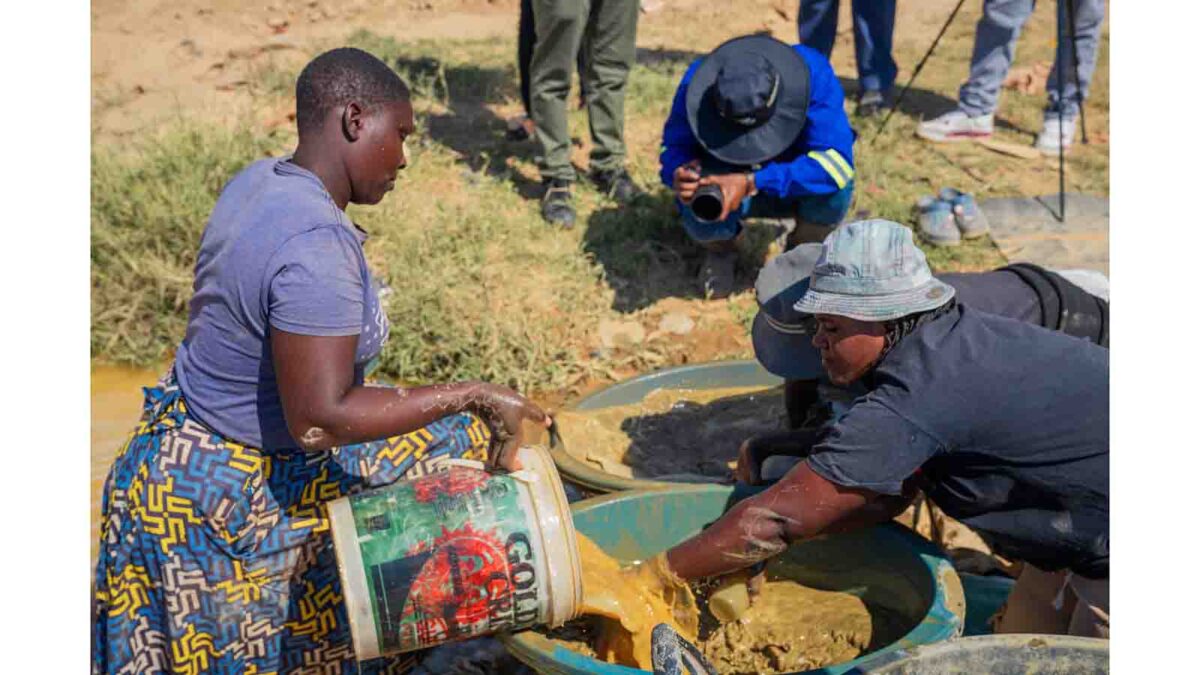
PLANETGOLD Zimbabwe will use its second annual stakeholders’ conference to encourage artisanal and small-scale gold miners to run their operations as profitable businesses rather than survival ventures.
The conference, themed “Unlocking Responsible Gold in Zimbabwe”, comes as artisanal and small-scale miners account for a record 75 percent of the country’s gold output.
The five-year project, supported by the Global Environment Facility, led by the United Nations Environment Programme and executed by IMPACT, aims to support 7 500 miners across 11 districts, reduce mercury use by 4,85 tonnes and improve management of about 76 000 hectares of land.
Speaking at a media briefing in Harare on Friday, project officials said the conference comes as the sector’s contribution to national gold output has hit a historic high of 75 percent.
The five-year project is supported by the Global Environment Facility, led by the United Nations Environment Programme and executed by IMPACT.
It is run in partnership with the Ministry of Mines and Mining Development and the Ministry of Environment, Climate and Wildlife, targeting 7 500 men and women across 11 districts, a 4,85-tonne mercury reduction and better management of about 76,000 hectares of landscape.
PlanetGOLD Zimbabwe technical specialist Engineer Mollin Siwella said the biggest hurdle is that 96 percent of the sector still uses mercury.
She said miners are also losing most of their gold.
“Some are recovering only as much as 10 to 12 percent of the gold potential that is in the ore,” he said.
“Once we fix those inefficiencies and introduce the technologies, I am sure it is going to spread.”
She said the project is working to shift the sector from subsistence to enterprise through three tracks.
“Formalisation is based on miners’’ own accounts of the barriers they face, and it calls on Government to simplify the registration process,” she said.
“On finance, a panel at the conference will discuss lessons from lending to small-scale miners so they can afford safer equipment.”
She said a dedicated session will look at how mercury-free processing can be adopted at real mine sites.
Eng Siwella said the technologies will be tested in the laboratory before any equipment is bought.
“We want to provide technologies that work,” she said.