

 Online Reporter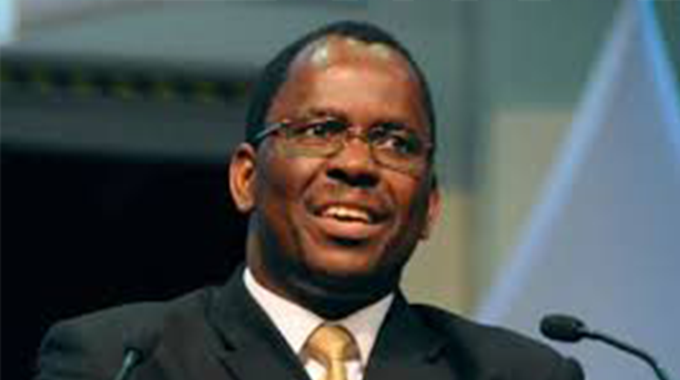
Ivan Zhakata
Herald Correspondent
Zimbabwe is moving to reform access to higher education in science, technology, engineering and mathematics through a proposed bridging programme inspired by Uganda’s Higher Education Access Certificate.
This follows benchmarking visit aimed at strengthening inclusive entry pathways into universities.
A high‑level delegation led by the Permanent Secretary in the Ministry of Higher and Tertiary Education, Innovation, Science and Technology Development, Professor Fanuel Tagwira, is in Uganda this week studying the HEAC programme as Zimbabwe prepares to roll out its Science Foundation Programme (SFP).
The visit, hosted by FAWE Uganda in partnership with FAWE Africa, brought together senior Government officials, higher education regulators and university leaders in what has been described as a coordinated national effort to widen access to tertiary education.
Prof Tagwira said the benchmarking exercise was aimed at learning from Uganda’s experience in creating alternative entry routes into university education.
“The purpose of our visit is to do benchmarking, learning from the Ugandan experience in terms of how they have been able to support students from disadvantaged communities to access higher education through the Higher Education Access Programme,” he said.
Prof Tagwira said the model provides a critical second‑chance pathway for learners who fail to meet conventional university entry requirements after A‑Level studies.
Zimbabwe is studying Uganda’s HEAC programme, which was piloted in 2017 and accredited in 2019 as an alternative university entry pathway for students from vocational backgrounds, alternative curricula and disadvantaged communities.
The programme provides structured academic bridging support before students proceed to degree studies.
Uganda’s National Council for Higher Education (NCHE) said graduates of the programme have performed strongly in STEM‑related disciplines, including Pharmacy, Nursing, Biomedical Laboratory Sciences and Engineering.
NCHE executive director Professor Mary Okwakol said students from the programme had demonstrated strong academic performance at university level.
“Students who went through the HEAC programme, when they joined other programmes, performed as well as other students, and sometimes even better,” she said.
Prof Okwakol said some students had attained cumulative grade point averages above 4.0, describing the results as evidence of the programme’s effectiveness.
Zimbabwe Council for Higher Education chief executive Professor Kuzvinetsa Dzvimbo described the Ugandan model as a major breakthrough in widening access to higher education.
“This Higher Education Access Programme, for me, is not just fantastic, it is actually revolutionary, because it is bringing into higher education students who, under normal circumstances, would not be able to access higher education and training,” he said. Prof Dzvimbo said the model was also key in improving access for students from low‑income backgrounds and for women.
As part of the visit, the delegation also engaged Uganda’s NCHE on regulatory systems, focusing on accreditation frameworks, curriculum development, quality assurance mechanisms and student progression pathways.
The discussions provided practical insights into how bridging programmes can be embedded within national higher education systems while maintaining academic standards and institutional integrity.
Findings from the benchmarking visit are expected to inform Zimbabwe’s proposed Science Foundation Programme, which seeks to create structured pathways into STEM degree programmes for learners who do not initially meet traditional entry requirements.
The initiative forms part of broader efforts to expand access to higher education while strengthening national capacity in science, innovation and technology.



