malvernmugadzikwa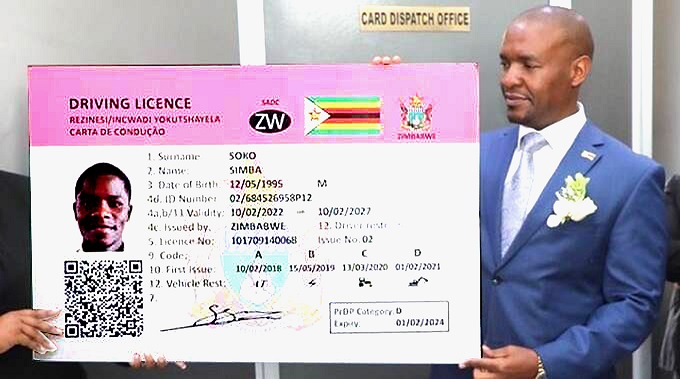
Nokuthula Dube
THE Central Vehicle Registry (CVR) has issued nearly 250 000 plastic driver’s licences since their introduction in June last year, marking a significant leap in reducing the initial backlog.
The new plastic licences, which replaced metal discs, have advanced security features, making them difficult to forge.
CVR is now expanding the rollout of plastic licence enrolment centres.
Two new centres are set to open in Bulawayo and Mashonaland West province early next month.
A nationwide rollout of more centres is scheduled for next year.
The introduction of plastic licences has helped drastically cut the country’s massive backlog, which once stood at 600 000.
The authorities are now issuing an average of 220 000 licences annually, a sharp increase from the 100 000 previously produced under the old metal disc system.
CVR director Mr Saston Muzenda was optimistic about making further progress.
“Between June and December last year, we issued a total of 76 900 of the new plastic driver’s licences.
“From January to end of September this year, we have done 171 394 of the new licences.
“During the month of September alone, we issued a total of 18 015 licences.
“Under the metal disc system, we were processing about 100 000 annually, but with the new system, we are going up to around 220 000 a year, helping us make substantial inroads in slashing the backlog,” Mr Muzenda said.
The new licence is valid in multiple countries within the Southern African Development Community (SADC), the Common Market for Eastern and Southern Africa (COMESA), and the East African Community (EAC) regions.
This has eliminated the need for additional licences when driving in countries in these regions.
The licences are being issued through the Vehicle Inspectorate Department (VID) offices, with collection points conveniently located at local post offices.
One of the standout features of the new plastic licence is a QR code, which offers instant verification of the holder’s credentials, significantly curbing counterfeiting and ensuring that only qualified drivers are on the roads.
This technological advancement represents a significant leap towards greater road safety and regulatory compliance.
Added Mr Muzenda: “This year, we are targeting to start issuing the new licences in Mashonaland West and Bulawayo Metropolitan provinces, starting with Bulawayo as our top priority and then we will go to Mashonaland West.
“For Bulawayo, I think they should be operational by November 1 and then by mid-November, we should be in Mash West.
“And I am being very conservative with the dates because this very month of October, they should be physically there in Bulawayo.
“Our Bulawayo office will also assist people coming from Matabeleland South and North provinces.
“When we are done with those two, we will then do the next provinces, which are Manicaland (Mutare), Masvingo and Midlands (Gweru).
“After that, we will be targeting Mashonaland East and Mashonaland Central, which is Marondera and Bindura, respectively.
“We will then go to Matabeleland North and Matabeleland South, and we will be done.”
The CVR, Mr Muzenda added, has already made significant strides in clearing the backlog, having resolved outstanding licence issuances from 2018 using the previous metal licence disc system.
Work is underway to address the backlog from 2019, with officials now capturing drivers’ biometric data.
“In terms of the backlog from 2018, it is now cleared; we did that using the old metal driver’s licence system.
“For 2019, we have finished with electronic capturing of the documents.
“Those who took their licences in 2019 need to have their biometric data captured.
“They must come for the biometric data capture and pay the requisite fees,” Mr Muzenda added.
The scannable driver’s licence meets international standards and Government is committed to formulation of robust legal, policy and administrative mechanisms to improve road safety.


 Online Reporter