admin
admin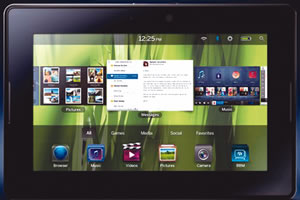
computer market received a dent last Tuesday with the release of the Playbook not being as warmly welcomed as Apple had in March.
The launch of iPad 2 witnessed campers putting up at the giant headquarters so that they could get their hands on one of the most eagerly anticipated tech gadget and it seems Apple did not disappoint.
The company sold more than 500 000 iPad 2 tablets as consumer demand left retailers bereft of the device on its debut weekend, even as rival computer makers readied more than 100 would be competitors.
On March 11 earlier this year, hundreds of people lined up at the Fifth Avenue store in New York. Store workers handed out free hot chocolate and water to those waiting.
RIM’s Blackberry PlayBook did not receive the same enthusiastic response as the iPad 2 did and they will certainly be going back to the drawing board, however, the product does have some oomph to it.
While many of us in Zimbabwe are still struggling to get our hands on the iPad 2, those who have had access to it have parted with no less than US$1 200 to get the gadget that is seemingly heading to the top as the gadget of the year.
The PlayBook is touted as the business version of Apple Inc.’s iPad. The seven-inch tablet runs on a dual core processor, and boasts the ability to multi-task. You can watch a video while surfing the Web on a split screen.
Unlike the iPad, it can run Adobe’s animation program Flash, which is used on many websites. It also has a high definition display and can integrate seamlessly into BlackBerry Enterprise Servers, which makes it attractive to businesses.
The biggest count against the PlayBook is a lack of applications. Only about 1 000 applications can be used with it, compared with hundreds of thousands for Apple and Android devices. The PlayBook also does not have an email, calendar or contacts programme, unless it is synced with a BlackBerry.
Some of those anxious to buy the device on Tuesday said they had looked at other tablets, but found the PlayBook the most compelling.
They like it because they can hook it up to a BlackBerry (although Zimbabweans are still waiting for these services) and connect to the Internet without having to spend all kinds of money on a 3G plan which is a big advantage.
While reviews for the new tablet have been generally positive, the PlayBook had a tough time actually getting off the ground. It has been criticised for its lack of native email, calendar and organising apps.
Furthermore, the tablet was delayed, which could be attributed to high demand for Apple’s iPad. The release date, originally slated for the first quarter of 2011, was reportedly pushed back due to a shortage of touch screen panels, which Apple had already allegedly obtained for the iPad 2.
Analysts polled by Reuters estimate RIM will sell about three million PlayBooks in 2011. By contrast, analysts have projected that Apple will sell up to 60 million iPads this year. Apple has not released any sales data yet, but was expected to do so in its second quarter earnings call on Wednesday.
But it is possible the PlayBook could have a slow start, gaining momentum in the future. Analysts predict that by 2015, RIM will be the number three tablet maker with its new QNX platform. However, it is only projected to nab 10 percent of the market share.
The Wi-Fi-only BlackBerry PlayBook comes in three storage capacities – 16GB, 32GB and 64GB. The PlayBook is priced identically to the Wi-Fi-only Apple iPad 2 for the same storage capacities. RIM has announced a 4G PlayBook that is scheduled to launch later this year.
According to PC magazine the user interface for the PlayBook is said to be quite impressive. Not only does it run smoothly, but the graphics are simple and visually interesting. Even better, the layout is very sensible.
It is not quite as dead simple to navigate and organise as the Apple iOS UI, but it is easy to figure out where your apps are and makes more sense than the overly busy Honeycomb Home screen.
You can navigate them by four categories: All, Favourites, Media and Games. A dock at the lower portion of the screen expands to fill the screen with the tap of an arrow, showing you more than the six apps the minimised dock displays.
“It’s a bit of a bear to set up, but we were able to get the wireless sharing feature up and running after some tinkering. The PlayBook can share files and wirelessly download files from computers on the same Wi-Fi network.
The set up process on the tablet is simple and requires very little effort – just some quick adjustments in the Storage and Sharing menu. It’s getting the computers to co-operate that can be frustrating,” read the review.
Multitasking on the PlayBook is good in theory, but weak in implementation. You typically will get a “live” view of what you were most recently doing in each app.
“However, RIM made a fairly crucial mistake here -the apps are all actually running, it seems, even when in the background. Not only is that a suck on the battery, but it hobbles the tablet’s basic functional abilities. You can have plenty of apps “running”, but they really go into a sleep-but-quick-to-wake mode whenever you’re not actually using them, thus saving power and not taxing the processor. The PlayBook keeps everything running until you get a notification in the form of a flashing red signal in the upper left corner of the screen: “System is running low on memory – please close some applications,” the review reads.
The best example of how this is not a good thing: Say you are playing a video in an app and then you minimise it to go to another app, it does not stop playing. You will hear the audio in the background as you are performing other tasks.
For music, that makes sense, but not video. You must pause the video or close the app to fix this, but the general point is, not only can several apps not be open simultaneously, but the ones that are open, are actually running and using up
And then, there are the bugs. Sometimes, your computer will not recognise the PlayBook when connected via USB cable – a problem you never encounter with the iPad.
Sometimes, it shows up as a drive on your computer just as it should. Sometimes, the PlayBook cannot find a wireless network when it is in a room filled with them, despite having been connected to one moments earlier.
Credit: www.bloomberg.com
www.montrealgazette.com
[email protected]



 Online Reporter