admin
admin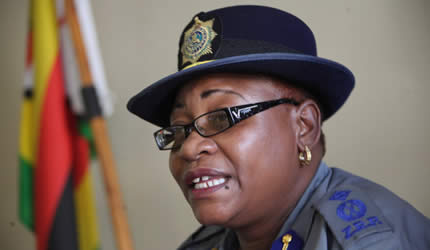
and Monday were doing so out of ignorance.
Addressing an editors round-table on media and elections in Zimbabwe organised by the Southern African Research and Documentation Service in Harare yesterday, police chief spokesperson Senior Assistant Commissioner Charity Charamba said the numbers were boosted by the inclusion of the police constabulary.
She pointed out that the police constabulary, a reserve force, had always been in existence even before independence and that it was part of the force.
Snr Asst Comm Charamba said since the regular police force did not have enough manpower, the police constabulary were deployed alongside other officers during occasions such as elections.
“We have a responsibility to preserve the internal security of this country and as such we have to have enough manpower on the ground,” she said.
According to the Zimbabwe Electoral Commission, 69 222 applications had been received from the police for the special vote, a figure some quarters queried. The electoral body issued 70 000 special vote forms to the ZRP.
Snr Asst Comm said the special vote was an acceptable practice the world over since police officers had to be given a chance to vote in view of the fact that they would be out of their constituencies carrying out their duty on election day.
She said the reason why the special vote ballot papers exceeded the force’s members was because there had to be provision for those that would make mistakes during the process of filling in the forms.
Snr Asst Comm Charamba said the police was ready to ensure peace prevailed for the harmonised elections set for July 31 and urged the media to report objectively to assist the force in that endeavour.
“We are more than ready for the elections to ensure that there is peace during this period,” she said.
She noted that the period leading up to the elections was largely peaceful with only a few cases of intra-party and inter-party clashes, mostly around primary elections and that these were being investigated.
Snr Asst Comm Charamba spoke against hate speech and warned both the media and politicians against inflammatory statements.
She said the statements such as the one made last week by MDC-T youth chairperson Solomon Madzore had the potential to ignite violence by both members of his party and other parties that felt provoked.
Madzore told an MDC-T rally in Marondera on Sunday that they were prepared to take up arms and shed blood if the party lost the elections.
“It is important for the media to be objective in its coverage to make our policing job easier,” said Snr Asst Comm Charamba.
Related Stories…
“You need to verify your facts before publishing. During this period, we need to work as Zimbabweans, not foreigners.”
Zimbabwe Media Commissioner Mrs Miriam Sibanda urged the media to try and bring out key election issues to enable the electorate to make an informed choice at the polls.
She expressed concern that of the 28 operating publishers, out of the 80 licensed ones, very few were interacting with readers in indigenous languages.
On concerns by media practitioners that they were being required to get accreditation for elections when they were already accredited by the ZMC, Mrs Sibanda said representations had been made on the issue but that “unfortunately the law requires that it be done”.
The Secretary in the Ministry of Media, Information and Publicity, Mr George Charamba, also attended the round-table and warned the media against operating from a position of ignorance.
He challenged media practitioners to have a grasp of electoral law, electoral guidelines by the United Nations, African Union and Southern African Development Community that outline the expected standards and even code of conduct of election observers.


 Online Reporter