

 admin
admin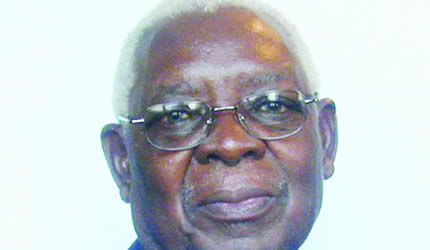
Tafara Shumba Correspondent
Cde Cephas Msipa is one of the few surviving members of the former PF Zapu national executive committee. He was elected Secretary General of PF Zapu in 1984. He is one of the politicians who saved the longest tenure as the Governor of Midlands Province. He was instrumental in the negotiations between zanu-pf and PF-Zapu that gave birth to the historic Unity Accord of 1987.
This is not an obituary but just a brief political background of a man who recently hinted at the split of zanu-pf if President Mugabe does not intervene to nip in the bud the unprecedented internal factional strife bedevilling the revolutionary party. The senior politburo member said the buck stopped with the President.
“We have to be careful that factionalism does not lead other people to think about forming a break-away party. It can happen,” said Cde Msipa.
With all due respect to this veteran politician, the proposition of a split is totally off the mark and will remain a flight of fancy.
Factionalism is not a new phenomenon in zanu-pf. There have been such battles since the formation of the revolutionary party in 1963. zanu-pf remained united despite these differences. History has taught us that zanu-pf cadres can be at variance on other things but not on principles. Once people remain glued around the same principles, the chances of a split are next to nothing.
This is where zanu-pf differs from the fly by night Western backed opposition parties which suffer from ideological kwarshiokor.
Since its formation in 1999, the MDC has had several splits which dented its chances of posing a serious threat to the incumbent. Armed with the Western support, the Tsvangirai-led MDC entered the political stage riding on, among other things, the protest vote, alleged corruption within zanu-pf and its perceived inability to deliver services to the public.
In this vein, the MDC-T touted itself as a harbinger of change which would undo all the so-called vices prevalent within zanu-pf.
The MDC was a hotchpotch of people with a volatile concoction of ideologies, among them vendors, touts, shebeen queens, unemployed persons and civil rights activists. This is where the revolutionary party goes out of line with the imperialist surrogates masquerading as democratic opposition parties.
zanu-pf has a solid ideology and principles that continue to hold its centre.
Six years after formation, the upshots of the ideological mishmash manifested in the split that birthed several MDCs. In the beginning was the MDC led by Tsvangirai. The secretary general and vice president, Welshman Ncube and Gibson Sibanda respectively, broke away to form a party which maintained the name MDC. Tsvangirai was left with the MDC-T. Professor Arthur Mutambara was conveniently put at the helm of the break-away party for tribal balancing.
That split heralded a series of other break-away parties that have been hitherto dogging the MDC.
The Ncube-Sibanda break-away was followed by that of Job Sikhala who formed his own MDC-99. Professor Ncube later broke away, leaving Professor Mutambara with a broken party. Of late, Tendai Biti and his band disentangled themselves from the MDC-T to form a renewed MDC. Professor Lovemore Madhuku, a declared former ally of Tsvangirai, recently broke ranks with the later and transformed his insolvent NCA, into a political party.
In just 15 years, seven splinter groups have already emerged out of the original MDC of 1999 and more are threatening to pull out. zanu-pf is more than 51 years old. A simple calculation can show how many splits will be there by the time the MDC hits 51 years.
Since the formation of the revolutionary party, there has never been a serious split save for misguided individuals who were either sacked or fired themselves.
They, however, failed to gain traction with the electorate. Fifty-one years down the line, it’s inconceivable that some committed members of zanu-pf might break away to form a splinter party.
Let’s give Cde Msipa the benefit of the doubt, in case someone whispered his thoughtless intention to form a break-away party.
If there are indeed such comrades, it’s quite revolutionary for them to reconsider those injudicious thoughts. The late zanu-pf Secretary for Legal Affairs, Cde Eddison Zvobgo, used to say that no matter how much you are frustrated, quitting zanu-pf should never be an option. Thus, the misguided Cdes, if ever they are there, should not burn their houses to kill a snake.
History has taught us that political life outside zanu-pf is not sustainable.
Professor Jonathan Moyo last year advised fellow comrades who may have wanted to divorce themselves from zanu-pf, that it was cold out there. Prof Moyo gave the advice from a deep sense of reflection based on his experience.
“They should take it from me. It’s horrible and miserable. They should take it from those who have been down the path,” said Prof Moyo.
He went on to say such a move was unwise, misguided and career threatening.
Indeed, it is career threatening.
A look at the post-zanu-pf political careers of, among others, Dr Simba Makoni, Dumiso Dabengwa, Edgar Tekere, Margret Dongo and Thenjiwe Lesabe can testify to the fact that it is indeed cold outside.
The unwise decision to quit Zanu PF destroyed the political careers of these people.



 Online Reporter