

 admin
admin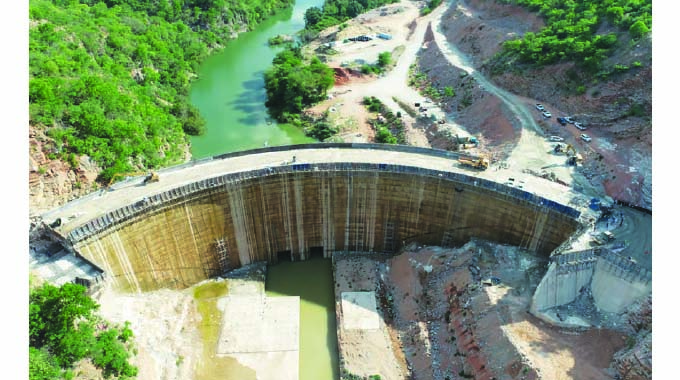
Wallace Musakanyi
Zimbabwe’s enduring democracy is set to reach a tipping point necessary for establishing a citizen-driven and majority-rule wired political infrastructure as the country is set to conduct harmonised elections.
Pursuant to Section 158(1) of the Zimbabwean Constitution, which stipulates that a general election must be conducted 30 days before the expiry of the five-year period upon swearing in of President and Parliament, the elections will be conducted between July and August.
Zimbabwe conforms with liberal democratic values that promote the realisation of freedom of association, expression, universal suffrage and other binding civil and political rights which are firmly protected by the Constitution, regional as well as international Conventions which the country is a party to.
Against the backdrop of this wide democratic space, in the next few weeks/months, there is going to be a stampede from political players, opinion leaders, business moguls, community leaders, political activists and cashivists as they contest for public office at various echelons of power.
The same country that is loved by patriotic citizens fully cognizant of their history, ethos of the liberation struggle and yet vilified by the neo-liberal, Western funded politicians, will be a hunting ground for public office mirrored by the contestation and ridiculing of ideas, programs and policies in a bid to charm the electorate.
Nevertheless, the political dynamics that were necessitated by the New Dispensation gave birth to a new political precedence that emphasises the triumph of development over politics.
In other words, this type of development centred way of politicking summed by the symbiotic relationship between economics and politics, especially during these contemporary times.
This serves as a warning to anti-development political leaders across the political divide that the days of playing hide and seek with the electorate are done and dusted. As such, development will be a key decider of whether the person will be voted in or out of office.
In that regard, ahead of the upcoming harmonised elections, political tangibilities will be of paramount importance to the election of political leaders who will be running for office.
The electorate eventually will be swayed to vote for a candidate who resonates well with the matrix of development which forms the basis of political tangibilities.
In this vein, this gives flesh to the philosophically grounded nyika inovakwa nevene vayo/ilizwe lakhiwa ngabaninilo spirited exercise which is a norm in the Second Republic.
This model which is inspired by President Mnangagwa centres the locals in the economic development matrix giving ample room for not only development, but grassroots based and homegrown solutions as well.
Armed with these potent, broad based progressive initiatives, the Zanu-PF government, politicians and key associated affiliates have exploited these enterprises for the betterment of the country and the communities they hail from.
Mega infrastructure, overwhelming economic development and localised community development that has been anchored through the proper utilisation of the Constituency Development Fund as well as under the auspices of the devolution programme have transformed the nation for the better within a five-year period.
Under the aforementioned interventions, roads, clinics, schools have been constructed, empowerment initiatives have also been rolled out.
Politically speaking, these are the political tangibilities that will inform the electorate’s voting patterns come election time.
In a world where renowned political scientists like Harold Laswell defined politics as who gets what, when and how makes voting a transaction informed by the principle of reciprocity where leaders receive votes in exchange for positive development/projects they would have pioneered in their respective communities.
Zimbabwe’s political dynamics and voting patterns ahead of the general elections will definitely be hinged on this political doctrine of reciprocity.
The electorate will eventually vote for what they see, feel and touch, as such development is the collateral security that will enable the aspiring leaders to harvest votes from the electorate.
With all the tangible development that is taking shape across all the economic sectors courtesy of the Zanu-PF led Government, it will make its political mobilisation and campaign smooth, easy and meaningful as the elections are fast approaching.
This is because beyond the Viva Zanu-PF political slogan, the electorate are able to hand pick the development initiatives that have been implemented by Zanu-PF from ward or village level up to national level.
In relation to the Zimbabwean political discourse, the days of hard politics are over, powered by the Second Republic. The Government has ushered in development-woven governance framework where development feeds into the State and political machinery.
As good as it is, politicians from the other side of the fence who greatly rely on rhetoric-based politics premised on demonising the Government, loose talk and promising the electorate heaven on earth yet plagued with a deficit of action will get the taste of their medicine during the upcoming harmonised elections.
In that regard, it is pertinent for the voters to conduct a comprehensive audit of their leaders and take stock of the positive interventions they have rolled out in order to facilitate a performance-based voting style in a move to further unlock the economic development which is already work in progress under the Second Republic.
λ Wallace Musakanyi can be contacted on [email protected]


 Online Reporter
 Bongani Ndlovu