Online Reporter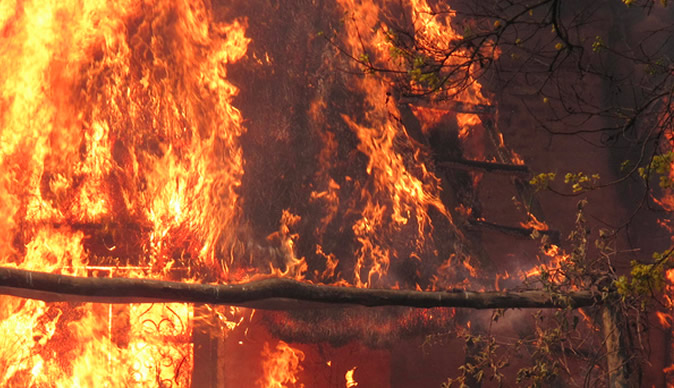
Peter Matika, Sunday News Reporter
A four-roomed house belonging to Sabelo Ndlovu in Nkuba village, Nkayi district, was burned to the ground under suspicious circumstances last week (28 September 2022), highlighting the volatile intersection of political violence and property inheritance disputes that continue to plague Zimbabwe’s rural areas.
According to neighbours who spoke on condition of anonymity due to fear of reprisals, the incident appears to be connected to a long-standing property dispute between Sabelo Ndlovu and his uncle, Witness Ndlovu, a known ZANU-PF supporter.
“The house has been a source of conflict since Sabelo’s mother, Gladys Ndlovu, died under suspicious circumstances in July 2007,” said one neighbour.
“Now we wake up to find the house burned down, and Witness has been openly boasting about being behind it, saying no one can touch him because of his political connections.”
The property dispute exemplifies the complex challenges faced in Zimbabwe’s rural areas, where statutory and customary inheritance laws often clash, creating opportunities for politically connected individuals to exploit these tensions.
The situation is further complicated by Zimbabwe’s history of political violence, particularly involving ZANU-PF supporters against opposition party members.
Gladys Ndlovu was reportedly an active MDC member before her death in 2007, during a period marked by intense political violence against opposition supporters. Her death came during a time when Zimbabwe was experiencing widespread political unrest, with the Zimbabwe Peace Project documenting thousands of cases of political violence.
“Witness has been trying to claim the house since Gladys died, saying he was the rightful heir according to custom. He has been threatening Sabelo with ‘unknown action’ for years,” the neighbour revealed.
“Being well-connected with ZANU-PF, he would often use his political influence to intimidate Sabelo. Even before her death, Witness was harassing Gladys fighting for the family livestock.”
The incident reflects a common pattern in Zimbabwe where property destruction, particularly house burnings, has been used as a tool for political intimidation and settling personal scores. The lack of comprehensive witness protection programs and the deteriorating human rights situation in the country have left many victims of political violence without recourse.
Attempts to reach Sabelo Ndlovu for comment were unsuccessful, as he has reportedly gone into hiding fearing for his life. This response is not uncommon in Zimbabwe, where arbitrary arrests and intimidation are frequently used against perceived opposition supporters.
The case highlights the ongoing challenges in Zimbabwe’s political landscape, where the intersection of property rights, political affiliation, and personal safety continues to create volatile situations, particularly in rural areas. The incident also underscores the persistent use of violence and intimidation as political tools, especially in regions with strong opposition presence.
Local authorities have not yet commented on the incident, and it remains unclear whether any formal investigation will be conducted. The case adds to the growing list of politically motivated property destruction incidents in Zimbabwe, where victims often find themselves without adequate legal protection or recourse.



 Bongani Ndlovu