


 malvernmugadzikwa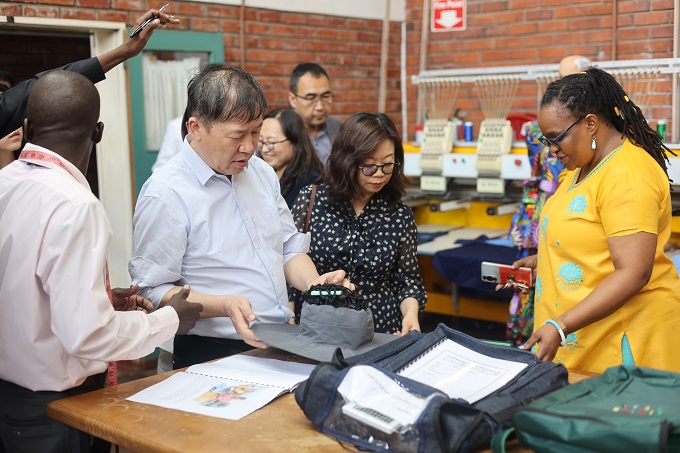
Gender and Community Editor
UNDER the Second Republic, institutions of higher learning are being reconfigured to help them innovate, catalyse industrialisation, collaborate and internationalise their educational ecosystem under a new dispensation that prioritises science, engineering, research and innovation.
This new strategic thrust is beginning to pay off.
At the Harare Polytechnic, for example, student-led start-ups are taking centre stage.
One of the success stories is Crisp n Care, a start-up registered this year.
It focuses on preserving agricultural produce and promoting healthy eating habits.
Following a US$47 000 investment, a mini processing plant is currently under construction within the Harare Polytechnic campus.
The enterprise traces its roots to the 2022 Association of Technical Universities and Polytechnics in Africa Conference held in Victoria Falls, where it competed with innovations from 18 countries and ultimately won the US$3 500 prize.
But at the Harare Polytechnic, the spirit of collaboration extends beyond Zimbabwe’s borders. Its engineering department has partnered a United Kingdom-based company, The Lord of Doing Engineering, on a project to convert vehicles for dual fuel capability — liquid fuel and gas.
This initiative has already seen 10 vehicles being transformed, including one belonging to the institution.
This converted vehicle boasts a range of 200 kilometres on a mere 10-kilogramme gas tank.
However, innovation at the institution is not only confined to scientific endeavours.
The Applied Arts Department has since established a clothing company.
Further, another success story lies in the polytechnic’s water purification plant, which has been operational for the past seven years.
This year, the plant achieved a significant milestone by securing the necessary certifications from both the City of Harare’s Health Department and the Standards Association of Zimbabwe. The plant is now expected to be commercialised soon.
Students are also being mentored to venture into entrepreneurship after graduation.
To ensure sustainability, the Harare Polytechnic retains a share in some of the ventures, which also allows it to recoup its investments.
Harare Polytechnic principal Engineer Tafadzwa Madondo said the Government had created a conducive environment for institutions to innovate and thrive.
“The Government has said we are open for business,” he said.
“Being open for business is not for the Government only, but for all Zimbabweans.
“We have seen that with this stance, the graduate we produce is now of higher quality.
“The graduate now possesses entrepreneurial skills; they become demand-driven.
“Some no longer want to be employed; they want to start their own things.”
The Harare Polytechnic has also forged collaborations with Chinese and Belarusian institutions.
Eng Madondo said there were plans to enter into partnerships that will facilitate the creation of centres of excellence for research, and information and communication technology (ICT), renewable energy, metallurgy and mechanical engineering.
Plans are reportedly at an advanced stage to set up a centre of excellence in Murombedzi through a partnership with Chinese institutions.
“There are a lot of people in rural areas who have no skills, and we intend to harness their talents and capacitate them, whether in dressmaking, coffin- and cabin-making or electrical engineering,” Eng Madondo said.
“We will offer them short courses linked to our departments.
The institution, he added, also has 56 students in China pursuing mechatronics, a new programme.



 Bongani Ndlovu
 Online Reporter