admin
admin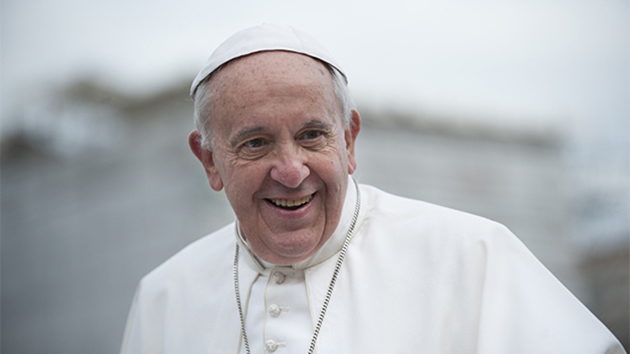
NAIROBI.- Pope Francis warned yesterday that it would be “catastrophic” for world leaders to let special interest groups get in the way of a global agreement to curb fossil fuel emissions as he brought his environmental message to the heart of Africa on the eve of make-or-break climate change talks in Paris.
Francis issued the pointed warning in a speech to the UN’s regional office here after celebrating his first public Mass on the continent: A joyous, rain-soaked ceremony before 300 000 faithful that saw the Argentine Pope being serenaded by ululating Swahili singers, swaying nuns, Maasai tribesmen and dancing children dressed in the colors of Kenya’s flag.
Francis has made ecological concerns a hallmark of his nearly 3-year-old papacy, issuing a landmark encyclical earlier this year that paired the need to care for the environment with the need to care for humanity’s most vulnerable. Francis argues the two are interconnected since the poor often suffer the most from the effects of global warming, and are largely excluded from today’s fossil-fuel based global economy that is heating up the planet.
Yesterday, Francis repeated that message but took particular aim at those who reject the science behind global warming. In the United States, that includes some Republican presidential candidates and lawmakers, who have opposed steps President Barack Obama has taken on his own to cut greenhouse gas emissions.
“It would be sad, and dare I say even catastrophic, were special interests to prevail over the common good and lead to manipulating information in order to protect their own plans and interests,” Francis said.
He didn’t elaborate, but in the United States at least, there is a well-funded campaign that rejects the findings of 97 percent of climate scientists that global warming is likely man-made and insists that any heating of the Earth is natural. Politicians have cited these claims in their arguments that emissions cuts will hurt the economy.
Francis, who has said global warming is “mainly” man-made, said the world was faced with a stark choice: either improve or destroy the environment. He said he hoped the Paris talks would approve a “transformational” agreement to fight poverty and protect the environment by developing a new energy system that depends on minimal fossil fuel use.
“Many are the faces, the stories and the evident effects on the lives of thousands of people for whom the culture of deterioration and waste has allowed to be sacrificed before the idols of profits and consumption,” he said.
“We cannot remain indifferent in the face of this. We have no right.”
His speech followed a similarly emphatic one before the UN General Assembly in New York in September, and in various speeches on his travels to South America and Asia.
Yesterday was the second day in a row that Francis had touched on environmental concerns after he arrived in Kenya for a six-day pilgrimage that also takes him to Uganda today and the conflict-ridden Central African Republic.
Francis’ first full day in Africa began with a meeting with about 25 Kenyan Christian and Muslim leaders. He warned them that they had little choice but to engage in dialogue to guard against the “barbarous” Islamic extremist attacks that have struck the country.
“Dialogue is not a luxury. It is not something extra or optional, but essential,” he said.
He later celebrated Mass before about 300 000 people at the University of Nairobi, where he received a raucous welcome from the crowd as he zoomed around in his open-sided pope-mobile, some 10 000 police providing security. Some people had been at the university since 3am, braving heavy showers that turned the grounds into enormous, slick mud puddles. Others waited in queues 3 kilometres long to get close to the venue. – AP.


 Online Reporter