Online Reporter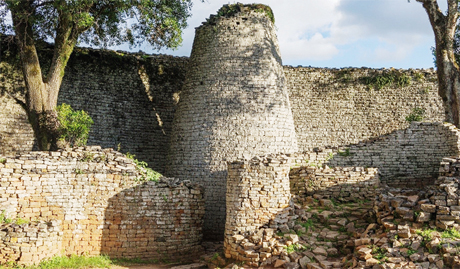
Charles Mavhunga
Tourism Branding
Across the world, destinations are no longer marketed only through landscapes and wildlife.
They are increasingly branded around legacy, wisdom and stewardship: the story of who a nation is, where it has come from, and where it is going.
Zimbabwe now has a strong new chapter in that story. President Emmerson Dambudzo Mnangagwa has proclaimed 15 September a public holiday known as Munhumutapa Day, through Statutory Instrument 148 of 2026 under the Public Holidays and Prohibition of Business Act (Chapter 10:21).
The day commemorates the pre-colonial Mutapa Empire and its contribution to Zimbabwe’s history and identity.
The date also marks the birthday of His Excellency, who turned 84 this year.
For tourism branding, the convergence carries weight. It links an ancient empire of trade, diplomacy and statecraft with a modern leadership narrative of experience, continuity and stewardship. For investors, conference organisers and the diaspora, the message is clear:
Zimbabwe is mature, stable and open for long-term partnership.
Heritage as National Capital
The Mutapa Empire was a sophisticated state that traded gold and ivory with merchants from the Swahili coast, Arabia, India and, eventually, Portugal. It shows that Zimbabweans were engaging with the global economy centuries before colonialism.
By elevating this history to a national holiday, the President has turned heritage into a brand asset. This matters because today’s travellers seek meaning. Cultural and heritage tourism is among the fastest-growing segments worldwide, driven by visitors who want stories and authenticity rather than just sightseeing.
Great Zimbabwe, the Khami Ruins, Matobo Hills and Mosi-Oa-Tunya already give the country world-class heritage credentials. Munhumutapa Day creates an annual platform to package them into festivals, heritage trails, academic symposia and diaspora homecoming events.
Lessons from China: Civilisation as a Brand
China offers a powerful lesson. Its tourism identity rests on continuity with an ancient civilisation, including the Great Wall, the Forbidden City and the Terracotta Army, presented alongside high-speed rail, modern airports and smart cities. The message is that an old civilisation can also be a modern, capable nation.
Zimbabwe can make the same argument.
The upgraded Robert Gabriel Mugabe International Airport, the rehabilitated Beitbridge–Harare–Chirundu highway, and investment in rural roads, dams and energy under the Second Republic show that heritage and modernisation are not opposites. China also shows the value of consistent, long-term planning. Zimbabwe’s Vision 2030 and its National Development Strategies provide a similar framework, signalling to investors that the development trajectory is strategic rather than improvised.
Lessons from Rwanda: Leadership-Driven Branding
Closer to home, Rwanda shows how a clear national vision, championed from the top, can transform global perceptions. Through its Visit Rwanda campaign, global sports partnerships and the Kigali Convention Centre, Rwanda has become one of Africa’s leading conference destinations. Its high-value gorilla-trekking model shows that premium positioning can protect both revenue and conservation.
The lesson for Zimbabwe is that branding succeeds when policy, infrastructure and messaging align. The President’s philosophy, Nyika inovakwa nevene vayo (a country is built by its own people), provides a home-grown narrative of self-reliance comparable to Rwanda’s story of renewal. The principle of leaving no one and no place behind gives tourism a developmental dimension, encouraging community-based tourism in places such as Binga, Chimanimani, Mutoko and Gonarezhou, so that the benefits reach beyond traditional hotspots.
Lessons from Developed Destinations: Conference and Diaspora Tourism.
Singapore and Dubai show how stability and predictability attract meetings, incentives, conferences and exhibitions. Governments and corporations choose destinations they trust.
Zimbabwe’s emphasis on peace, engagement and re-engagement strengthens its case as a venue for regional summits and international conferences, building on facilities in Mosi-Oa-Tunyaand Harare. Ireland and Ghana, meanwhile, have shown the value of diaspora tourism.
Ghana’s Year of Return drew attention and spending by inviting people of African descent to reconnect with their roots. Munhumutapa Day offers Zimbabwe a similar annual moment to invite its global diaspora home to celebrate their heritage, invest, and become ambassadors for Brand Zimbabwe.
Brand Zimbabwe: From Possibility to Reality
Under the Second Republic, tourism has been treated as a pillar of economic growth, with the sector targeted as a key contributor to the Upper-Middle Income vision. The revival of cultural heritage, recognition of historical legacy, and infrastructure development together form a coherent brand proposition: a nation proud of its past, focused on its future and welcoming to the world. To maximise this moment, stakeholders should consider three priorities. First, develop Munhumutapa Day into a signature annual cultural festival with international marketing reach.
Second, create integrated heritage routes linking Mutapa-era and Great Zimbabwe sites with Mosi-Oa-Tunyaand wildlife destinations.
Third, position the day as a platform for investment and diaspora engagement forums, turning celebration into partnership.
Conclusion
Great nations tell great stories. China tells the story of an enduring civilisation; Rwanda tells the story of renewal through visionary leadership. Zimbabwe now has its own compelling narrative, rooted in the Mutapa Empire and carried forward by a leadership that has placed heritage, infrastructure and inclusive development at the centre of national progress.
Munhumutapa Day is more than a holiday. It is a brand statement that Zimbabwe honours its legacy, is steady on its course, and is open to the world. For tourists, investors and the diaspora alike, the invitation is clear: come and experience a nation whose past is its pride and whose future is being built by its own people.
Charles Mavhunga is a Zimbabwean scholar, author, and cultural ambassador pursuing a PhD in Management at Bindura University of Science Education. He is the author of Mbira Virtuosos: Stories of Zimbabwean Mbira Legends (available on Amazon) and co-author of Business Enterprising Skills (Forms 1–4), published by Gramsol Books, Harare and approved by Zimbabwe’s Ministry of Primary and Secondary Education. A recognised Global Cultural Ambassador and member of the Council for the Development of Social Science Research in Africa (CODESRIA), he contributes weekly to The Herald, where he has published over 300 articles on tourism branding. He can be reached at [email protected] or +263 772 989 816.