admin
admin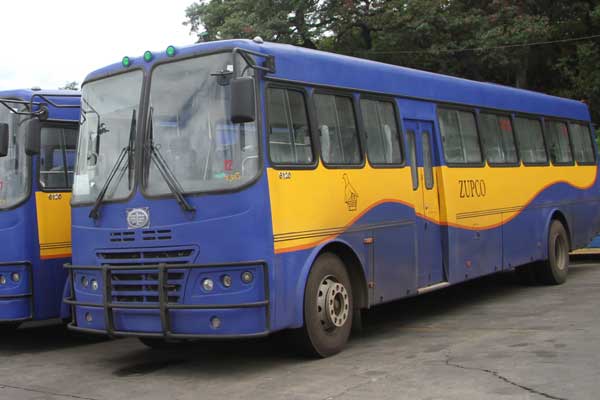
Clive Mphambela
Just how many hours does the average black Zimbabwean spend on average per day going to and from work? What is the cost of the commune in dollar terms, per day, per week per month? What is the economic cost of commuting both in terms of productivity lost and financial cost? What are the economic welfare implications of very long and costly commutes?
What are the risks to National Security, of a 100 percent commuter minibus based public transport system? What are the economic costs of having hundreds of thousands of small, badly maintained ramshackle, and mostly unregistered, non tax compliant commuter omnibus (kombis) having the national responsibility over our urban transport system?
These are just some of the serious and pertinent questions that many economic advisors to the city fathers and Government policy makers must try answers to as we begin to have a serious conversation around implementing a new public transport network based on mass travel.
We must learn from the dramatic rise in commuter fares that followed the announcement of the new fuel pricing framework which had a contributory effect on raising public anger.
Government must move swiftly to implement measures to alter the commuting patterns of the working population so that commuters are not held at ransom by profit seeking taxi operators.
Apart from the fact that the sharp rise in commuter fares was disproportionate to the rise in fuel prices, the public transport system (effectively run by fragmented private players) exposed a major flow, that even the owners of the commuter omnibuses themselves were not in control of the actions of their crews.
Commuter omnibus crews are in fact a law unto themselves, and that in my considered view is dangerous.
George Guvamatanga, Permanent Secretary for the Finance and Economic Development Ministry aptly put it in a televised interview that commuter omnibus fares were now decoupled from the real costs of running their businesses and the fares had become predatory.
Nothing can reasonably justify fares of $3, $4 or $5 for a 5, 10 or even 15-kilometre trip to the city centre. That is a story for another day, however.
Meanwhile, suffice to say, long commutes hurt both workers and businesses in terms of time and financial costs. Ultimately long commutes are bad for the economy at large, as they generally result in “dead weight loss”, that is lost potential GDP or welfare that accrues to no one.
However, the laws of economics say that whenever is a cost, someone is paying. There is never a free lunch.
The current commuter taxi based transport system Tax(es) Lower Income Earners?
Economists have always argued that the lower income earners, bear a disproportionate burden of the social and financial costs of long commuting times and this is worse if the long commutes are costly in monetary terms.
These costs are akin to the lower income earners, who rely on public transportation systems, paying additional taxes.
The commuter taxi system must be replaced by an efficient, low cost mass transit system that utilises scale economies to get hundreds of people to their places of economic endeavour at the lowest cost.
A highly fragmented commuter omnibus system such as the one we have now is inefficient and very costly and if the events of that past few weeks are to go buy, the system also exposes the country to a significant risk, when the public transport system is essentially in irresponsible hands.
A new mass transit system will thus in my view lighten the burdens of the lower income earners. Lets see how?
Fuel consumption economics
Firstly, let us understand that a single large bus carrying between 75 and 100 passengers at a time on a ten kilometre trip will use far less fuel than an equivalent 5 or eight minibus taxes.
A large bus will need a smaller crew and ultimately there are aggregate savings. The savings to be enjoyed at national level in terms of fuel and spare parts imports as well as consumables such as oils and tyres and so forth are huge.
Road maintenance costs vs revenue contribution
Our roads are presently heavily congested. Thousands of commuter minibuses and private vehicles are in use primarily because we do not have an efficient and costly mass transport system. Everyone either drives to work or get a kombi. Road maintenance costs are very high. We need to do an exercise that quantifies these costs as well as the costs of accidents, and so forth.
A crucial question would be understand how many of the small commuter taxis are properly registered and contribute to central government revenues by way of income taxes and PAYE . . . my guess is very few.
Reducing commuting times is a priority
By my off the cuff estimates( not scientific at this stage) the average Harare worker will spend 68 minutes per day commuting to and from work. This is just a bit lower than double the average commute time in both, the United States (measured in 2002), a country known for its long commuting times, and Hungary, a European Union country known to have the longest commute times (Stutzer and Frey 2008).
Closer to home in South Africa, the average commute is 102 minutes for Black South Africans, with White South Africans spending less time commuting to work than black South Africans, 68 minutes per day, according to the 2013 South African National Travel Survey.
Commuting times are long if the transport system is congested and fragmented. A bus and train based system with clear and consistent time tabling will enable transport planners to systematically reduce average commuting times for the economy in a measurable and scientific way.
I am not an expert in that area but I do know that it can be done. We have a tonne of smart transport engineers and gurus in transport economics. Our current haphazard system, of mostly unsafe tin boxes is not the way to go. Let’s move away from it.
Why we should be worried about rising commuting costs
At the social level, because of the demographic groups that are largely affected by these costs, rising costs of transportation mean that any economic growth registered will not be as inclusive as it would otherwise have been, since its usually the lower income workers who are forced to spending larger fractions of their incomes getting to and from work.
Zimbabwean cities, just like the South African cities, have historically been shaped to very large a large extent by the policies of racial segregation which existed for a long time before independence.
This simply means that wage paying work opportunities are more often than not, located very far from home, particularly for black Zimbabweans.
This is why Harare, has several dormitory town for instance. As I have already said, this imposes high commuting costs, both in monetary and time costs.
Impact on employment
High commuting costs increase what economists call “search friction”. This is the cost of searching for paid work. Zimbabwean unemployment is already very high, and we have just added a new dimension to it. If search friction is severe, it actually plays a major in raising unemployment levels due to the fact that job seekers will be located a long way from employment opportunities and thus cannot easily access information about these opportunities.
Low income formal sector workers will pay larger effective taxes on their wages due to long and costly commutes. Long commutes to both formal and informal sector employment disincentivise workers. Some will not be able to bear the extra transport costs and will probably opt out of work. Others will try and pass the costs on to the employers, raising wage pressures.
Finally, let me point out that there is a big disconnect between the policy that has been put out and the infrastructure that is supposed to support it. Commuter shuttles are not at present available and the ranks both the new pick up points and the city ranks are not in order. The new ranks have no amenities and the old ranks are in a state of serious disrepair?
The cost of a clean city
There is another argument that supports moves to revamp the urban transport system. Our cities have been rendered chaotic and ultimately, the city fathers also want to bring order and sanity to the city, starting with the public transport system. However, we should not miss any critical steps. Firstly, stakeholders consultations need to be done and completed. Secondly, I am a firm believer in the fact that Harare especially needs a complete redesign of its public transport network.
In addition to a well-run bus network, a light rail system from Chitungwiza, Ruwa Norton and the Western suburbs is a great idea, supported by a rail ring around the greater Harare. This will take a lot of cars off our roads, with major positive benefits for the economy in terms of lowering the overall cost of doing business and foreign currency savings. And improved productivity. Food for thought.
The writer is an economist. The views expressed in this article are his personal opinions and should in no way be interpreted to represent the views of any organizations that the writer is associated with.



 Online Reporter