admin
admin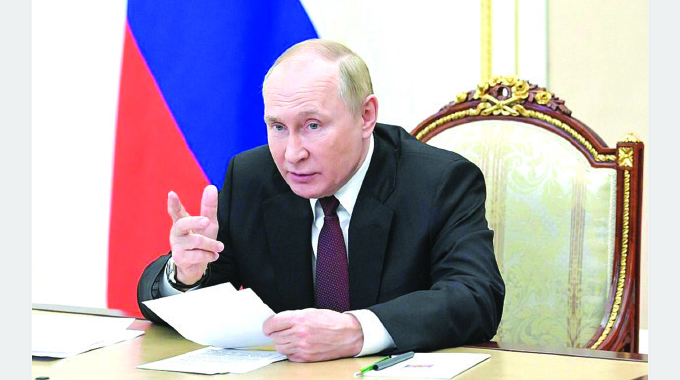
The potential for conflict remains very high both in the world as a whole and at the regional level. We see the rise of new risks and challenges to our collective security.
This is caused above all by a dramatic aggravation in global geopolitical confrontation. The world is changing and becoming multipolar before our very eyes. However, some members of the international community are doing everything in their power to preserve their faltering hegemony and to this end, they are using various political, military, economic, information and other methods and means, from destroying the legal framework of strategic stability to adopting unilateral sanctions against those who reject their policy.
They do not even stop short of openly subversive actions. I am referring to the explosions on the Nord Stream gas pipelines. This actually amounts to the destruction of the common European energy infrastructure. This is being done, although, to put it mildly, these methods are doing colossal damage to the European economy and are seriously impairing the quality of life for millions of people. And besides, they are keeping silent about who has done this and who stands to gain from it.
Some countries have long been using the tactics of blackmail, pressure and intimidation throughout the CIS space. In particular, attempts continue to be made to implement ‘colour revolution’ scenarios, methods involving nationalism and extremism are employed, and armed conflicts, which directly threaten the security of all CIS members, are being stoked.
We can see the goals of those who are doing this in Ukraine, which has been made an instrument of US foreign policy. The country has actually lost its sovereignty and is being directly governed by the United States, which is using it as a battering ram against Russia, Belarus, which is a member of our Union State, and the CSTO and the CIS in general.
At the same time, we can see the United States’ real attitude to its client states.
Ukraine was almost immediately turned into a testing site for military biological experiments and is being flooded with weapons, including heavy weaponry, without any heed to the Kiev regime’s statements about its desire to obtain nuclear weapons. The Kiev authorities have declared this desire publicly, but everyone keeps silent. We also know about their plans to use a so-called “dirty bomb” as a provocation.
As for threats in the CIS space, I would like to say that the level of threat coming from ISIL, Al Qaeda and other terrorist organisations has not decreased. They are trying to infiltrate CIS countries and are creating undercover cells, while the concentration of terrorist groups in Afghanistan, especially on the borders of Central Asian states, certainly carries the potential risk of invasion in the region.
It is obvious that the CIS as a whole and its individual states have never faced such comprehensive threats before. It is therefore our common task to protect our nations from them as much as possible, to strengthen stability and peace in the CIS space and to continue to promote mutually beneficial integration processes, which have provided an example of truly partner relations over the past decades.
We must make use of all the forces and means available to us to fulfil these tasks.
One of the priority is to jointly counter any attempts to interfere in the internal affairs of the CIS countries. We know what this is. To resist it, we must more actively reveal and curb the work of foreign secret services, aimed at destabilising the situation in each individual CIS member-state.
It is also important to continue our coordinated systemic struggle against terrorism. Recently, there has been positive dynamics in this respect.
The black market in arms operating in Ukraine is creating serious challenges. Cross-border criminal groups are actively involved in smuggling these arms to other regions. These are not just small arms. There is a persistent risk of criminals getting hold of more powerful weapons, including portable air defence systems and precision weapons.
Furthermore, the act of terror on the Crimean Bridge and sabotage attempts at the Kursk Nuclear Power Plant – after all, such attacks have already been carried out around it – and many other incidents show the need to take enhanced security measures at critical transport and energy facilities.
Some tasks remain as urgent as before. This applies to countering cybercrime and drug trafficking, eliminating cross-border criminal groups and, of course, developing cooperation in protecting state frontiers. — The Kremlin, Moscow



 Online Reporter