Online Reporter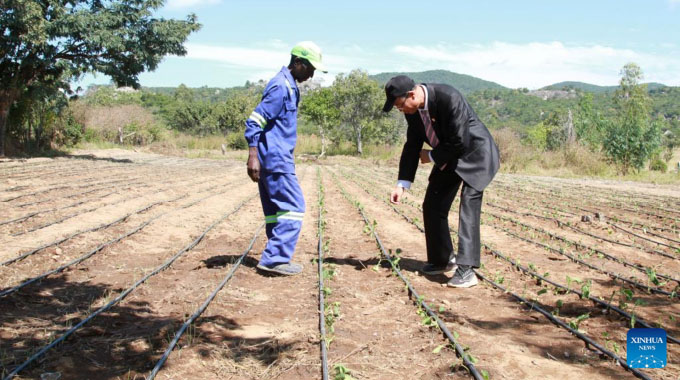
Dr Nandi Mtetwa
A Chinese friend says he is usually met with incredulity when he tells colleagues and acquaintances that in 1980 many African countries, including Zimbabwe, were richer than China — at least measured by the Gross Domestic Product (GDP) and general living conditions.
What drives this utter disbelief is that China, in the past 40 years, has grown exponentially in terms of its wealth and economic well-being. It seems a long time ago when China was among the world’s poorest nations. Interestingly, some countries that were with China in the same poverty bracket — or even slightly better —have stagnated or even regressed.
China’s success in alleviating poverty — sometimes termed poverty eradication or elimination — has become a global phenomenon. Many countries of the world now seek to find answers in China’s example.
Zimbabwe is no exception. In this article I explore key aspects and highlights of China’s fight and success against poverty, and what countries like Zimbabwe can learn. Interestingly, China is willing to share such lessons with the developing world and has initiated some programmes and projects that will see countries adopt a practical approach with tangible results.
At the end of 2020 China announced proudly to the world that it had managed to eliminate absolute poverty. This was a feat — 40 years in the making — that marked some of the historical successes of China in the new era.
Historically, China had struggled with eliminating poverty because of the sheer numbers of Chinese people, the vastness of the country and failures of economic policies from the feudal times until the 1970s when the reform and opening up period became — and eliminating extreme poverty was stated as a goal.
In February 2021, President Xi Jinping declared the “complete victory” in eliminating absolute poverty, which involved the lifting of 98,99 million rural residents from poverty; and the removal of the designation of 832 impoverished counties and 128 000 villages as poor.
The sheer scale of this feat has made it key to study: China’s success in eradicating poverty is widely acknowledged globally because of its quantity and quantity aspects, as well as the methodology underpinning the endeavour which could well rank as a success for humanity.
China’s poverty eradication dovetails with — and preceded the target by —the United Nations whose eradication of extreme poverty — the first target of the UN 2030 Agenda for Sustainable Development — sets out key priority areas such as the elimination of poverty, inequality and hunger; attainment of a high standard of living, quality of life and well-being for all citizens and instituting of measures such as modern agriculture for increased productivity and production.
As home to nearly one fifth of the world’s population, China’s poverty eradication is a service to humanity itself. China approached the task of poverty alleviation as a human philosophy and as a key deliverable of its modernisation agenda. According to China, poverty is a “chronic affliction of human society and a common challenge faced by the whole world”.
“Poverty and its associated problems, including hunger, diseases, and social conflicts, are serious impediments to people’s pursuit of a better life, so the eradication of poverty has always been a wish to be fulfilled. The history of humankind is the history of relentless struggle against poverty,” says the white paper titled, “Poverty Alleviation: China’s Experience and Contribution”, released in April 2021.
The paper went on to argue that: “Poverty is not predestined, nor is it unconquerable”. It said China’s experience in poverty alleviation indicates that courage, vision, sense of responsibility, and the eagerness to take on challenges are the most essential.
The paper correctly situated China’s struggles with poverty: China is the world’s largest developing country, with a population of 1,4 billion. In addition to its weak foundations and uneven development, the nation had long been plagued by poverty at a scale and a level of severity that has rarely been seen anywhere else in the world.
From paper to practice
The beauty of China’s poverty eradication story is that it is not just a tale on paper. It is a lived experience and China has opened up the world to visit various sites in China where poverty was eliminated in the counties and villages.
Thousands of Zimbabwean politicians, academics, journalists and civil society have had the privilege of going to China and learning from its experience.
China has given numerous countries access to successful models in poverty alleviation and ensuring food security as well as undertaking training and seminars both at the level of the United Nations Industrial Development Organisation and in sites across several countries to share ideas and actions in targeted poverty alleviation with other developing countries.
Further, in the context of co-operation between China and Africa within the Forum on China-Africa Co-operation framework, poverty alleviation has been a key theme. At the last Summit in Beijing, the 10 Partnership Areas that China outlined included development co-operation, with China pledging to implement 1 000 “small and beautiful” livelihood projects.
To improve agriculture and livelihoods, China pledged Africa with one billion yuan (about 140 million US dollars) in emergency food assistance, send 500 agricultural experts, and establish a China-Africa agricultural science and technology innovation alliance. Further, efforts would be made to encourage two-way investment for new business operations by Chinese and African companies, enable Africa to retain added value, and create at least 1 million jobs for Africa.
The United Nations secretary general Antonio Guterres noted that “China’s remarkable rapid development, including eradicating poverty, provides a wealth of experience and expertise. Africa can maximise the potential of China’s support…”
In the 14th Five Year Plan, the previous development blueprint for China, the Asian giant undertook to use its vision and contribute its strength to resolving global development issues and implementing the United Nations 2030 Agenda for Sustainable Development, which saw some concrete interventions in assisting some countries in improving their rural living environment and meeting local needs in transport, work and life. For example, it helped Mauritania to build a highway in its Hope Delta to support local agriculture and animal husbandry.
In other African countries of Lesotho, Rwanda and the Central African Republic, China launched pilot projects on Juncao planting techniques, to help rural households to increase their incomes. In Liberia and Ethiopia, China imparted bamboo weaving techniques, encouraging farmers to tap local bamboo
In Chad, China launched assistance projects to upgrade their irrigation systems, and offered agricultural machinery and supplies to ease local shortages. In Ethiopia, Kenya and Uganda, China provided timely aid during locust plagues to help restore agricultural production.
China has also established the Sino-Africa Joint Research Centre for scientific co-operation in agriculture. It has sent agricultural specialists overseas to offer technical training programmes on raising rice yields in Côte d’Ivoire, upgrading aquaculture in Zanzibar, Tanzania, while providing technological support and services for agricultural development in Africa, China initiated under a “10+10” co-operation mechanism between Chinese and African agricultural research institutes for the joint development of new crop varieties, technologies, and equipment suited to the African continent.
Tied to this, China is helping Africa develop agro-industrial chains. It established an agro-product preliminary processing centre in Cape Verde, a corn flour production plant in Zambia.
Agriculture is the foundation of economic growth and social stability in developing countries in the Third World. China is assisting developing countries to leverage their own strengths to accelerate agricultural progress and ensure food self-sufficiency and food security. This is achieved in part through improving agricultural productivity.
According to China, by the end of 2019, the country had dispatched 81 agro-technology teams composed of 808 experts to 37 Asian and African countries; China had assisted African countries in setting up 22 agro-technology pilot centres to promote high-yield crop varieties, helping farmers increase productivity and boost their confidence in development.
China’s small and beautiful projects in Zimbabwe
In the past couple of years, China has taken concrete steps to assist Zimbabwe fight poverty and hunger through the establishment of agriculture demonstration sites, deployment of expert teams and the upgrading of agriculture infrastructure.
A flagship of this co-operation is the China-aided Agricultural Technology Demonstration Centre (CATDC), located at Gwebi Agricultural College, about 27 kilometres north-west of Harare. Spread across 109 hectares, the centre functions as a national hub for agricultural trials, mechanisation demonstrations and high-level farmer training. Its significance lies not only in its infrastructure, but in its role as a bridge between theory and practice — exposing students, extension officers and farmers to modern cultivation methods, improved seed varieties and small-scale mechanisation suited to Zimbabwean conditions. In a country where productivity gaps among smallholder farmers remain a key driver of rural poverty, such exposure is transformative.
The Shamva Agricultural Demonstration Village, was launched in May 2025 in Zindi Village, Mashonaland Central. This project directly targets the structural challenge facing many rural households: the trap of subsistence production. By focusing on citrus and crop training, introducing solar-powered cold storage, and supporting agro-processing facilities, the Shamva initiative seeks to move farmers up the value chain — from producing merely to survive, to producing for markets. Cold storage reduces post-harvest losses, while agro-processing extends shelf life and creates local employment. In poverty reduction terms, this is critical: income stability, not just yields, determines rural resilience.
The Shamva project came after the Zvimba demonstration centre established in 2019 has focused on high-yield rabbit and indigenous chicken production — livestock systems that are affordable, nutritionally important and well-suited to smallholder conditions.
The year 2025 ended on a high note with the rollout of Juncao technology. The Juncao concept involves the cultivation of giant mushroom grass. Juncao is a multi-purpose technology: it enables the production of edible mushrooms — a high-value, low-land-use food source — while also serving as high-protein livestock feed. In a climate-vulnerable country, Juncao’s resilience and versatility offer practical answers to food security, nutrition and income diversification. Its rapid adoption reflects China’s emphasis on adaptable, low-cost technologies that can be scaled without heavy capital investment.
In mid-December, Ambassador Zhou extended support for the upgrade nine key irrigation schemes across six provinces, an investment running into millions of dollars, pledging more if the model worked.
Over and above this, Chinese agricultural experts have been working directly with farmers, students and institutions.
They have been undertaking a key mandate ranging from demonstration to policy advice, technical promotion and capacity building.
China is not only providing a blueprint on paper, it has shown that it can take key lessons from its journey to theatres and laboratories across the world to demonstrate how things are done. Zimbabwe is privileged to be among countries China has close technical and political relationships with.
It is crucial to take vital lessons from China, particularly regarding political will, policy formulation, planning and implementation. There should also be committed technocrats and volunteers who are prepared to ensure the implementation of the plans until the war on poverty is won.
Dr Mtetwa is a Swazi policy and development practitioner and expert based in Harare.



 derick.khumalo