admin
admin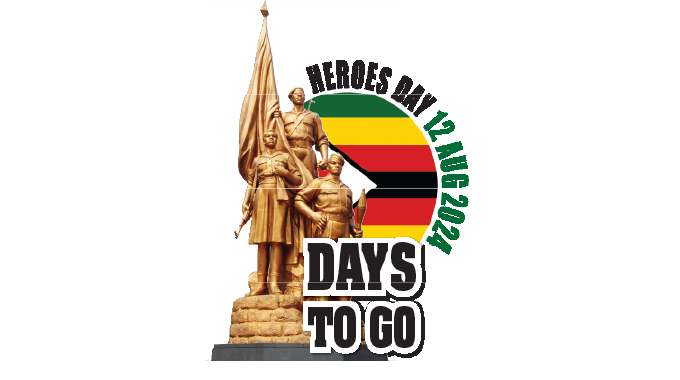
Elliot Ziwira
Senior Writer
As Heroes Day approaches, I find myself immersed in the intricate stories of sacrifice, determination and resilience that have woven the fabric of the nation’s history.
Growing up in Dombodzvuku Village in Murehwa, I was surrounded by the remnants of a struggle that continues to inspire and haunt me.
The skeletal remains of uncle Thomas Chirimuuta’s once-regal homestead, the faded memories of his sisters, who disappeared into the liberation war, and the symbolic graves that mark their absence – all whispers of the past – beckon me to revisit the untold stories of our heroes.
In this memory of home, uncle Chirimuuta’s once-imposing homestead, now reduced to a skeleton, reigns. The place is deserted now, since Chirimuuta and his wife, Mai Rudo, are both late. Having started their own families, the couple’s children had moved on.
On a visit to this homestead, located to the south-east of our home, you would be struck by the family’s fenced graveyard on the southern fringes of the yard close to the thatched kitchen, and further away from the disused barn.
The discerning eye would not miss Chirimuuta’s farming pride, a John Deere tractor buoyantly reminiscing on its heyday in a ramshackle way crammed between the yesteryear marvel of a house and the barn.
Several black granite tombstones grace the graveyard, among them two smaller ones lying footstone to headstone. The initial impression is that they are children’s graves, yet they are not. They are emblematic tombs for Sekuru’s younger sisters; Michael’s mother’s and her younger sister’s.
Mike was known to us from the time we could remember names. A quiet and intelligent boy, he lived under the wing of uncle Samuel, Thomas Chirimuuta’s younger brother, whose homestead is a stone’s throw away from the graveyard.
Samuel, a butcher, and farmer, like his elder brother, is also late.
During school holidays in the village, we would sometimes play with Mike at his uncle’s place.
One morning at the height of the protracted liberation struggle, memory recalls, Thomas Chirimuuta’s two sisters disappeared from home. The family learnt later that they had crossed the border to join freedom fighters in Mozambique.
Mike was barely three-years-old when his mother answered the liberation call.
My mother talks glowingly of the beautiful sisters.
After the struggle, the family waited anxiously for the return of their loved ones, like thousands of other families. Thomas Chirimuuta and his father went to demobilisation points countless times, with each search being fruitless. Though spiritually weighed down, they continued to wait.
Mike waited, too, for his beloved mother, who loved him more to sacrifice for his freedom, and a better life in a new Zimbabwe.
Much later, word came through that the sisters died in an inferno, alongside four other freedom fighters, when another woman’s son or daughter sold out. Their charred remains were buried in shallow graves somewhere at the front.
Follow-ups revealed that, indeed, the wait was over, as their names were on the list of those who could not make it to the Promised Land.
However, custom informs that one cannot just die and be forgotten; it is unAfrican. There is need for closure, and a final resting place for the departed. So, the family had to perform a traditional ceremony to bring the deceased to the fold.
The ritual was performed years after Independence in 1980 through the burial of two goat heads to symbolically represent the departed daughters of the soil. Another ceremony was done to bring their spirits home, thus, putting closure to the anxiety of waiting.
And, as I delve deeper into the stories of our struggle, home implores me to take heed.
To the west of our homestead, beyond Ba Linda Bowa’s, there is a valley where my mother’s vegetable garden is, among others.
If you were to stand a few metres from the foot of a hillock after the boundary of BaLinda’s fields, facing Muketiwa’s garden – before my mother’s, further west, with Sayiriyo’s to your right, a gaze from the village cemetery to the north, you would see a raised platform. At the edge of this platform was a mutamba tree, whose stump is still visible.
It is here that herdboys gather to end or start their day in the veld.
If you were to look closely around the stump, you would see a depression. And, if you were to ask my mother or any other villager, not the herdboys of course, they would tell you that the depressed area marked Cde Diamond’s grave.
A handsome young freedom fighter, my mother recalls, Cde Diamond left school to join the struggle when he was in Form Two. She also remembers that his parents and other relatives came to exhume his remains for reburial in Mutare after Independence.
On the same day that he fell, Cde Shacky and three other sons of the soil perished, and my cousin Florence was shot, although she survived. Now late, she was part of Vanamukoma’s intelligence network; Chimbwido.
It was the day that my paternal great-grandmother, Mbuya Alice, and Sekuru Bowa’s homesteads were razed to the ground. They were bases for freedom fighters. On that particular day, someone sold out to Ian Smith’s soldiers.
The slain guerrillas’ bodies were paraded to the villagers, save for Cde Diamond’s, because the Rhodesian soldiers could not locate it, before being ferried to an unknown destination.
Some bodies, along with those of vanamujimbas and chimbwidos (war collaborators), and others suspected of harbouring freedom fighters, were thrown into Nyakambiri River behind Chitsotso, the sacred mountain, to be fodder to underwater creatures of prey, or cast into the dip tank at Guwati.
Such is the sacrifice for freedom.
There are many such stories about the liberation struggle, which I gleaned from my mother, her brother, Sekuru Munetsi Chizema, and his son, Sekuru Chester, both late provincial heroes interred at Harare Provincial Heroes Acre.
May their souls rest in eternal peace! They played their part well.
In this journey of remembrance, I am reminded of the power of memory and the significance of the Tomb of the Unknown Soldier.
This imposing monument testifies to the bravery and sacrifice of our freedom fighters, whose names may be unknown, but whose legacy lives on through us.
The bronze statues of the three soldiers – two men and a woman – represent the universality of struggle and the steadfast support of womanhood and motherhood.
The national flag, AK 47 rifle, Bazooka, and rocket launcher etched into the statue serve as a poignant reminder of the tools that brought freedom to our doorstep.
The base of the Tomb is covered with stonework depicting Great Zimbabwe – symbolically representing the historical heart of the nation and the land that precipitated the desire for freedom.
Since the dead live in the living, and the living speak to the departed through intercessors or spirit mediums, the link between the living soldiers and those who died in battle is resplendent in the Tomb of the Unknown Soldier.
The standing statue portrays the living soul, while the tomb supporting them portrays the dead. Those who made it to the new country; the brave war veterans, and the gallant ones, who breathed their last in the trenches, share the spirit of sacrifice.
Thus, all are equally represented in the Tomb of the Unknown Soldier.
The spiritual dimension is depicted through the shiny black granite, portraying a final resting place and appeasement to the souls of our fallen heroes, like Sekuru Chirimuuta’s sisters, my father’s aunts, whose bones are scattered across the Motherland and beyond.
As I explore the stories of Cde Diamond, Cde Masweet, and Cde Chihombe Madala, which have been internalised in me, I am struck by the realisation that our liberation struggle was not just a fight for freedom. It was a demonstration of the human spirit’s capacity for love, hope, and determination.
The shallow graves, disused mines, caves, and rivers that consumed our gallant sons and daughters, hauntingly remind us of the true cost of our independence.
The enduring story of Mike, who waited in vain for his mother’s return, and the countless families who suffered the same fate, underscore the human toll of war.
This Heroes Day, as we lay wreaths at the Tomb of the Unknown Soldier, let us not only honour the memory of our fallen heroes, but confront the complexities of our shared history as well.
It is only pertinent that we celebrate the unsung heroes who continue to shape our nation’s narrative and strive to build a future that celebrates their sacrifice.
We should remember the struggles of our past, not just as a series of events, but as an embodiment of the human soul’s capacity for resilience and hope.
As we move forward, we have an obligation to carry the legacy of our heroes with us. And, may their stories continue to inspire us to build a brighter future for all Zimbabweans!


 Bongani Ndlovu