daniel chigunwe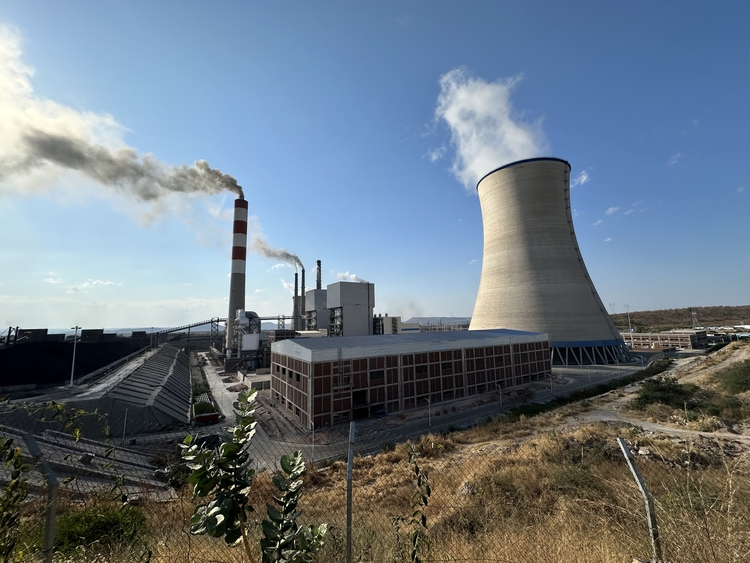
Nelson Gahadza
Industry says there has been improvement in the power supply situation in recent weeks and hopes this is sustained on a commercially viable scale.
Zimbabwe’s power supply situation has remained a significant operational risk for several companies that ended up using expensive alternative sources.
However, Hwange Power Station’s Unit 7 was recently reconnected to the national grid, resulting in the average production rising to 800 units.
Unit 8, which together with unit 7 has combined capacity to produce 600 megawatts, is also being commissioned and is already churning out a significant amount of electricity to the national grid.
Confederation of Zimbabwe Industries (CZI) president Kurai Matsheza confirmed to Business Weekly that power supply has improved. However, there remained other challenges impacting the industry, he said.
“There is some improvement and we hope it will sustain like that. Unit 7 is feeding in but they are still confirming whether it is commercially available.
“They have started testing unit 8 and it means feeding into the grid but commercial availability will be some months down the line, but as they test, we consume that power, therefore, we feel the improvement,” he said.
According to the National Development Strategy 1 (NDS1), providing reliable and low-cost energy access is the Government’s top priority and an efficient energy supply sector is in line with the Government’s intention to provide economic growth and stability.
As a result, the government intends to increase Zimbabwe’s overall electricity supply from 2 317MW installed capacity to 3 467MW by 2025, over 1 000 MW in less than four years.
Analysts contend the power crisis requires long-term solutions and, given relatively high fuel prices, solar energy becomes the next best and optimal energy source.
Kariba Power Station, which is averaging 900MW, is currently at risk of reduced production during the third quarter of the year as the dam level recedes.
Matsheza said the cost of production remains high due to a myriad of challenges. However, what is keeping industry alive is a result of demand.
“If there is low demand, there will be no money, aiding another challenging dimension to Industry. But for now demand is still there and the issues of electricity were among the biggest challenges drawing us back,” he said.
Resources group RioZim Limited recently said power supply remains a major threat to the Group’s operations, but the focus for the year is to stabilise power supply across all its operations to ensure consistent plant throughput.
The Group is already focusing on backup power generators across the mines albeit this will be at a significantly high operating cost.
RioZim is an integrated mining and metallurgical company in Zimbabwe with an extensive portfolio of resources in gold, base metals, diamonds, coal and chrome.
Its mining operations include Renco Gold Mine in Masvingo Province, and Cam & Motor Gold Mine and Empress Nickel Refinery, both in Mashonaland West Province.
According to the latest Chamber of Mines 2023 state of the mining industry survey report, Zimbabwe’s mining sector power consumption is expected to increase by 20 percent in 2023 driven by ongoing capital projects.
Various players are planning to invest in alternative power sources such as solar projects to supplement their power requirements.
The mining industry continues to be an important sector in the Zimbabwean economy and the government’s economic blueprint, the National Development Strategy 1 (NDS1), gives the mining industry a central and important role.
Brick manufacturing company, Willdale, also recently said poor electricity supply had hampered its operations, particularly in the extrusion and firing of structured kilns, resulting in reduced output.
Willdale specializes in manufacturing and marketing bricks for the construction industry. The manufacturing process requires significant and constant power supply.
Economist Dr Prosper Chitambara said the issue of power is a big challenge, but in the short term there has been an improvement and the hope of Hwange 8 coming on board would improve the situation.
The country was plunged into a difficult power supply situation by the effects of climate change, as water levels at the Kariba Dam significantly reduced.
On the other hand, perennial challenges at Hwange had persisted while the small thermals were non-operational most of the time.



 Online Reporter