admin
admin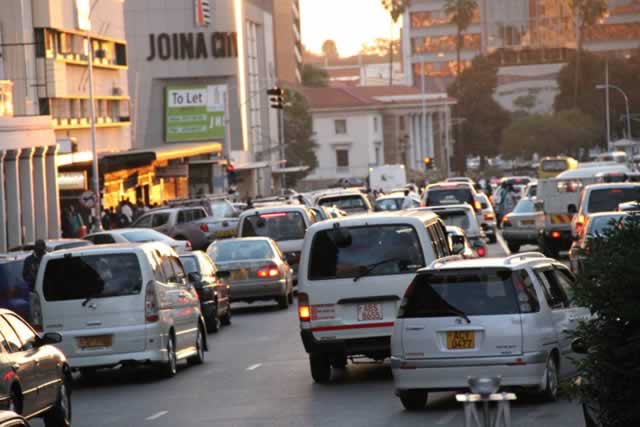
Beatrice Tonhodzai-Ngondo Make A Difference
DRIVING in Harare has certainly become a lot tougher than it used to be. It takes longer now to get to your destination especially when driving.
I actually think at times it is faster to walk to get where you need to go than to drive. This is no longer the time to drive to a destination that is a couple of metres away. There are just too many cars on Harare’s roads at the moment that you wonder what the future will be like.
Sitting in a traffic jam one night recently after it had drizzled a bit across the country, I got thinking.
I recently was in Stockholm, Sweden, at the invitation of the Swedish Embassy in Zimbabwe and was impressed by the transport network they have there.
For busy routes such as the Airport to the centre of the city, an efficient train system operates, which uses everything natural as the city embraces the call to go green as a way of preserving the environment.
As the effects of climate change become all evident across the world, including here in Zimbabwe, many countries are doing their bit to try and preserve the environment at all costS. Some have started manufacturing cars that are only powered by natural gases, while others are even planning and constructing towns or areas that are totally green in the materials used to build, the transport system, the way plants, water bodies and nature are all catered for.
I saw an area in Stockholm where everything is natural where residents of the area are even provided with bicycles to use as a means of transport. In Stockholm they have made wonderful strides, which I could not help but admire.
Thus as I sat in the traffic jam, caused by those little showers that had enveloped the city, I began to seriously think of the volume of cars on our roads over the past five years.
It has been a gradual build-up and today if you drive into any of the country’s major roads leading in and out of the city, irrespective of the time of day, you will sweat.
In the past, Fridays were known to be bad for traffic because of how people generally knock off work early and start moving up and about doing some other errands. These days there is no difference between a Friday and a Monday.
Driving through town with my sister who had been away from Zimbabwe for some years the other day, she said; “. . . how can there be so much traffic as if it is a Friday?” To her understanding, there should not have been that much traffic in the city on a weekday at that of the day when most people would have been at work.
She also expressed excitement at the volume of cars driven by Zimbabweans, especially the big, top of the range vehicles.
Her exact words were: “Finally, we have arrived and done it as a people. To think that in the past cars were something special.
Now almost everyone with some form of income can afford to save and buy a car. This is what we always wanted.”
She went on to marvel at the number of big and posh vehicles saying: “And when Zimbabweans do something, they go all out. Look at those big cars. My only worry is that should they not be for the highway while people use smaller cars in the city?”
I could not help but take a moment to think about that. I then remembered an argument at my friend’s place the other day when her husband was asking to use her smaller car, a Mercedes-Benz C200 to go into town on a Saturday.
He drives a huge Toyota Prado. His argument was that it would take him less time to go into town quickly and come back in her car than his.
She was refusing saying she also wanted to go to the shops and would struggle to get parking space for his huge car.
The husband took a moment to explain to me that a big car is a nightmare in Harare these days because of parking issues and also just because it is not as easy to manoeuvre as much as the smaller car.
Now, as he spoke I wondered whether as people we ever think about such things or once there is an opportunity to get a car or we just want the big and flashy car.
We do not think of how much fuel these big cars can guzzle, are expensive to service and maintain and how they are more suitable for off road and long trips.
We just want them for status I guess.
Because as my sister told me, coming from a time when cars were a preserve for the white folk and the rich, everyone now wants to experience that which comes with owning a car too.
A car is a status symbol and as such, it is understandable that everyone wants to have one and it makes sense why there are so many cars on our roads.
But are the roads ready for the avalanche of cars suddenly unleashed on them? Also, does the city have adequate space too?
Ever waited for 30 minutes to find a parking spot in town?
That happens a lot especially if you need to quickly get something done in the CBD.
Then there are roads like Samora Machel, Jason Moyo and Kenneth Kaunda which get so clogged up at all times of the day because they lead in and out of important key points in the city.
The vehicle population in the country, in particular Harare, should start posing some serious food for thought to not only local authorities but to the Government as well.
In the long term, what is the plan?
Is it urban tollgates, I wonder?
It needs some innovation to come up with solutions.
Yes, one-ways have been created to respond to the congestion issue but as we can all see, we are still far from arresting this problem and it will get worse as more and more people buy cars.
We should also start thinking of the environment. What is its place in all this? In preserving today, we make a difference for tomorrow.
Feedback: [email protected]


 Online Reporter