admin
admin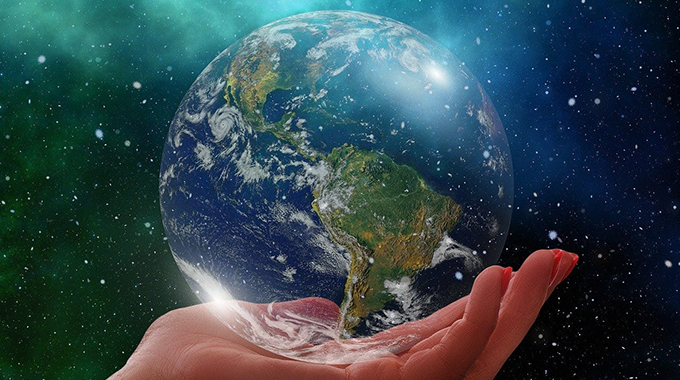
Flora Teckie
A Bahai Perspective
Earth Day is observed on April 21.
It is opportune to reflect on how to appropriately protect, preserve, and use the earth’s natural resources, and how our attitudes should be towards Mother Earth — the source of our sustenance.
We, as human beings, are custodians of the earth, and have the obligation to ensure that nature is respected and protected as part of a divine trust for which humanity is ultimately answerable.
According to the Bahá’í International Community, “The beauty, richness and diversity of the natural world are all expressions of the attributes of God. This inspires in us deep respect for nature. Humanity … is responsible for using the earth’s raw materials in a way that preserves harmony and contributes to the advancement of civilisation”.
In our world today there are various environmental challenges — such as climate change, deforestation, soil erosion, plastic pollution, and water shortages — and it has become clear that focussing mainly on the material aspects of environmental challenges, without looking into their moral and ethical dimensions, is counterproductive to humanity’s long-term well-being.
Need for a united effort to preserve our natural resources
Global climate change, and other environmental problems, are now challenging us to rise to the next level of our collective maturity — a maturity which calls for us to accept our fundamental unity, and the fact that we are all one people living on one planet: that we are all members of one human family.
“Setting humanity on a more sustainable path to the future” in the Bahá’í view “involves transformation in attitudes and actions”.
It will depend on our unity as humanity. A globally-accepted vision for the future, based on unity and cooperation among the nations, races, creeds, and classes is necessary, because as long as one group of nations perceives its interests in opposition to another, progress will be limited and short-lived.
Furthermore, the need for international co-operation to protect the environment cannot be over-emphasised.
The local, national and the international communities are very much linked through the environment.
“In order to progress beyond a world community driven by a largely economic and utilitarian calculus, to one of shared responsibility for the prosperity of all nations”, says the Bahá’í International Community, the principle of oneness of humanity “must take root in the conscience of the individual. In this way, we come to recognise the broader human agenda — which subsumes those of climate change, poverty eradication, gender equality, development, and the like — and seeks to use both human and natural resources in a way that facilitates the progress and well-being of all people” and “As consciousness of the oneness of humankind increases, so too does the recognition that the wealth and wonders of the earth are the common heritage of all people, who deserve just and equitable access to its resources”.
Moral and ethical dimensions in addressing environmental challenges
We will always need material resources to sustain civilisation. As we learn how best to use the earth’s raw materials for the advancement of civilisation, we must be conscious of our attitudes towards the source of our sustenance and wealth.
Focussing mainly on the material aspects of environmental challenges, without considering their moral and ethical dimensions, is counterproductive to humanity’s long-term well-being.
Instead of exploiting the earth’s resources without due regard to sustainability, we should be asking how to live with an ethic of respect, care, and justice towards all life and nature.
According to a statement of the Bahá’í International Community, “only a comprehensive vision of a global society, supported by universal values and principles, can inspire individuals to take responsibility for the long-term care and protection of the natural environment”.
Justice must be observed in utilising the earth’s resources. Upholding justice implies moving from self-interest to a mode of sharing and caring for our natural resources.
It is clear that the relationships that link people to one another have a direct impact on the physical resources of our planet.
There is a close relation, for example, between inequality and environmental degradation.
The systems and practices that have resulted in large segments of society facing poverty, have similarly impoverished the natural environment. For example, the destructive impacts of climate change are aggravated by the extremes of wealth and poverty.
“A more balanced attitude toward the environment must therefore address human conditions as consciously as it does natural ones. It must be embodied in social norms and patterns of action characterised by justice and equity. On this foundation can be built an evolving vision of our common future together”, states the Bahá’í International Community’s statement to Paris Conference entitled: “Shared Vision, Shared Volition: Choosing Our Global Future Together”.
A global action for preserving the beauty and richness of Mother Earth will therefore require commitment to higher moral standards, and a vision for the future, based on unity, justice, and willing co-operation among the people of all nations, in addition to technical and economic considerations.
For feedback please contact: [email protected] or [email protected]
Website: www.bahai.org



 Online Reporter