Chronicle Editor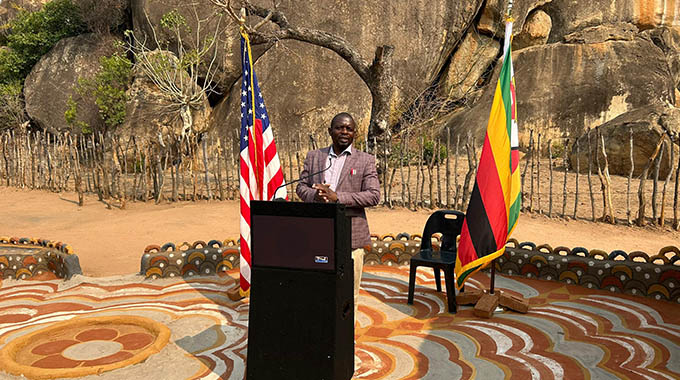
Mbulelo Mpofu, recently in Nathisa, Matobo
A SENIOR Lecturer in Archaeology at the University of Zimbabwe (UZ) has presented a compelling overview of the significance and preservation plans for Zimbabwe’s ancient rock art, particularly in the Matobo region.
Professor Seke Katsamudanga, spoke eloquently at the launch of the Ambassador’s Fund for Cultural Preservation (AFCP) project by U.S Ambassador to Zimbabwe, Pamela Tremont. The art, dating back over 10 000 years, serves as a crucial link to the historical, cultural, and scientific legacy of the San communities.
Prof Katsamudanga said the rock art of Zimbabwe is not merely decorative; it is a profound medium of communication, conveying social lessons and spiritual beliefs of ancient peoples.
The imagery found in Matobo features dynamic scenes of dancing, hunting, and resource gathering, along with intriguing figures that blend human and animal characteristics. These depictions provide valuable insights into the environmental conditions and cultural practices of the time.
“The rock art of Zimbabwe is an important resource that has historical, cultural and scientific value. The rock art in Zimbabwe, and especially, that in Matobo has been dated to more than 10 000 years ago. It shows us that people of the time had already begun communicating through visual art.
“Obviously, the art had meaning to the people, and they had to share and exchange information. The rock art conveyed social lessons and in other contexts it communicated spiritual and religious information. In the art, we see dancing figures, hunting scenes, gathering of resources from plants, and many other activities. Sometimes, there are strange images with combinations of human and other animal or plant features. We also read about the environmental conditions of the time,” he said.
Yet, the disappearance of San communities has hindered the continuity of these artistic traditions, leading to varied interpretations of the rock art’s meaning.
Professor Katsamudanga noted that while research has recognised patterns and themes within the art, understanding is further enriched by oral traditions collected in the 19th century from San communities in southern Africa.

Despite the durability of the rock art, it faces significant threats from environmental factors and human activities. Climate change and vandalism, including graffiti, pose serious challenges to its preservation.
He outlined that organisations such as the National Museums and Monuments of Zimbabwe, National Parks, and local initiatives like Amagugu have worked tirelessly to protect this heritage. However, the involvement of local communities, particularly those around Ward 17, has been essential in safeguarding these cultural treasures.
The newly launched project aims to enhance community participation in the preservation of rock art. By fostering collaboration between heritage professionals and local residents, the initiative seeks to empower communities to take an active role in protecting their cultural heritage. A key component of the project includes a rock art competition designed to raise awareness and engage locals in preservation efforts.
Professor Katsamudanga said in the Matobo National Park, where many of Zimbabwe’s rock art sites are located, monitoring programmes are being established to assess the impact of wildlife and increased visitor traffic on the art’s integrity. One proposed solution involves paving the floor at Pomongwe cave to mitigate dust accumulation, which threatens the artwork’s preservation.
Professor Katsamudanga underscored the importance of a multifaceted approach to heritage conservation that includes community education, scientific research, and sustainable practices. The project will document its activities, producing a documentary, a book, and a comprehensive database of recorded sites. These resources will be disseminated through social media and other platforms, expanding the reach of the heritage awareness campaign.
“The project is documenting all these activities and will produce a documentary, a book, and a database of the sites recorded. Availability of these products on social media platforms and through other outlets will expand the reach of the heritage awareness campaign and increase the chances of the preservation efforts. On behalf of the Project team, I thank the American Ambassador for the generous funding that has allowed the project to take off. We will do our best to meet the expectations towards the preservation of the art,” he concluded.
As the project unfolds, it promises to not only protect the rich rock art legacy of Matobo but also to strengthen the ties between local communities and their cultural heritage.
– Follow on X @MbuleloMpofu



 Online Reporter