Chronicle Editor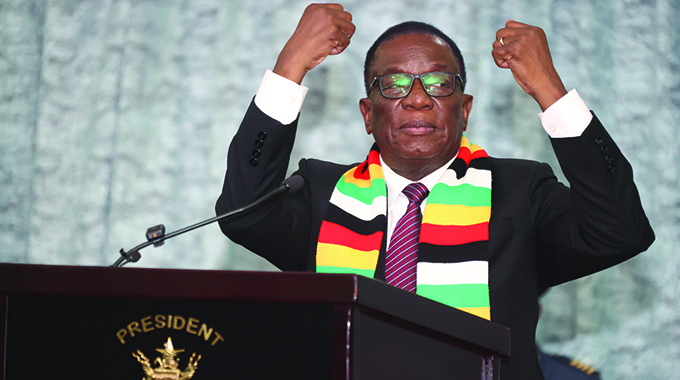
Ivan Zhakata, Harare Bureau
AFRICAN countries should craft robust policies and implement radical and transformative strategies to end hunger, President Mnangagwa has said. Focus, he said, should be on the continent’s predominantly rural population, with attention given to women, youths and the marginalised.
In a speech read on his behalf by Lands, Agriculture, Fisheries, Water and Rural Development Minister, Dr Anxious Masuka at the World Without Hunger Conference in Addis Ababa, Ethiopia, yesterday, President Mnangagwa said his Government has crafted the Agriculture, Food Systems and Rural Transformation Strategy to achieve both food and nutrition security.
Zimbabwe, he said, sought to attain food sovereignty to improve livelihoods and accelerate economic development in line with the country’s Vision 2030 of a prosperous and empowered upper middle-income society.
“To achieve household food security for 62 percent of the population residing in rural areas, my Government has further launched ‘Rural Development 8.0’, a cocktail of outcome-based and impact-oriented interventions designed to leave no one and no place behind.
“Consequently, Zimbabwe has ordinarily become food self-sufficient in normal rainfall years through the wholesale adoption of the sustainable intensive conservation household agriculture model, locally called Pfumvudza/Intwasa,” President Mnangagwa said.
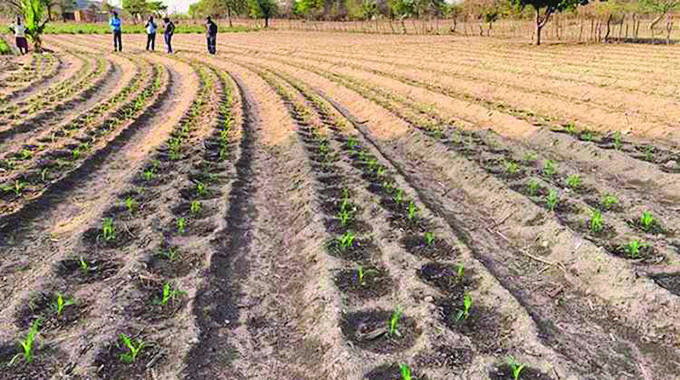
Like many countries in the SADC region, Zimbabwe is this year grappling with a food deficit due to the El-Nino-induced drought.
While cereal production declined by 72 percent during the 2023/2024 summer season, President Mnangagwa said Government will be able to feed every vulnerable rural household until March 2025 when the next harvest is expected due to climate-proofing interventions and increased irrigation development.
He added that vulnerable urban households are receiving cash transfers to buy food while all learners at basic education level are also receiving meals during school days until the end of the first term next year.
To build resilience of communities, Government has mobilised sufficient inputs namely fertiliser, seed and chemicals, for all rural households ahead of the main rainfall season, which has just begun. President Mnangagwa said the move will enable communities to bounce back and build forward better.
“My Government, through a transformed extension paradigm, is capacitating communities to view agriculture as a business at every scale, from household to large scale agriculture.
“In this context, in all our rural areas, resilience-building of households and communities has now shifted to the accelerated establishment of Village Business Units across all the 35 000 rural villages — these are viable, profitable and sustainable agriculture enterprises whose positive impact will spawn rural aggregation, value addition and beneficiation and spur rural industrialisation,” he said.
As part of the broader national agricultural transformation, Government has put in place an enabling policy and regulatory environment, increasing public sector financing of agriculture while crowding in the private sector, emphasising and investing in resilient climate-proofed agriculture and better agro-ecology, soil health and soil fertility management.

Further, the Second Republic has accelerated investments in technology and modernisation, illuminated the importance of science-led and fact-based management to increase production and productivity, and invested in capacity building of farmers and value chain actors.
It has also highlighted the criticality of research and innovation, promoted replicable and scalable agricultural entrepreneurship, promoted derisking and insurance for agriculture, invested in infrastructure and logistics, facilitated the provision of markets, highlighted and invested in food systems and nutrition.
Investment in food loss and waste reduction and enhanced public-private sector linkages for joint planning and implementation have also been done.
President Mnangagwa said the interventions have begun to bear fruit, as evidenced by the country’s record wheat production this winter estimated at over 600 000 tonnes, which is over one and half times the annual national requirement of 350 000 tonnes.
“We must harness our positive, collective and continent-wide political will to cause the desired change that should, of necessity, under-girdle sustained agricultural transformation.
“This will end the scourge of hunger on the African continent and concomitantly improve nutrition and uplift communities out of poverty. I am convinced that this is indeed possible,” President Mnangagwa said.
The three-day World Without Hunger Conference, organised by the United Nations Industrial Development Organisation, the government of Ethiopia and the African Union (AU) with technical assistance of the Food and Agriculture Organisation (FAO), kicked off on Tuesday at the Adwa Victory Memorial Museum in Addis Ababa.



 Online Reporter