Online Reporter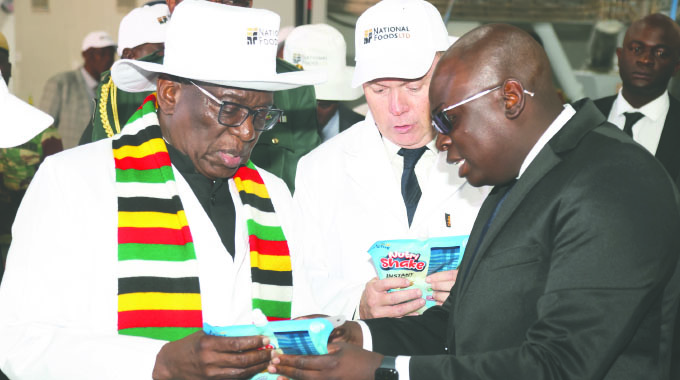
Wallace Ruzvidzo
PRESIDENT Mnangagwa yesterday lauded Zimbabwe’s private sector for its significant contributions to the Government’s industrialisation and modernisation agenda, highlighting National Foods’ newly commissioned multi-million-dollar production facility as a prime example of successful public-private collaboration.
Speaking at the commissioning of National Foods’ large-scale breakfast cereals extrusion plant, biscuit manufacturing line, and pasta facility in Harare yesterday, the President said such investments demonstrate Zimbabwe’s growing capacity to produce what it consumes and to compete regionally and globally in terms of production and productivity.
“Today, we affirm that Zimbabwe has the capacity to produce what we consume and to compete regionally and globally, driven by strategic investments, innovative technology, and patriotic resolve.
“It is my strong belief that initiatives such as this one will accelerate our journey towards Vision 2030, bringing economic prosperity, improved livelihoods, and national pride.
“Let us, therefore, continue to work together to support initiatives that uphold our sovereignty, empower ourselves, and build a sustainable and self-reliant Zimbabwe,” said President Mnangagwa.
He noted that the Second Republic is ushering in a resilient and modern food industry aligned with the United Nations Sustainable Development Goals (SDGs), particularly SDG1 (ending poverty) and SDG2 (ending hunger and promoting sustainable agriculture).
“It is everyone’s goal to ensure that nutritious, affordable food options are accessible to all Zimbabweans, while supporting the well-being of families and lifting our citizens out of poverty into prosperity. I acknowledge and thank our investors, partners, and all stakeholders whose support and confidence have made this venture possible,” he said.
The President reaffirmed the Government’s commitment to improving the business environment in line with the
“Zimbabwe is open for business” mantra and stressed the importance of local production.
“Investments like the one being commissioned today exemplify the importance of local content and value addition.
“By transforming raw agricultural produce into finished goods locally, we promote economic empowerment, deepen self-sufficiency, and develop local industries.
“This is our pathway to building an economy that benefits Zimbabweans, not relying on imports.
“They demonstrate that with strategic partnerships, Government support, and the resilience of our people, our motherland can produce what we need and compete at both regional and global levels,” he said.
Zimbabwe has recently achieved self-sufficiency in wheat production — a key raw material in pasta manufacturing.
The country currently consumes around 5 000 tonnes of pasta monthly, most of which has been imported.
President Mnangagwa said the commissioning of National Foods’ US$6 million pasta line was timely, as it helps close the import gap.
The plant produces approximately 1 200 tonnes of short-cut pasta per month, with an additional capacity of two tonnes per hour, consuming around 1 500 tonnes of locally produced wheat monthly.
“This is applauded and will go a long way to support Zimbabwe’s agricultural sector and reduce reliance on imported pasta. I urge the company to continue on its strategic trajectory and ensure that you operate around the clock, which will in turn increase output and save the country foreign currency,” he said.
With such investments, the President said, Zimbabwe is now well-positioned to meet local demand and strengthen its role as a regional supplier.
“It is impressive that to date, National Foods exports to Zambia, Botswana, and South Africa,” he said.
He then challenged the company to expand its regional footprint.
“I challenge the Group to expand these markets, towards promoting regional integration, creating employment opportunities, and fostering economic diplomacy. My Government will support you in this regard,” said President Mnangagwa.
On the company’s modern breakfast cereal plant, which has a targeted capacity of 800 tonnes per month, the President described it as a game changer.
“It will enable our country to locally produce fortified, high-quality cereals, ensuring consistent safety and nutritional standards. With a targeted investment of US$7 million, this plant will utilise around 15 000 tonnes of maize annually, directly supporting our farmers and stimulating further production and productivity in the agriculture sector. This move reduces reliance on imported cereals and foreign currency outflows, while increasing our regional competitiveness,” he said.
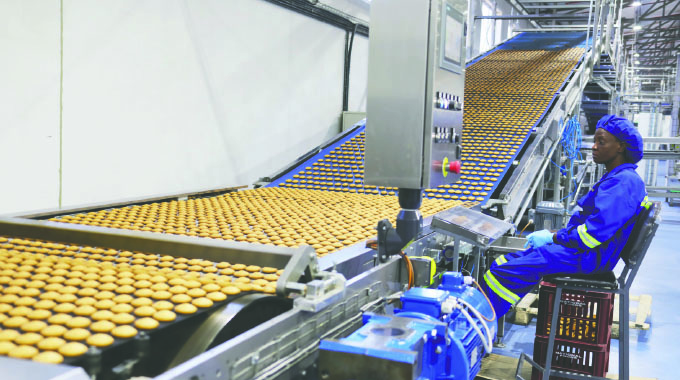
The National Foods biscuit production line—one of the most advanced large-scale biscuit manufacturing facilities in Zimbabwe—also reflects the country’s ongoing drive towards industrial innovation and self-sufficiency. With a capacity of up to 1 300 tonnes per month, the plant uses cutting-edge technology to produce a wide variety of biscuits.
“Congratulations. The new plant demonstrates National Foods’ commitment to job creation and skills development, which are vital for inclusive economic growth. At the heart of this project is our ongoing pursuit of food security and improved nutrition.
“Increased local food production ensures that our communities have reliable access to nutritious food, aligning with our agricultural development goals. It is vital that we grow what we eat and eat what we grow, taking control of our food systems for the well-being of our people.
“I want to commend the Government, the private sector, and especially the farmers whose produce makes all this possible,” said President Mnangagwa.
The President praised the facility as a beacon of economic development and industrialisation.
“This production facility is a beacon of efforts towards economic development and industrialisation. It embodies our collective ambition of building a self-reliant and prosperous Zimbabwe, sector by sector. As Zimbabweans, we can harness our own resources to foster the growth of local agro-industries through value addition and the requisite support to our farmers,” he said.
He said that such initiatives are advancing the creation of a diversified and sustainable economy, where value addition thrives and industries drive inclusive growth.
“I commend the Board and shareholders for their confidence in the policies of the Second Republic and the prevailing conducive business environment. Today’s developments speak to the ever-growing need to value-add our plentiful agricultural produce, strengthen our economy, and support the livelihoods of our people.
“These projects are aligned with the Zimbabwe Industrial Reconstruction and Growth Plan, the National Development Strategy, and the broader national Vision 2030,” said President Mnangagwa.
Industry and Commerce Minister Mangaliso Ndlovu said he was delighted to witness such progress from companies under his ministry.
“Today we celebrate the accomplishments of National Foods while accelerating our vision,” he said.
Harare Minister of State for Provincial Affairs and Devolution, Charles Tavengwa, praised the Second Republic’s dedication.
National Foods Chief Executive Officer, Mr Mike Lashbrook, expressed the company’s confidence in the Second Republic’s business-oriented policies.
The commissioning ceremony was attended by Cabinet Ministers, captains of industry, and senior Government officials.