Online Reporter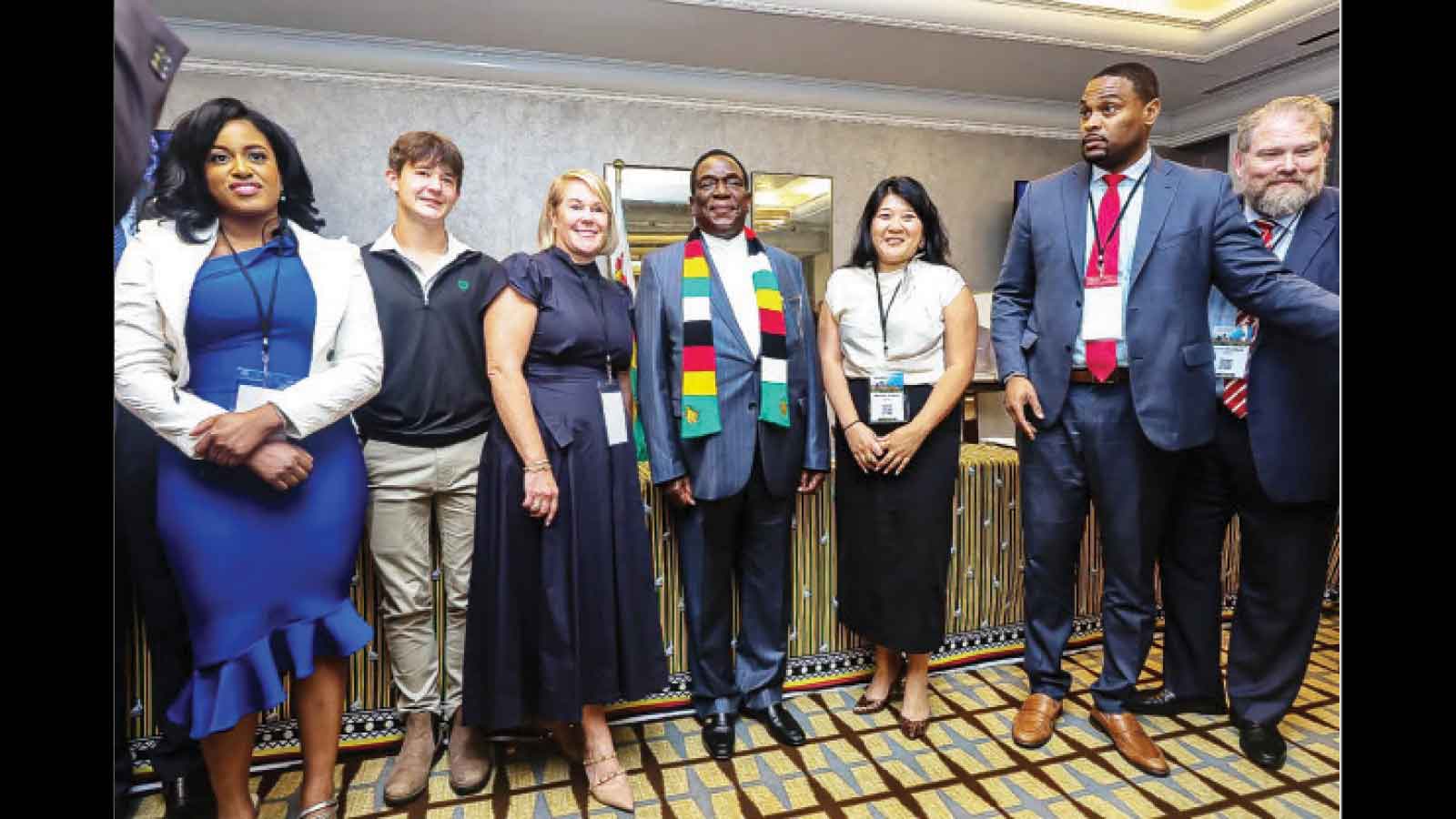
MacDenias Moyo
The Zimbabwe Business Forum held in New York on the sidelines of the United Nations General Assembly was no ordinary gathering.
It was a deliberate stage upon which President Mnangagwa proclaimed Zimbabwe’s renaissance to the citadel of global capital.
The theme of the forum, “Global Challenges, Zimbabwean Solutions, Shared Prosperity” was not a slogan but a philosophical declaration that Zimbabwe is ready to confront the turbulence of the world economy with its own ingenuity and resilience.
Standing before investors, financiers and development partners, the President reaffirmed with unflinching confidence that “Zimbabwe is open for business.”
This was not a perfunctory phrase, but a doctrine, a national creed that has already begun to reshape the contours of our economy.
He spoke of a skilled workforce, a strategic Southern African location and diverse opportunities spanning mining, agriculture, tourism, energy and aviation. These were not abstract promises, but tangible realities that investors could seize upon.
The President declared that under the Second Republic, Zimbabwe has cultivated an environment where capital feels safe, protected and empowered to grow.
He assured investors of fair, equitable and non‑racial treatment, a guarantee that Zimbabwe will not discriminate nor exploit but will partner in good faith.
In his own words, “Our commitment is backed by seamless investor aftercare and a strict policy of fair and equal treatment for all who choose to partner with us.”
This was a profound statement of ideological clarity. Zimbabwe is rejecting exploitative arrangements, warning against the “rider‑horse relationship” that has historically defined the interaction between African nations and foreign capital.
Instead, President Mnangagwa insisted that investment must deliver shared benefits for both investors and Zimbabwean communities. This is the essence of sovereignty in the economic sphere — a refusal to be ridden, a determination to walk as equals.
The President’s emphasis on beneficiation and value addition was equally significant. He reminded the world that Zimbabwe’s vast mineral wealth — lithium, platinum, gold and rare earth elements will not be exported raw but processed at source.
This is a revolutionary stance, ensuring that jobs, technology and value creation remain within Zimbabwe. It is a declaration that Zimbabwe will not be a quarry but a factory, not a supplier of raw materials but a producer of finished goods.
The forum itself was a convergence of Zimbabwe’s key investment institutions like ZimTrade, the Zimbabwe Tourism Authority and the Zimbabwe Investment and Development Agency. Their presence was symbolic of a coordinated national effort to present Zimbabwe as a unified investment destination. This institutional architecture is the scaffolding upon which Zimbabwe’s new economic edifice is being built.
The President’s words were backed by evidence. Zimbabwe recorded 8.3 percent economic growth in 2025, the fastest in Southern Africa, and is projected to grow at 5 percent in 2026.
Inflation has been tamed to an average of 4.2 percent in the first half of 2026, figures that have drawn commendation from international financial institutions. These are not mere statistics, but proof that fiscal discipline, infrastructural investment and macroeconomic stability are yielding results.
Already, the fruits of the Zimbabwe is Open‑for‑Business Policy are visible. Lithium projects in Goromonzi and Bikita, platinum expansions in Mhondoro‑Ngezi and agricultural investments in irrigation and horticulture testify to the magnetism of Zimbabwe’s new posture.
Tourism is surging, with Victoria Falls and Hwange drawing increased international traffic. Aviation is expanding, with new routes and partnerships forming. These are the early harvests of a policy that is destined to yield even greater prosperity.
The symbolism of New York cannot be overstated. By addressing investors in the financial capital of the world, President Mnangagwa was not whispering to sympathetic allies, but speaking boldly to the citadel of global capital.
His invitation to “come and experience the magic of Zimbabwe” was not poetic indulgence but a confident assertion that Zimbabwe is ready to host, ready to partner, ready to prosper.
This visit must be understood as a milestone in Zimbabwe’s march toward Vision 2030. It is a reaffirmation that under President Mnangagwa’s stewardship, Zimbabwe has shed the cloak of isolation and donned the mantle of global relevance.
The trajectory is clear – continued re-engagement, attraction of foreign direct investment, beneficiation of resources, infrastructural development and the creation of a middle‑income economy by 2030.
The doctrine of “friend to all, enemy to none” is the philosophical cornerstone of this re-engagement drive. It elevates Zimbabwe from a passive recipient of aid to an assertive architect of equitable partnerships.
It is a stance that has already opened doors once closed, attracting investments across mining, agriculture, tourism and energy. It is a stance that will continue to yield prosperity as Zimbabwe deepens its international partnerships.
In New York, President Mnangagwa did not merely court investors. He proclaimed Zimbabwe’s economic sovereignty. He declared that Zimbabwe is rising, that Zimbabwe is ready, that Zimbabwe is open for business. His words were not hollow rhetoric but a manifesto of national renewal.
Zimbabwe’s clarion call in New York was a proclamation that our nation is ascending. Under the stewardship of President Mnangagwa, Zimbabwe is re-engaging, Zimbabwe is prospering, Zimbabwe is rising.