

 admin
admin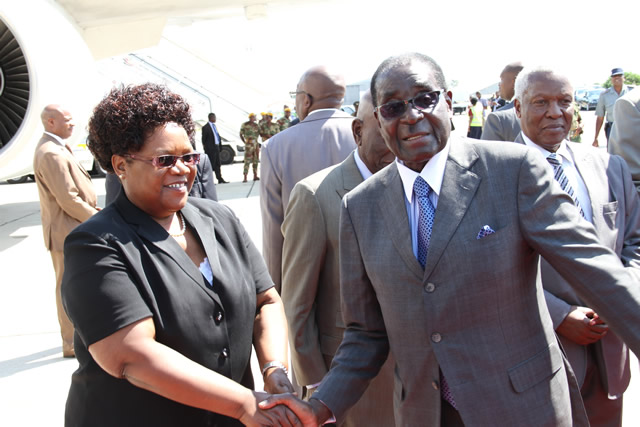
Morris Mkwate
President Mugabe has left the country to attend the African Union (AU) Extraordinary Summit which will be held in Addis Ababa, Ethiopia, tomorrow to discuss future relations between Africa and the International Criminal Court (ICC). A possible collective pullout of the 34 African countries that ratified the Rome Statute – the ICC founding charter – will likely emerge among the most contentious points of debate. Zimbabwe is not party to the treaty on the strength of its deep-rooted belief in domestic legal systems.
It is, however, expected to support nations with a similar perspective on the ICC.
The summit is being convened at the request of East African countries after The Hague-based court charged Kenyan President Uhuru Kenyatta and his deputy, Mr William Ruto, with crimes against humanity.
The two are accused of instigating post-election violence that left more than 1 000 dead between 2007 and early 2008.
According to a draft agenda made available this week, the Extraordinary Session would be preceded by the opening of the Executive Council.
Ethiopian Prime Minister and AU chairperson Mr Hailemariam Dessalegn is expected to present a statement after which summit will consider a progress report on the implementation of resolutions regarding international jurisdiction, justice, and the ICC passed in May this year.
Summit will also consider the election and subsequent appointment of a new Commissioner for Peace and Security following the appointment of Ambassador Ramtane Lamamra as Algeria’s Foreign Affairs Secretary.
In May, Heads of State and Government resolved to seriously look into the ICC’s apparent bias against Africa and the misuse of indictments against its leaders. Cases in point include those involving Sudanese President Omar Al Bashir and the two Kenyan leaders.
President Al Bashir, who became the first sitting head of state to be indicted by the court, is facing five counts of crimes against humanity, two counts of war crimes and three counts of genocide. The ICC alleges he perpetrated the crimes “indirectly” during an armed conflict in Darfur between March 2003 and July 2008 and has since issued two arrest warrants.


 Online Reporter