admin
admin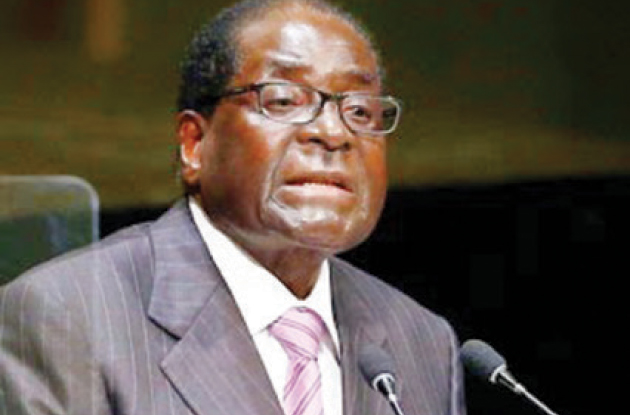

Cletus Mushanawani in New Delhi, India
President Robert Mugabe, who is also chairman of the African Union, yesterday met with Indian Prime Minister Narendra Modi here for bilateral talks ahead of the biggest India-Africa Forum Summit which starts today.
The President was accompanied by Foreign Affairs Minister Simbarashe Mumbengegwi and Small and Medium Enterprises and Co-operative Development Minister Sithembiso Nyoni and became the first African leader to be hosted by Prime Minister Modi. The two leaders had a closed door meeting for almost 30 minutes.
Prime Minister Modi later in the day separately met other African leaders from Swaziland, Benin, Kenya, Nigeria Niger, Lesotho, South Africa, Uganda, Ghana, Gabon, Chad and Djibouti.
Besides meeting the African leaders seperately for bilateral talks, Prime Minister Modi also hosted a dinner for them yesterday evening.
President Mugabe has continued drawing attention in New Delhi, with business almost grinding to a halt at the hotel where he is staying as hotel staff, security personnel from India and other African countries and chauffeurs temporarily abandon their duties to catch a glimpse of him each time he walks to his waiting motorcade.
The third India-Africa Forum Summit has attracted over 2,000 delegates, as well as over 700 journalists, making it a historic event for the host nation.
On Sunday, the Indian government in association with the New Delhi Municipal Council unveiled an India-Africa friendship rose garden at Chanakyapuri in the city.
An official told the media that: “The summit will be over, but the fragrance will remain. We wanted a landmark dedicated to the India-Africa Summit.”
Since Prime Minister Modi is so active on Twitter, a “Twitter Tree” was “planted” at the summit venue where live Twitter feed on the India-Africa Forum Summit will be shown on a screen in the shape of a blue and white tree.
Commenting on the historic ties between India and Africa, Prime Minister Modi said: “It’s said that thousands of years ago India and Africa was a single land mass. Later, due to the Indian Ocean, it split into two.
“There are a lot of similarities between us. Around 27 million Indians have been living in Africa for a long time.” Prime Minister Modi said while India and Africa had economic and political ties, the most notable factor of the relationship was education provided by India to African youths.
Over 25,000 African students have managed to successfully complete their education in India.
India is Africa’s fourth-largest trading partner after China, the United States and the European Union.
Over the past decade, the two-way trade between India and Africa has witnessed a massive surge from $25 billion in 2006 to the current level of over $70 billion.
India has oil investments in Mozambique, South Sudan, Egypt and Libya and is also the biggest importer of crude oil from Nigeria.
At least 21 companies have expressed interest in investing in Zimbabwe, with their representatives meeting President Mugabe and his delegation on Tuesday.
On the global political front, besides India and Africa having a total population of nearly two billion people, the two have no permanent seats in the United Nations Security Council, which the West has been using to further their political and economic interests across the world.
Speaking during Tuesday’s bilateral meeting with the Zimbabwean delegation, India’s External Affairs Minister Sushma Swaraj said: “Although Indians and Africans comprise nearly 2,5 billion people, our nations continue to be excluded from appropriate representation in the institutions of global governance. India and Africa can no longer be excluded from their rightful place of the permanent membership of the UN Security Council.”
Noting that democratic reforms are essential in global institutions, Minister Swaraj said the 70th session of the UN General Assembly was an opportune moment to achieve concrete results to resolve these issues.
“Unless we put in place more democratic global governance structures, the more equitable and just international security and development frameworks that are essential for collective peace and prosperity of this planet, will continue to elude us. There can no longer be pockets of prosperity in vast areas of underdevelopment and insecurity.”



 Online Reporter