admin
admin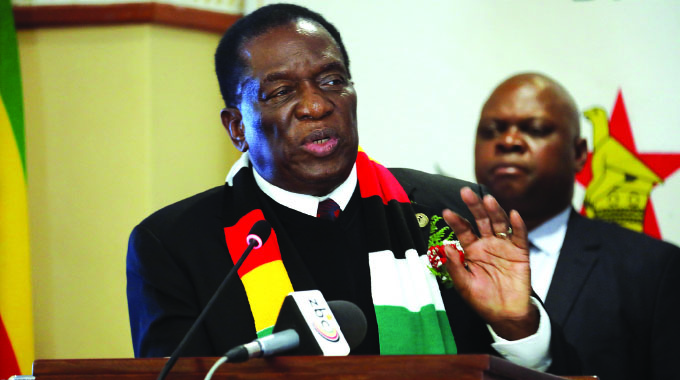
Vusumuzi Dube
Zimpapers Elections Desk
PRESIDENT Mnangagwa has been at the forefront of the country’s ambitious road rehabilitation push, aiming at improving infrastructure and boost economic growth.
As part of the Emergency Road Rehabilitation Programme (ERRP), the Second Republic is rehabilitating roads that had deteriorated.
Since coming into office, President Mnangagwa has consistently emphasised the need for infrastructure development as a catalyst for economic growth in Zimbabwe.
Recognising the state of the country’s road network as a hindrance to progress, the President has made it a priority to tackle this issue head-on.
Over the years, the country’s road network had continued to deteriorate, this was further exacerbated by local authorities’ failing to maintain the roads over the years.
Noting this continued rot in road infrastructure, President Mnangagwa in February 2021 declared the country’s road network a state of disaster as most of the roads had become impassible.
Pursuant to that, Government set aside $33,6 billion for the Second Phase of the ERRP and US$400 million had been set aside for the first phase. This has seen a number of major roads in the country being rehabilitated.
To get an appreciation of the road network, the President broke from tradition, travelling by road from Bulawayo to Lupane and also returned by road to have a personal feel of the needs of communities and assess developmental work being carried out by Government.
He also used the Harare-Masvingo highway en-route to an engagement at the Great Zimbabwe Monuments.
Further, the world-class Harare to Beitbridge motorway is now 90 percent complete with other major highways also up for rehabilitation.
Understanding that efficient transportation infrastructure is crucial for trade, investment, and connectivity, the President has committed significant resources to revitalising Zimbabwe’s road network.
The ERRP was launched in 2019 as a special initiative aimed at accelerating the rehabilitation of Zimbabwe’s dilapidated road infrastructure.
The programme focuses on both major highways and rural roads, recognising the importance of connectivity for all regions of the country.
Through the ERRP, Government aims to improve road safety, reduce travel times, and enhance economic opportunities.
To support the ERRP, President Mnangagwa’s Government secured financial assistance from both domestic and international sources.
Notably, the African Development Bank (AfDB) has pledged substantial funding towards road rehabilitation projects, recognising the potential economic benefits for Zimbabwe.
These investments have not only improved the functionality of the road network but also created job opportunities and stimulate economic growth in various sectors.
The rehabilitation of Zimbabwe’s road infrastructure holds immense potential to drive economic development.
Improved roads will facilitate the movement of goods and services, leading to increased domestic and international trade.
Moreover, enhanced connectivity between rural and urban areas will promote social integration, access to education, healthcare, and other essential services.
Additionally, the ERRP aims to reduce road accidents, saving lives and creating a safer environment for all road users.
As the ERRP continues to change the road network in the country the Zimbabwe National Road Authority has revealed that more than 50 000km of roads have been rehabilitated and reconstructed while 2 000 structures have been attended to since the start of the programme.
Zimbabwe has an estimated road network of 84 000km, out of which 93 percent of the network was in fair or poor condition and in need of rehabilitation or periodic maintenance.
In one of his many addresses on the country’s state of the road infrastructure, President Mnangagwa emphasised the need to modernise the country’s road network.
“The modernisation and rehabilitation of our infrastructure, in particular road networks, has resumed in earnest, with noticeable progress,” President Mnangagwa said.
“Given that these are key enablers to our national economic revival as envisaged under Vision 2030, we are determined to leapfrog the quality of our infrastructure across the country. To date, a total of $2,5 billion, which constitutes 34,5 percent of total capital development, has been set aside for various transport, water, public amenities, energy, irrigation, social services and other infrastructural projects.”
In a recent interview, ERP2 national coordinator Engineer Marone Pasipamire said more roads were being attended to countrywide.
“Since the programme started in 2021, more than 50 000km have been attended to. Various interventions have been made ranging from rehabilitation of roads, attending to gullies and wash-aways.
“We have also attended to reseals, gravelling, re-gravelling and road grading. Now we have moved to road markings. We are marking those roads that were rehabilitated and resealed. More than 2 000 structures have also been attended to under the same programme,” he said.
As if to further prove his commitment in reviving the country’s road network, the President, this week once again intervened and ordered intense road maintenance and rehabilitation works along the dilapidated Bulawayo-Victoria Falls Highway.
The swift intervention was in response to an outcry by the motoring public and business leaders who have appealed to the Government to urgently attend to the extensive damage on the strategic road to restore smooth transportation.
The Bulawayo-Victoria Falls Highway is a strategic trade route on the regional north-to-south corridor, linking Zimbabwe with South Africa, Zambia, Botswana, Namibia as well as the DRC.
The public concern prompted President Mnangagwa to direct that resources be immediately availed to kick-start massive rehabilitation works, and the contractor is already on the ground, Transport and Infrastructural Development Minister, Felix Mhona revealed.
He thanked the President for being a listening leader and also acting on concerns raised by the public.
Enhanced Connectivity:
As a result of the ERRP, there has been a notable improvement in connectivity across the country. Roads that were previously in poor condition or inaccessible have been repaired, allowing for easier movement of goods, services, and people.
This has connected rural areas to urban centres, promoting social integration and providing opportunities for economic development.
Improved Trade and Economic Growth:
The ERRP’s focus on rehabilitating major highways has had a positive impact on domestic and international trade. The improved road infrastructure has facilitated the movement of goods and increased trade activities. This, in turn, has contributed to economic growth and stimulated various sectors, creating job opportunities and attracting investment.
Road Safety:
The ERRP has also prioritised road safety by addressing hazards and repairing damaged sections of roads. This has helped to reduce accidents and improve safety for motorists, pedestrians, and other road users. With the rehabilitation of roads, travellers can now experience smoother and safer journeys.
Enhanced Access to Essential Services:
The ERRP’s efforts to rehabilitate rural roads have significantly improved access to essential services such as education, healthcare, and emergency services. Previously, many remote areas faced challenges in accessing these vital services due to poor road conditions. With the rehabilitation of rural roads, residents now have improved access to these services, leading to enhanced quality of life.
Tourism and Regional Integration:
The ERRP has helped open up previously inaccessible areas, boosting tourism potential. Improved road infrastructure allows tourists to reach popular destinations more easily, thus attracting more visitors and supporting the industry. Enhanced regional connectivity through improved roads promotes regional integration and collaboration.
The ERRP has brought about significant positive changes in Zimbabwe. Improved connectivity, increased trade opportunities, enhanced road safety, better access to essential services, and the promotion of tourism and regional integration are just a few examples of the positive impacts of this vital programme.
President Mnangagwa’s leadership in spearheading Zimbabwe’s road rehabilitation push through the ERRP reflects a long-term vision for development.
Concerted efforts and investments made by Government and international partners demonstrate a determined commitment to transforming Zimbabwe’s road network and driving progress for the nation as a whole.


 Online Reporter