Gibson Mhaka in Moscow, RUSSIA
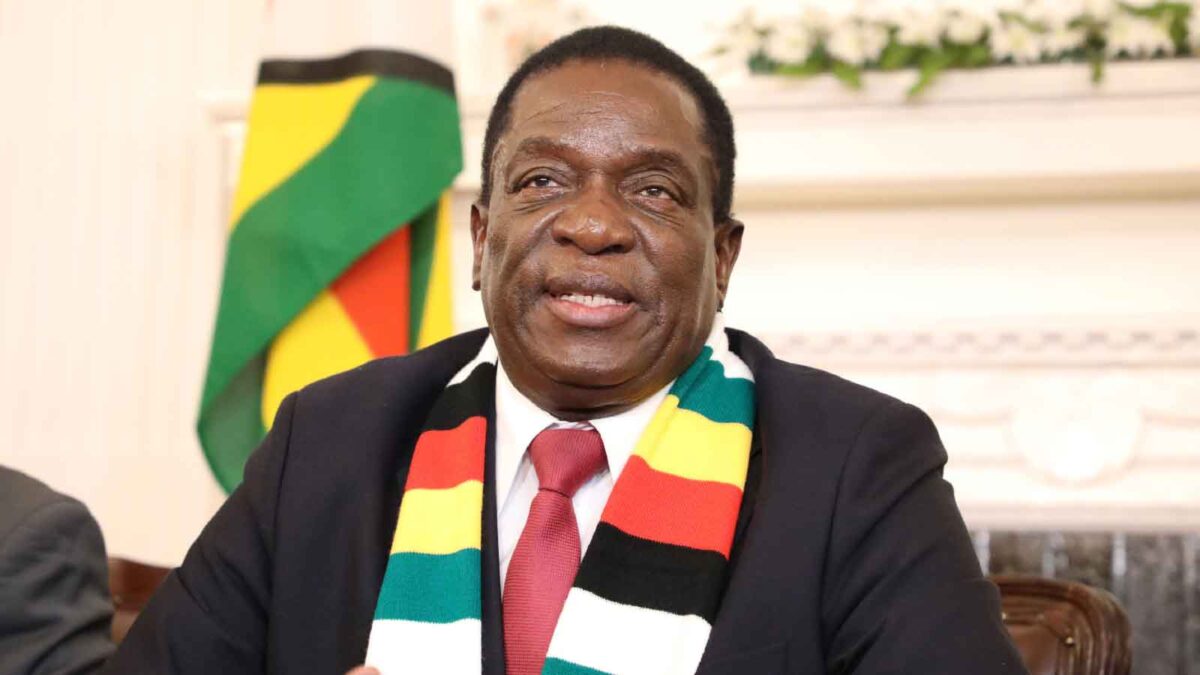
PRESIDENT Mnangagwa’s engagements in Russia are bringing Zimbabwe’s domestic development priorities and foreign policy objectives into sharper practical focus, as Harare seeks to turn international partnerships into investment, technological advancement, skills development and economic growth.
Anchored in the philosophy of Nyika inovakwa nevene vayo/Ilizwe lakhiwa ngabanikazi balo (a country is built by its own people), the engagements underscore the Government’s position that
Zimbabwe’s transformation must be driven by its citizens, supported by strategic international cooperation and measured by tangible results.
From economic diplomacy and financial cooperation to university partnerships and human capital development, the Moscow engagements illustrate how the Second Republic is seeking to connect
its domestic development agenda with its foreign policy of engagement and re-engagement. The emphasis is on moving beyond diplomatic declarations to practical cooperation that strengthens
national institutions, expands economic opportunities and equips Zimbabweans with the skills to modernise their country.
Ultimately, the success of these initiatives will depend on implementation, effective coordination and their measurable impact on ordinary citizens.
At the Third Russia-Africa Summit and Economic and Humanitarian Forum, the President has pursued co-operation across finance, education, science and institutional relations.
The engagements reflect the Government’s stated drive to attract partnerships while insisting that Zimbabweans must remain central to the country’s transformation. Whether the approach
delivers lasting gains will depend on what happens after the ceremonies, but the agenda in Moscow gives the policy a recognisable operational shape.
The clearest signal came when Zimbabwe and Russia signed a cooperation agreement with the Autonomous Non-Profit Organisation for the Development of International Cooperation, known as
Eurasia.
Foreign Affairs and International Trade Minister Professor Amon Murwira and board of trustees chairman Petr Milkhallovich Fradko signed in the President’s presence, setting the measure by
which such agreements should be judged.
“The two Governments have given this friendship political direction. It now falls to institutions such as yours, and your counterparts on the Zimbabwean side, to give practical expression to the
vision of our national leaders,” he said.
It was a call for implementation, not a declaration that implementation had already been achieved. “I challenge all of us to ensure that these agreements move quickly from paper to practical
projects and areas of impactful collaboration,” he added.
Diplomatic agreements can establish access and political confidence, but their value is ultimately determined by financing, responsibilities, deadlines and results. By demanding priority projects,
appropriate funding mechanisms and timelines, the President has put institutional follow-through at the centre of the relationship.
His proposal for a joint technical working group involving Russia’s PSB Bank and Zimbabwe’s Ministry of Finance, Ministry of Economic Development and Investment Promotion, and Reserve
Bank of Zimbabwe gives that demand a possible mechanism.
The group would identify bankable projects and suitable financing arrangements, with the potential to support trade, credit and investment in sectors prioritised by Zimbabwe.
“Zimbabwe particularly values the practical contribution that PSB Bank can make to our economic transformation,” President Mnangagwa said, describing the institution as well placed to support
trade finance, lines of credit and investment.
The President’s pitch for Brand Zimbabwe was built around economic indicators he presented to the Russian institutions.
He cited economic growth of 8,3 percent, agricultural growth of 27,9 percent and single-digit inflation since January 2026, alongside improving trade and exchange-rate stability. These figures
form the Government’s case that the country offers opportunities for investment.
The challenge is to translate macroeconomic performance into wider production, employment, exports and more predictable conditions for firms.
The same logic extends beyond finance. Cooperation agreements between Gwanda State University and Don State Technical University, and between Don State Technical University and
Marondera University of Agricultural Sciences and Technology, point to a route for linking Zimbabwean institutions with Russian technical expertise.
Properly developed, university partnerships can support joint research, staff exchanges, applied training and solutions tailored to local industries.
Their significance, however, will be measured by programmes delivered and skills retained, rather than signatures alone.
Education is also where the President’s message of national ownership becomes most direct.
More than 1 000 Zimbabweans are studying at Russian universities, including in fields such as medicine, technology, natural sciences, nuclear science and space-related disciplines.
President Mnangagwa described their education as a national investment and urged them to return home equipped to contribute to modernisation.
“Your decision to pursue your studies in the Russian Federation is therefore not only a personal investment, but a national investment. It is an investment in the motherland. You are our
investment,” he told the students.
He challenged them to think beyond passing examinations and ask what their knowledge could solve at home: what technology they could develop, what enterprise they could establish and what
institution they could strengthen.
The appeal connects the Government’s heritage-based education approach with a practical question of skills, innovation and productivity. Scholarships yield their fullest public value when
graduates can find opportunities to apply their expertise, build enterprises or strengthen public services.
“You can learn Russian, but you can never become Russian,” the President said, reminding students to embrace international exposure without surrendering their Zimbabwean identity. He also
acknowledged pressures including unfamiliar systems and financial difficulties, and said authorities would continue addressing concerns within available resources.
Taken together, the engagements in Moscow offer a snapshot of how the President’s policy language is being applied across several fronts, diplomatic partnerships are expected to open economic
doors; universities are expected to build capability and students are expected to carry acquired knowledge back into national development.
This is the practical meaning the Government attaches to Nyika inovakwa nevene vayo/ Ilizwe lakhiwa ngabanikazi balo.
The principle does not mean development can be achieved in isolation.
Zimbabwe needs partners, finance, technology and access to markets. Its central proposition is that these external relationships should expand domestic capacity rather than substitute for it.
That requires local institutions to negotiate carefully, select viable projects and account for delivery.
President Mnangagwa has explicitly asked for regular progress reports on commitments made in Moscow.
That expectation creates a standard against which the visit can be assessed after the delegations leave, whether the working group is established, whether projects are selected and financed,
whether university cooperation produces tangible programmes, and whether students returning home can put their skills to work.
For now, Moscow has provided political direction and a set of proposed pathways. The harder phase begins with implementation. If agreements produce jobs, stronger institutions, useful
technology and improved livelihoods, the visit will have advanced the promise that Zimbabwe’s future must be built by Zimbabweans themselves, working with partners on terms that serve the
country’s development and deliver measurable public value.