

 Online Reporter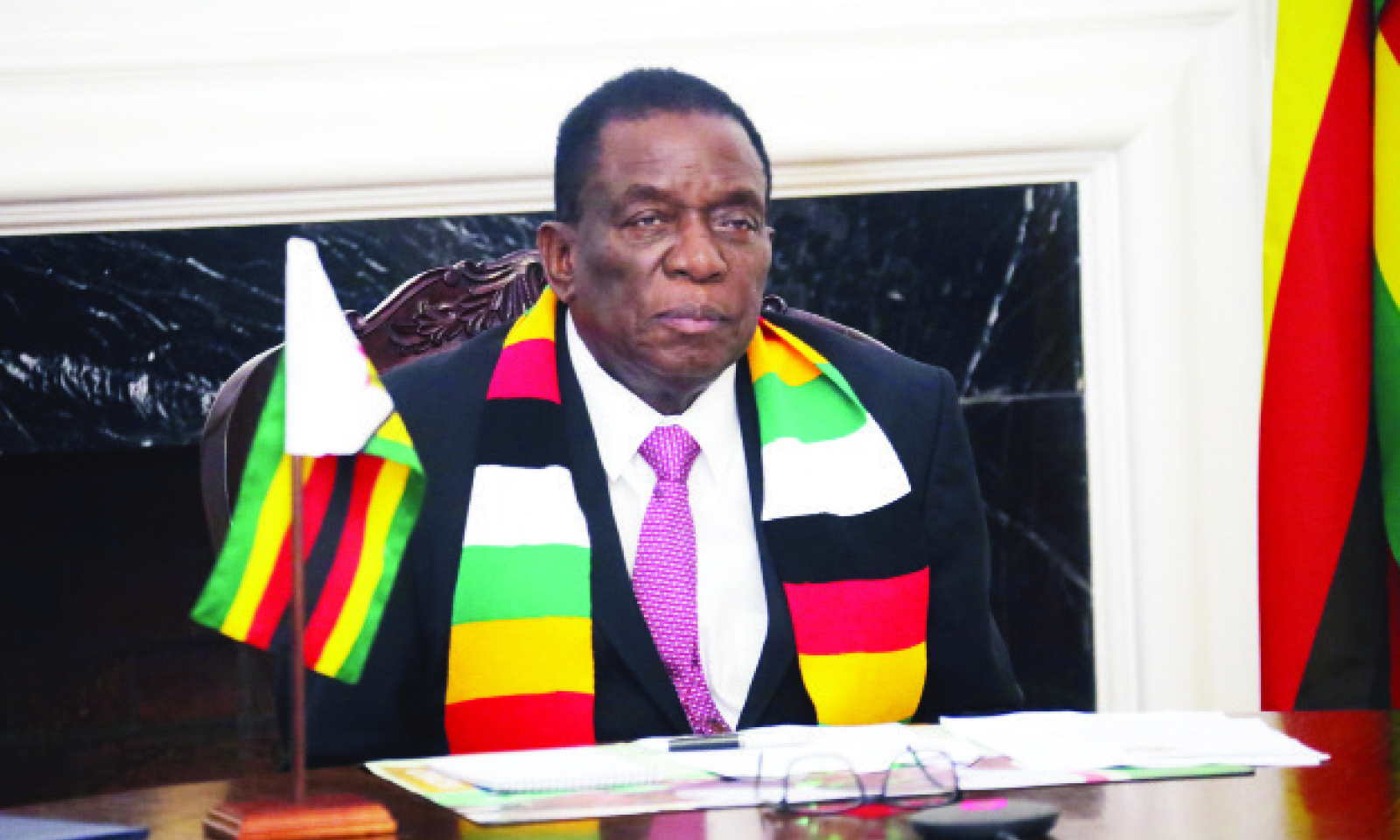
Gibson Mhaka, Zimpapers Politics Hub
NOVEMBER 24, 2017, though not formally enshrined on the national calendar as a holiday, remains one of Zimbabwe’s most pivotal dates, marking the birth of the Second Republic.
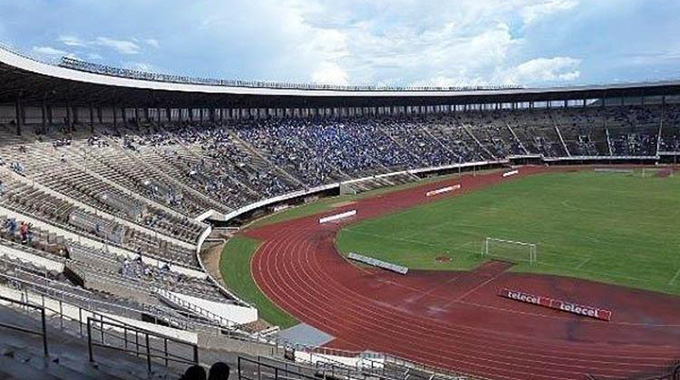
On that day, President Mnangagwa took his oath of office before a packed National Sports Stadium, vowing to serve all citizens and usher in a new era aimed at turning around the country’s fortunes.
As the Second Republic approaches its ninth anniversary on November 24, 2025, a moment for reflection reveals that Zimbabwe has since recorded notable strides across various sectors, including stabilising the macro-economy, accelerating infrastructure development, enhancing social service delivery, and fostering greater political tolerance under the New Dispensation.
Foundational philosophy and national mandate
This transformative trajectory was firmly established in President Mnangagwa’s inauguration speech.
He committed to serving the nation as the President of “all citizens regardless of colour, creed, religion, tribe, totem or political affiliation,” setting a clear, non-partisan mandate for national development.
This underpins the Government’s core philosophy of “leaving no place and no person behind,” which drives actions and ensures that development benefits all Zimbabweans across the country’s 10 provinces.
This people-centred approach is further reinforced by the national philosophy: Nyika inovakwa nevene vayo/ Ilizwe lakhiwa ngabanikazi balo (A country is built by its own people), which emphasises the use of home-grown solutions and judicious exploitation of the nation’s abundant natural resource endowments, coupled with unity of purpose.
Since the inception of the Second Republic, emphasis has been on life-changing developmental projects and programmes to create a conducive environment for socio-economic growth and, in particular, for the attainment of Vision 2030, the goal of achieving upper-middle-income status.
Flagship Projects and Infrastructure Revolution
Since taking office, the Second Republic has prioritised flagship projects as a key component of Vision 2030.
These transformative initiatives, many already complete or at different stages of implementation, demonstrate the Government’s political will to stimulate socio-economic growth, even as it operates with no access to international lines of credit and under the albatross of illegal sanctions, climate change and geopolitical shifts.
The commitment is clear: “Brick by brick, President Mnangagwa is developing the country,” ensuring no one and no place is left behind.
The resulting infrastructural development has significantly enhanced Zimbabwe’s transport, energy, and ICT sectors, bolstering domestic and regional connectivity, increasing productivity, promoting trade and attracting investment.
Under the Second Republic, landmark projects have transformed access to services and markets for many communities.
These completed and ongoing flagship projects include the upgrade of the Robert Gabriel Mugabe International Airport, the major rehabilitation of the Harare–Beitbridge road, the New Parliament Building in the Mt Hampden area in Harare, and the construction of Lake Gwayi-Shangani and other new dams.
Crucially, this list also features the Trabablas Interchange.
Remarkably, this crucial road project was fully self-financed by Zimbabwe without external funding and executed using local contractors, a powerful demonstration of the country’s capacity to deliver major infrastructure against all odds.
The Government has also made significant strides in the energy sector with the expansion of Hwange Thermal Power Station Units 7 and 8.
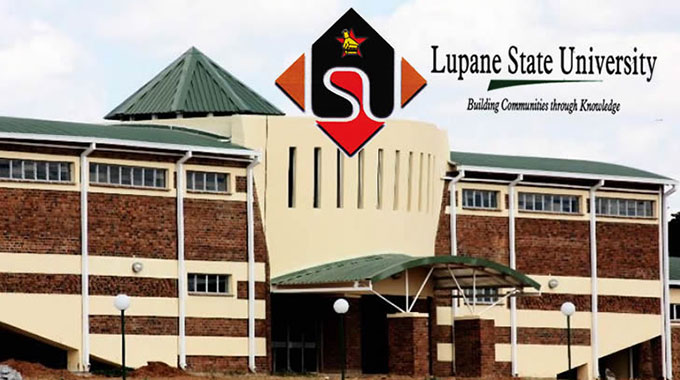
Furthermore, numerous high-impact projects are at various levels of completion in line with the “leaving no place and no person behind” philosophy, such as the Lupane Provincial Hospital, provincial offices, Lupane State University (LSU) student hostels, the Bulawayo Kraal Irrigation Scheme in Binga, the Binga mortuary, the Binga training school and airstrip, the upgrading of the Victoria Falls International Airport, and the Hwange Teachers’ College.
The prioritisation of the Bulawayo-Victoria Falls road, Bulawayo-Nkayi road, and Bulawayo-Tsholotsho road is also dramatically improving connectivity and accessibility across the region.
Additionally, massive investment has been directed towards the construction of new dams and the setting up of irrigation schemes, which are essential for climate-proofing agriculture.
Economic Strides and Sectoral Growth
The country’s development trajectory continues to gain momentum across all sectors of the economy.
The President has created an enabling environment for investment, attracting massive infrastructure projects such as new steel plants and road networks.
Agriculture and mining are recording historic output levels, while tourism is flourishing.
In agriculture, the sector has gone through a revolution, with massive investment ensuring both food security and sovereignty through the provision of access to inputs, technology, and markets, repositioning Zimbabwe as a potential breadbasket of Africa.
In mining, with Zimbabwe witnessing a scramble for its substantial mineral wealth, President Mnangagwa has consistently underscored the primacy of communities from which the minerals are extracted.
Overall, benefits accrued from these programmes include increased employment, value addition, beneficiation, modernisation of infrastructure, and massive housing delivery projects that have contributed to improved standards of living for citizens.
Devolution, National Healing, and Re-engagement
The commitment to inclusivity and equity is also evident in political reforms. President Mnangagwa immediately operationalised devolution and decentralisation in line with the 2013 Constitution.
This policy involves prioritising local businesses in the award of tenders and giving locals first preference in filling positions — a bold policy shift.
Additionally, the Government has moved national events, such as Independence Day celebrations, outside of Harare.
Bulawayo broke ground, hosting the first out-of-Harare national festivities in 2022, followed by Mt Darwin, Buhera, and Gokwe in subsequent years.
Maphisa in Matabeleland South Province will be hosting the event next year.
The hosting of this event has resulted in the rehabilitation of permanent structures and roads in the hosting provinces and districts.
On the critical issue of national healing, the President acted to bring closure to the post-independence civil disturbances commonly referred to as Gukurahundi.
This previously taboo subject was opened up for public discourse. The Government, working with local traditional leaders and civic groups, has initiated processes for restorative justice and healing.
The Gukurahundi hearings are progressing well in both Matabeleland North and Matabeleland South provinces, with no challenges expressed so far.
The progress made serves as a strong rebuttal to political parties and their affiliates who were urging people to shun the process.
As of October 29, 2025, a total of 18 015 submissions had been received from survivors, affected families, and community members across both provinces.
Initiated in February 2019, the Government’s approach seeks to resolve the Gukurahundi issue through an internal, home-grown process that reinforces national unity.
The Second Republic has demonstrated a strong commitment to facilitating a healing process that brings closure to past conflicts, aligning with President Mnangagwa’s vision of nation-building and fostering unity. The President’s move has been widely hailed as an important step in rebuilding the nation.
Finally, through the Engagement and Re-Engagement Foreign Policy, the Second Republic has witnessed renewed diplomatic and trade relations, upholding the principle that “isolation has never been splendid or viable.”
The international re-engagement efforts have witnessed the mending of bridges while cementing existing ones.
This was further demonstrated when President Mnangagwa assumed the Chairmanship of the Southern African Development Community (SADC) on August 17, 2024.
His tenure immediately focused on advancing peace, regional integration, and industrialisation.
The major domestic infrastructure transformation targeting roads, energy generation, and dam construction already underway and primarily funded through devolution funds, served to bolster Zimbabwe’s capacity to foster regional integration, trade investment and boost economic development across SADC.
The implemented programmes and projects pertinently bear testimony to the illustrious work by the Second Republic, ably led by President Mnangagwa, as Zimbabwe positions itself as one of Africa’s success stories.
In conclusion, the journey of the Second Republic since November 2017, ably led by President Mnangagwa, bears illustrious testimony to a concerted and sustained drive for national development.
Anchored by the non-partisan philosophy of “leaving no place and no person behind” and the self-reliance mantra ‘‘Nyika inovakwa nevene vayo/ Ilizwe lakhiwa ngabanikazi balo’, the Government has delivered tangible results from crucial macro-economic stabilisation to the self-funded construction of landmark infrastructure like Trabablas Interchange and the expansion of key sectors like mining and agriculture.
These flagship projects, alongside bold policy shifts like devolution and the courageous initiation of the Gukurahundi hearings, collectively demonstrate a profound political will to fulfill the promises of the inaugural speech.
Despite the persistent challenges of sanctions and climate change, Zimbabwe’s development trajectory, reinforced by its active role as SADC Chair and a successful re-engagement foreign policy, clearly positions the nation on a determined course toward achieving upper-middle-income status by 2030.
As the Second Republic reaches its ninth anniversary on November 24, 2025, the nation extends its congratulations to President Mnangagwa and the Government for the immense strides taken towards an empowered and prosperous upper-middle-income economy by 2030.


