Online Reporter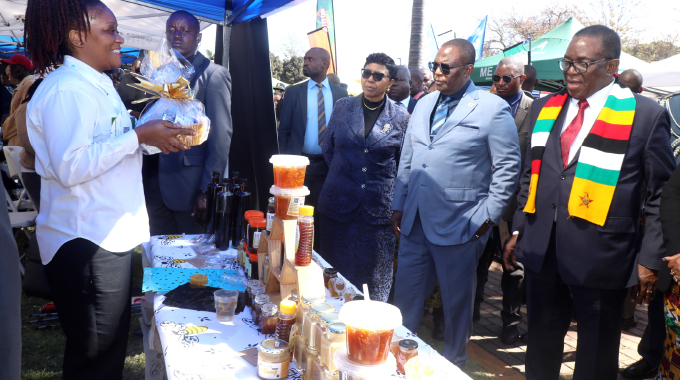
Wallace Ruzvidzo
Herald Reporter
PRESIDENT Mnangagwa has rallied entrepreneurs to embrace formalisation and become active participants in building a stronger and more prosperous nation.
In his address at the inaugural National Micro, Small and Medium Enterprises and Co-operatives indaba in Harare yesterday, the President said formalisation remained a critical national priority.
“Hence, Government has embarked on a comprehensive regulatory reform programme aimed at easing the cost of doing business and slashing compliance burdens,” he said.
President Mnangagwa said ultimately, enterprises must graduate from micro to small, small to medium, and medium to large-scale enterprises.
Through hard, honest work, ingenuity, innovation, focus and zeal, he said, there was no limit to what could be achieved by the SMEs sector and cooperatives.
“Moreso, that you here gathered are part of the strategic players that have helped the Second Republic realise unprecedented economic growth and social transformation.
“My Administration, therefore, recognises and salutes the role you play in driving entrepreneurship, innovation, industrialisation, employment creation and inclusive economic growth.
“Tinokutendai. Siyalibonga. Well done. As one united people, under one national flag, from Plumtree to Mutare, Beitbridge to Chirundu, let us continue to build our motherland, Zimbabwe, in line with our development philosophy: ‘Nyika inovakwa, inotongwa, inonamatirwa, nevene vayo/ Ilizwe lakhiwa, libuswe likhulekelwe ngabanikazi balo’,” said President Mnangagwa.
A vibrant and thriving micro, small and medium enterprises and cooperatives sector, he said, remained essential for the attainment of Vision 2030 and goals set out in the National Development Strategy 2.
The President added that the SMEs sector was no longer peripheral to the economy, but was now one of the principal pillars.
Statistics show that SMEs contribute over 60 percent of Gross Domestic Product and provide employment to millions of citizens.
“Enterprises in the sector are making significant contributions to drive the Local Content Policy and import substitution through the production of high-quality products.
“I can personally attest to this following my tour of the remarkable exhibitions mounted at the sidelines of this Indaba. Again, I say well done.
“Evidence is all around us that the micro, small and medium enterprises and cooperatives are evolving, sustaining livelihoods and ensuring continuity in the supply of essential goods and services.
“As we move towards Vision 2030, I challenge the sector to now shift focus to enter new markets and develop niche products in emerging economic spaces, including in technology-driven enterprises,” President Mnangagwa said.
Government has prioritised the development of modern, safe and dignified workspaces for traders, manufacturers and service providers, which are essential for enterprise growth.
Progress has been recorded through projects such as the modernisation of Mbare Musika and the development of markets in Bulawayo, Gwanda, Masvingo, Gweru, Chirundu and Chivhu, among others.
President Mnangagwa said land remained a critical productive asset, particularly for women entrepreneurs, co-operatives and agro-based enterprises.
As such, he called upon local authorities and relevant institutions to deliberately allocate land for enterprise development, including the construction of SME workspaces, industrial clusters, agro-processing facilities and cooperative business centres.
“To date, I also commend the innovative public-private partnership models being implemented by local authorities, the private sector and pension funds.
“This has resulted in the establishment of SME Centres, which stand out as shining examples of the benefits of win-win partnerships.
“Beyond infrastructure and financing, sustainable enterprise growth requires knowledge, skills and entrepreneurial competence.
“It is for this reason that Government continues to invest in entrepreneurship development, business management training and financial literacy programmes across the country,” President Mnangagwa said.
In line with the Heritage-Based Education 5.0 model, he called for closer collaboration between institutions of higher learning and micro, small and medium enterprises and cooperatives.
The Fourth Industrial Revolution and the advent of Artificial Intelligence is transforming the way business is conducted.
In this regard, President Mnangagwa said Government will continue to promote digital transformation initiatives and support capacity-building programmes that equip enterprises with the skills they need to succeed in this rapidly evolving business environment.
“Supporting export readiness and external markets participation by micro, small and medium enterprises and cooperatives is key.
“In line with our National Export Development Strategy, I urge our entrepreneurs to look beyond domestic markets to regional and continental markets under the African Continental Free Trade Area,” he said.
President Mnangagwa said Government continues to invest in strategic infrastructure, which would, in turn, facilitate increased participation in domestic, regional and international trade.
He said upgrades and expansion of energy generation capacity, road networks, the rail transport system, airports, border posts and dry ports are ongoing.
“These are set to improve connectivity, reduce the cost of doing business and strengthen Zimbabwe’s position as a regional trade and logistics hub”.
In agriculture, the President said Government stood ready to scale up support for the growth of enterprises engaged in value addition, processing, packaging and marketing of agricultural products.
“In this regard, rural communities should not be mere producers of raw materials. Across all our provinces, communities and SMEs must be organised to take advantage of opportunities in areas such as processing of oils, milk and milk products, tobacco, leather and leather products as well as in horticulture value chains,” said President Mnangagwa.
With regards to the mining sector, he said he recognised the tremendous work being done by small-scale miners.
The sub-sector has emerged as the backbone of Zimbabwe’s gold industry, contributing about 65 percent of national gold output.
“Going forward, I urge our small businesses in the mining sector to gradually move beyond the extraction of minerals towards beneficiation, processing and participation in higher-value segments of the mining value chain.
“The manufacturing sector provides immense opportunities, which cut across various key industries.
“I, therefore, call upon our entrepreneurs and cooperatives to position themselves by establishing foundries, fabrication workshops, engineering support services, component manufacturing enterprises and other downstream industries that have linkages with these strategic sectors,” President Mnangagwa said.
He called for responsible and sustainable business practices as participation in the economy by SMEs and cooperatives expands.
“Matters related to long-term environmental sustainability, occupational health and safety standards, along with other applicable by-laws, should be strictly adhered to.
“The responsibility to utilise our God-given resources as well as our shared living and working spaces, in a manner that allows for preservation for future generations, is on us all”.
President Mnangagwa commended the Ministry of Women Affairs, Community, Small and Medium Enterprises Development for organising the indaba, which was convened under the theme “Towards Vision 2030: Building an enabling micro, small and medium enterprises and cooperatives ecosystem”.
He said the Indaba dovetailed with the thrust of his Administration, which emphasises dialogue, and the Whole-of-Government and Society Approach.
“Our collective quest is to realise sustainable development and prosperity that leaves no one and no place behind.
“I was extremely pleased by the briefing which I received from the Honourable Minister (Monica) Mutsvangwa, who highlighted the various panel discussions you have held during this Indaba,” President Mnangagwa said.
He said it was equally commendable that the Ministry had initiated the processes to review Acts that govern both SMEs and Cooperatives.
“The National Cooperatives Development Policy, being unveiled today (yesterday), provides a comprehensive framework for the growth, modernisation and strengthening of the cooperative sector in Zimbabwe.
“Under the Financial Inclusion Strategy 2, financing mechanisms to support enterprise growth through access to affordable finance will be consolidated.
“I applaud the Reserve Bank of Zimbabwe and private financial institutions for the innovative financing mechanisms and financial inclusion initiatives that continue to expand access to capital for micro, small and medium enterprises and cooperatives.
“I also thank the financial services sector for attending this important Indaba to share their views, products and policies that affect SMEs,” the President said.
He said Government empowerment institutions such as the Small and Medium Enterprises Development Corporation, the Zimbabwe Women’s Microfinance Bank and Empower Bank would continue to be recapitalised to expand their capacity.
“The National Industrialisation Fund, the National Venture Capital Company of Zimbabwe and the recently launched Zimbabwe Entrepreneurship Exchange are some of the new innovations being rolled out by my Administration towards enhancing financial inclusion for this ever-growing sector.
“The Savings and Credit Cooperative Societies have over time proved to be important vehicles for mobilising domestic savings and financing productive activities at the micro and household level.
“The importance of coordinating this segment to reduce associated risks is an area, which the responsible ministry must be seized with,” President Mnangagwa said.
He also presented awards to recognise the spirit of excellence, innovation, resilience, compliance and outstanding contribution to national development by SMEs and Cooperatives.
Also in attendance at the indaba were Vice President Dr Constantino Chiwenga, Chief Secretary in the Office of the President and Cabinet Dr Martin Rushwaya, Senate president Mabel Chinomona, ZANU PF National Chairman and Defence Minister Oppah Muchinguri-Kashiri, other Cabinet ministers and senior Government officials.