Online Reporter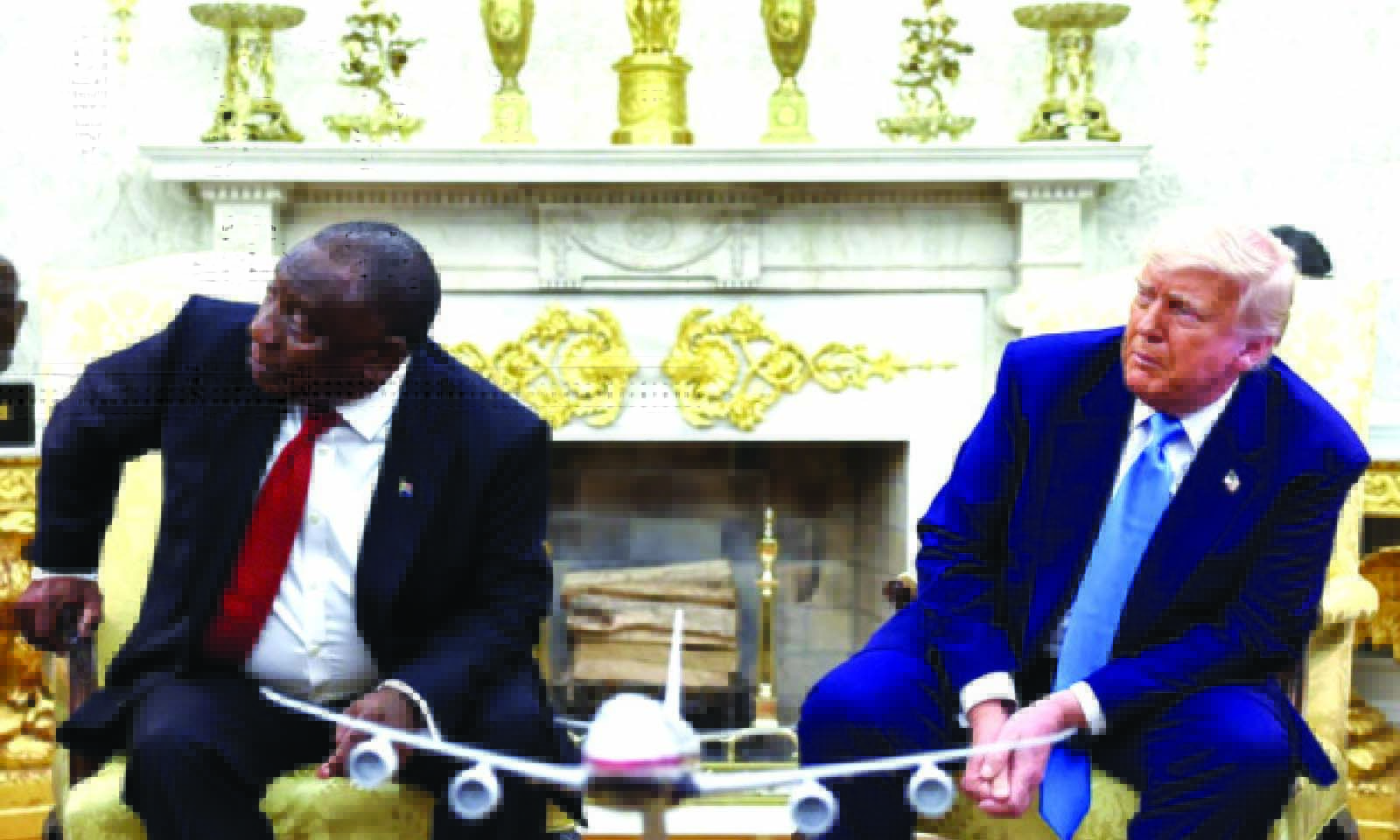
Ranga Mataire
Zimpapers Politics Hub
The much-anticipated meeting between United States President Donald Trump and South African President Cyril Ramaphosa in Washington, DC, yesterday followed a now-familiar pattern, with Trump adopting a confrontational tone and drawing information from discredited sources to ambush his guest.
However, unlike past leaders who found themselves cornered in similar settings — such as Canadian Prime Minister Justin Trudeau and Ukrainian President Volodymyr Zelensky — President Ramaphosa arrived calm and well-prepared.
Accompanied by a well-rounded delegation that included Cabinet ministers, business leaders, two former professional golfers, and a labour representative, President Ramaphosa was intent on shifting the tone of US-South Africa relations.
He opened the meeting on a conciliatory note, expressing his desire to “reset” the increasingly strained bilateral ties, which had frayed due to Trump’s inflammatory claims of a so-called “white genocide” in South Africa.
The conversation suddenly went sideways after President Trump presented as evidence a documentary in which South African opposition leader Julius Malema is heard chanting the struggle song, “Kill the Boer”.
President Trump then accused his counterpart of allowing officials advocating for the murder of white Afrikaner farmers.
President Ramaphosa, however, remained composed. Unlike Zelensky, who was visibly shaken in a similar encounter, President Ramaphosa calmly reiterated that such chants did not reflect the official stance of his government. He assured Trump that South Africa was open to dialogue and committed to addressing any legitimate concerns through diplomatic channels.
In a deft move, President Ramaphosa invoked the legacy of former South African President Nelson Mandela as a voice for peace and reconciliation, a reference that seemed to resonate with President Trump, who occasionally nodded in acknowledgment. It was a masterstroke for President Ramaphosa to bring along a diverse delegation comprising government officials and non-state actors.
They all gave their own accounts of the situation in South Africa. Their common message was on enhancing trade and investment between the two countries.
As predicted, the issue of land and the alleged persecution of white Afrikaner farmers dominated the conversation, with the South African delegation stating that no white farms were being forcibly confiscated.
President Ramaphosa sought to steer the discussion towards his key target: securing trade deals for his country.
Even if that doesn’t happen during this visit, President Ramaphosa achieved what many thought unlikely — neutralising a volatile leader of a global superpower bent on baiting sovereign nations into confrontation.