
MacDenias Moyo
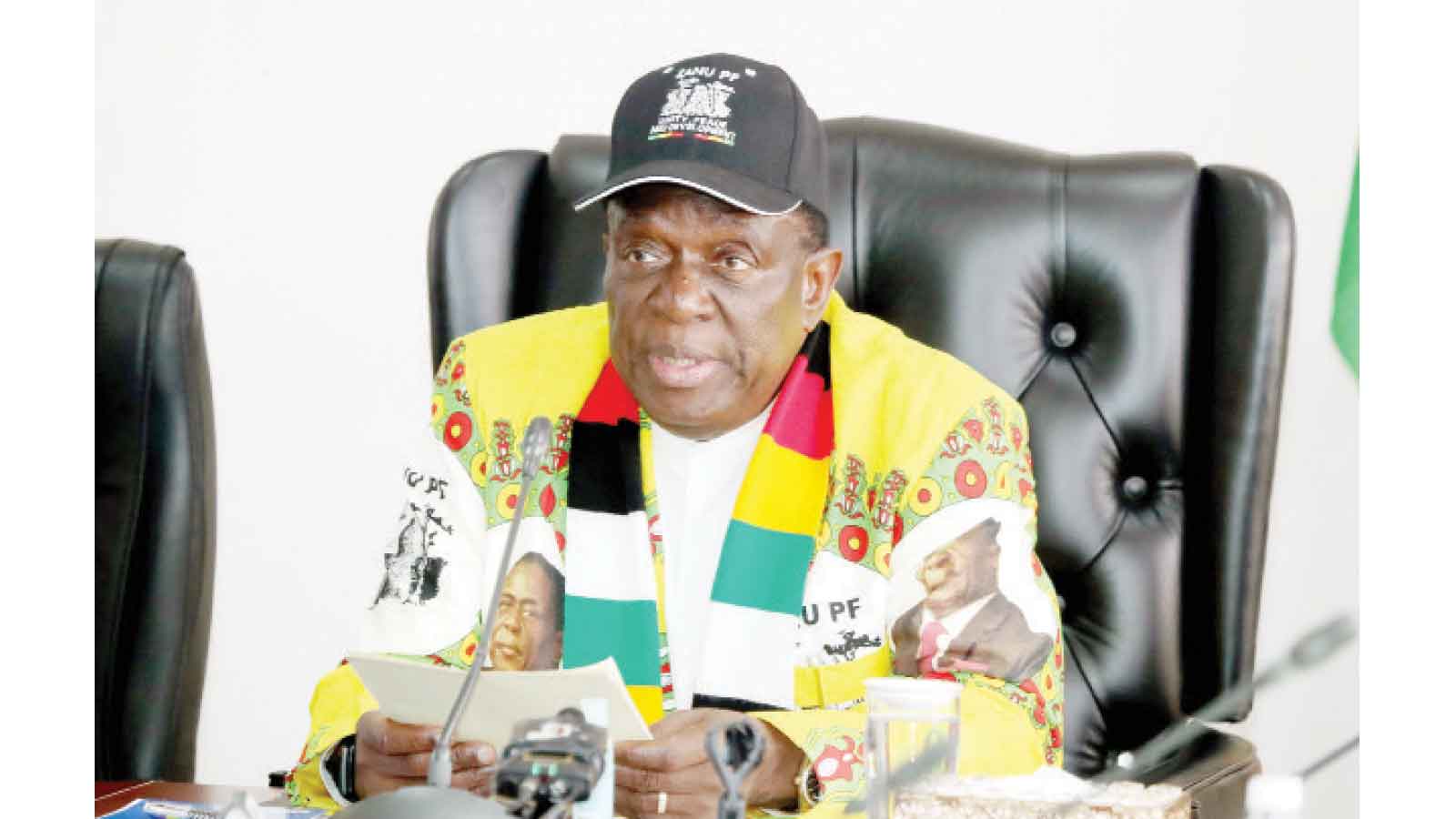
President Mnangagwa’s address at the 394th Ordinary Session of the ZANU PF Politburo on Wednesday was an oration of ideological gravity and national projection.
It was a speech that summoned the spirit of Joshua Nyongolo Nkomo, Father Zimbabwe and placed his legacy as the eternal compass of the revolutionary movement.
By declaring that “His values and principles should serve as a lasting guide, shaping their character, conduct and commitment to building the nation,” President Mnangagwa was issuing a binding directive.
The younger generations must be sculpted by the ethos of sacrifice, unity and patriotism that defined the liberation struggle.
The President’s commendation of the War Veterans League was profound. He recognised their progress since their formal establishment within the party and urged them to strengthen collaboration with the relevant Ministry.
This was a reminder that the custodians of liberation memory are not ornamental figures, but ideological sentinels whose welfare and integration into governance are inseparable from the legitimacy of the state. The veterans embody continuity and their role ensures that the revolution remains anchored in its founding ideals.
President Mnangagwa’s emphasis on National Cell Day was a reaffirmation of ZANU PF’s mass character. He declared that “no one and no place is left behind,” a phrase that resonates with the inclusivity of Vision 2030. By urging the Commissariat Department to empower grassroots structures, he insisted that the revolution must be lived in the villages, the wards and the cells. The party is not an elite enclave, but a mass movement whose legitimacy derives from its penetration into the daily lives of the people.
This insistence on grassroots empowerment is the essence of participatory democracy and the guarantee that the party remains responsive to the aspirations of the people.
The President’s remarks on the economy were pragmatic and visionary. He noted that Zimbabwe’s economy “remains on a positive growth trajectory” and celebrated the prospect of another landmark wheat harvest. Yet he did not indulge in triumphalism.
He warned of the impending El Niño disruptions of 2026 and 2027 and called for climate-smart agriculture. This was a sober recognition that sovereignty must be defended not only against political adversaries, but against ecological adversities. His insistence on agro-ecological tailoring was a call to arms in the war against climate vulnerability. It was a reminder that the revolution must adapt to the changing rhythms of nature if it is to safeguard the livelihoods of the people.
President Mnangagwa’s internationalist outlook was evident in his congratulatory message to President Xi Jinping and the Communist Party of China on their 105th anniversary.
This was not perfunctory diplomacy, but a reaffirmation of Zimbabwe’s place within a global fraternity of revolutionary movements. It was a recognition that Zimbabwe’s destiny is intertwined with global currents of resistance, solidarity and multipolarity.
The President also hailed the launch of the Victoria Falls International Financial Centre, situating Zimbabwe as a rising hub of investment and shared prosperity. These gestures were strategic affirmations that Zimbabwe is re-emerging as a respected actor on the world stage.
At the heart of Cde Mnangagwa’s vision is the overwhelming endorsement of CAB3. Public consultations revealed over 80 percent approval among citizens, while parliamentary votes recorded 226 in favour against 41 opposed in the National Assembly and 75 in favour in the Senate. This is not a narrow partisan victory, but a national consensus. CAB3 embodies the people’s will and its passage is a demonstration of the democratic legitimacy of the Second Republic. The President’s speech thus resonated with the confidence of a leader whose vision has been ratified by the citizenry.
His remarks must be situated within the broader framework of Vision 2030. The successes already visible—economic growth, infrastructural renewal, agricultural resilience, and international recognition—are fruits of this vision.
Cde Mnangagwa declared, “The successes we celebrate to date are a product of collective effort, sacrifice and commitment.” This is not rhetoric but reality. Vision 2030 is not a distant aspiration but a living process whose milestones are already manifest. The wheat harvests, the Victoria Falls International Financial Centre, the reintegration of returnees from the diaspora—all these are tangible proofs that the vision is yielding results.
President Mnangagwa’s speech was a synthesis of history, ideology, pragmatism and vision.
It invoked Father Zimbabwe Dr Nkomo, celebrated veterans, empowered grassroots structures, warned of climate threats, affirmed international alliances, celebrated democratic endorsement of CAB3 and projected the march toward Vision 2030.
It was an oration that reminded Zimbabweans that the revolution is not over, that sovereignty is not static and that destiny is forged through collective effort.