admin
admin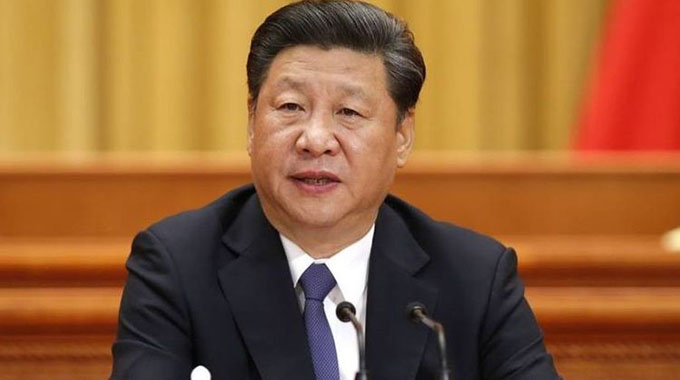
BEIJING — In 2022, while the world grappled with the pandemic, supply chain disruptions, regional conflicts and protectionism, China, under the leadership of President Xi Jinping, has remained a firm advocate of global cooperation and the open economy.
Over the past year, the Chinese president has pushed the world’s second-largest economy forward in seeking higher-standard opening-up and turning its remarkable development into opportunities to share with the world.
“China will open its door ever wider,” he reiterated when meeting journalists after being elected general secretary of the 20th Central Committee of the Communist Party of China (CPC) at its first plenary session in late October.
“We’ll be steadfast in deepening reform and opening-up across the board, and in pursuing high-quality development. A prosperous China will create many more opportunities for the world,” President Xi has said.
Opportunities in vast market
At the tone-setting Central Economic Work Conference in mid-December, attracting and utilising foreign capital through greater efforts was listed as one of the priorities of the country’s economic agenda.
On a number of occasions this year, President Xi has spoken of China’s enormous domestic market, which he would like to turn into “enormous opportunities for the world.”
“Our goal is to increase the middle-income population to more than 800 million in the next 15 years, and promote the sustained growth of our super-sized market,” he revealed at the Asia-Pacific Economic Cooperation (APEC) CEO Summit last month.
As evidence of the increasing appeal of China’s vast market, in the first 11 months of this year, foreign direct investment into the Chinese mainland maintained a 12.2-percent expansion to top 178 billion US dollars despite growing fears about a global recession.
In November, a total of 73.52 billion dollars’ worth of tentative deals were reached for one-year purchases of goods and services at the fifth China International Import Expo (CIIE) in Shanghai, an event that President Xi personally planned, proposed, deployed and promoted.
Echoing China’s opening-up pledge, a joint opinion article in the German daily Frankfurter Allgemeine Zeitung, co-authored by leaders of some of Germany’s top companies including BASF and Siemens, called for a pragmatic approach to fostering economic and business relations with China.
The op-ed, published in November, said the presence of German companies in the dynamically expanding Chinese market was also serving the interests of the German economy. “Turning our back on China would cut us off from these opportunities,” they wrote.
Opportunities from institutional opening-up
For foreign investors, new opportunities are also coming from China’s efforts to steadily expand institutional opening-up based on rules, regulations, management and standards.
“China will work with all countries and all parties to share the opportunities from its institutional opening-up,” President Xi said at the opening of this year’s CIIE.
In October, senior Chinese lawmakers met at a standing committee session of the National People’s Congress to review a report on the enforcement of the Foreign Investment Law, which came into effect on January 1, 2020 to protect the legitimate rights and interests of foreign investors.
The report found that the law has been effectively implemented. By the end of September this year, the number of registered foreign-invested enterprises in China reached about 455,000, with 2020 and 2021 both witnessing an annual increase of about 43,000.
A survey by the commerce ministry and the official website of China’s central government (www.gov.cn) of 3,130 foreign firms showed that the implementation of the foreign investment law has boosted expectations and confidence in the Chinese market among nearly 90 percent of respondents.
This year China has fully implemented the shortened negative list for foreign investment, expanded the encouraged investment catalogue, and added more cities to the pilot program of opening the service sector.
In a report to the 20th National Congress of the CPC in October, President Xi also pledged to protect the rights and interests of foreign investors in accordance with the law, and foster a world-class business environment that is market-oriented, law-based and internationalised.
Opportunities from deepened int’l cooperation
On the first day of 2022, the Regional Comprehensive Economic Partnership (RCEP) agreement, signed by 15 Asia-Pacific countries including China, entered into force, creating the world’s largest trade bloc.
A milestone in China’s opening-up, the trade pact has served as a key support to regional trade through a tough year like 2022.
From January to August, trade between China and the other 14 RCEP members reached 8.32 trillion yuan (1.19 trillion US dollars), or 30,5 percent of China’s total foreign trade.
The Belt and Road Initiative, a China-proposed international public good, also bore further fruit this year. As of the end of August, China’s accumulative volume of trade in goods with countries along the Belt and Road reached about 12 trillion dollars.
In the meantime, China is also actively seeking to join high-standard economic and trade agreements such as the Comprehensive and Progressive Agreement for Trans-Pacific Partnership and the Digital Economy Partnership Agreement.
China is ready to work with all countries to practice true multilateralism, build more consensus for openness, jointly overcome the difficulties and challenges confronting global economic growth, and make sure that its commitment to openness will bring about broad prospects for global development, according to President Xi.
“Openness is a key driving force behind the progress of human civilisations and an intrinsic path toward global prosperity and development,” he has said. — Xinhua



 Online Reporter