Online Reporter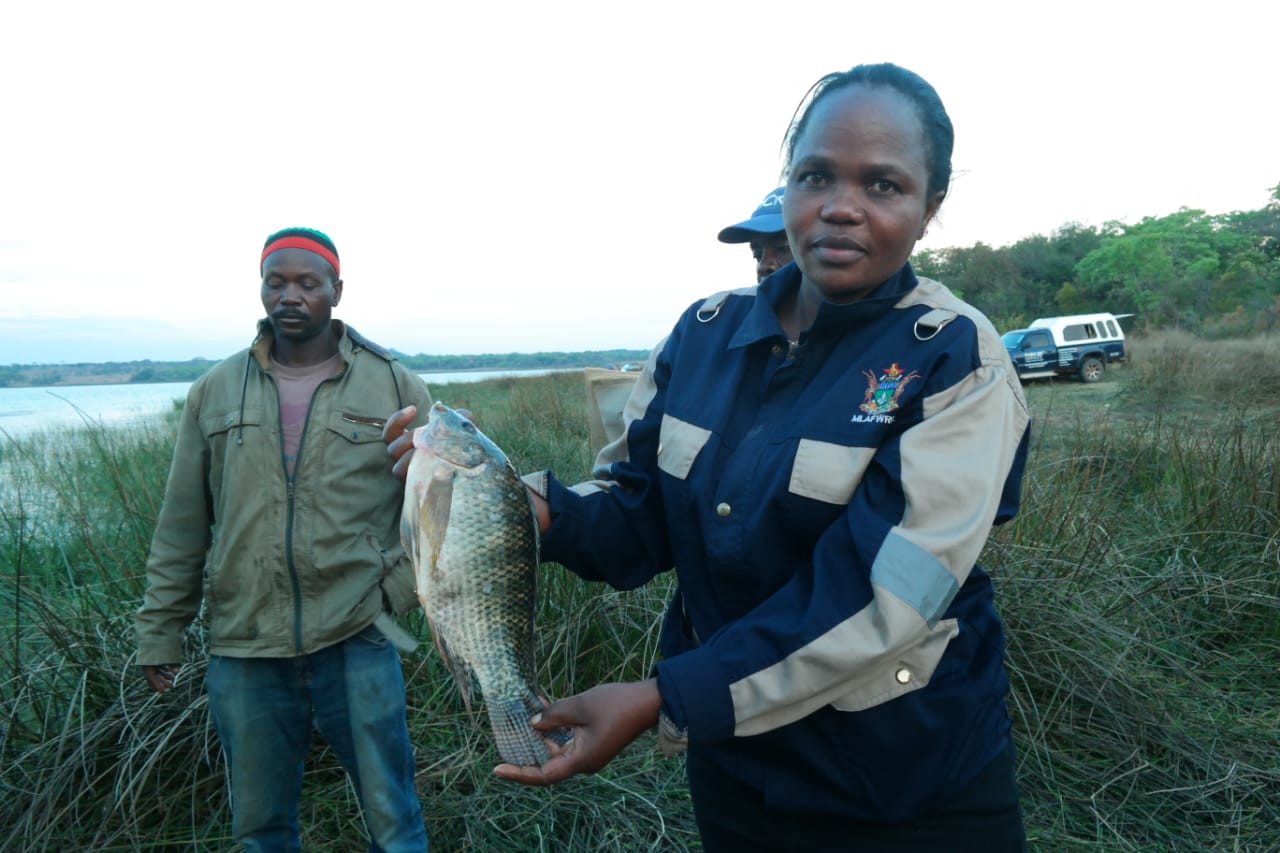
Patrick Chitumba in Shurugwi
RURAL communities in Shurugwi are finding new sources of food, income and resilience courtesy of the Presidential Fisheries Scheme at Gwenhoro Dam that has enabled them to cope with climate variability that continues to threaten livelihoods largely dependent on rainfall.
The scheme has also financially empowered women and are no longer heavily dependent on their husbands for household requirements.
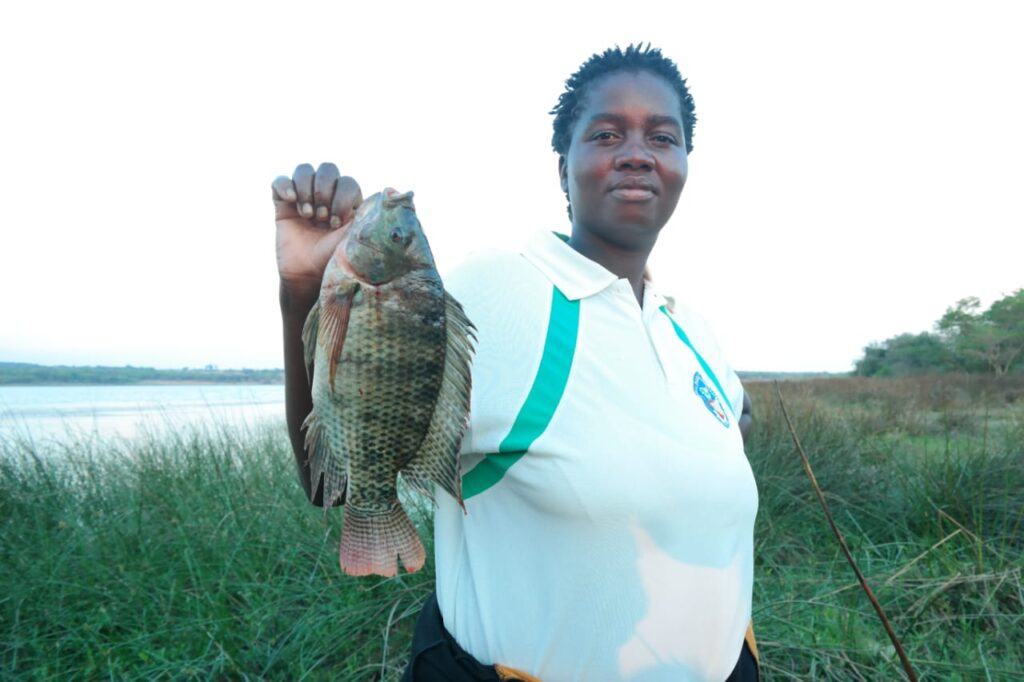
Through it, four cooperatives comprising 15 farmers received 10 000 fish fingerlings in January and have started reaping the rewards, with each cooperative producing about 200kg of fish a week.
The project has turned the dam into a growing rural economic hub, which dovetails with the Second Republic’s rural industrialisation agenda. Surrounding communities are also buying fish for household consumption and resale and use proceeds to buy equipment, pay school fees and support savings schemes and community activities.
The initiative is part of the Government’s broader drive to support rural livelihoods, with fisheries emerging as an increasingly important component of Zimbabwe’s food and nutrition security strategy.
The chairperson of the four cooperatives operating at Gwenhoro Dam, Mr Evertone Mtombeni said the fish restocking programme has provided a much-needed economic lifeline.
“We want to express our deep gratitude for the programme initiated by our President to restock the dams. We received 10 000 fingerlings which we released into the water,” he said.
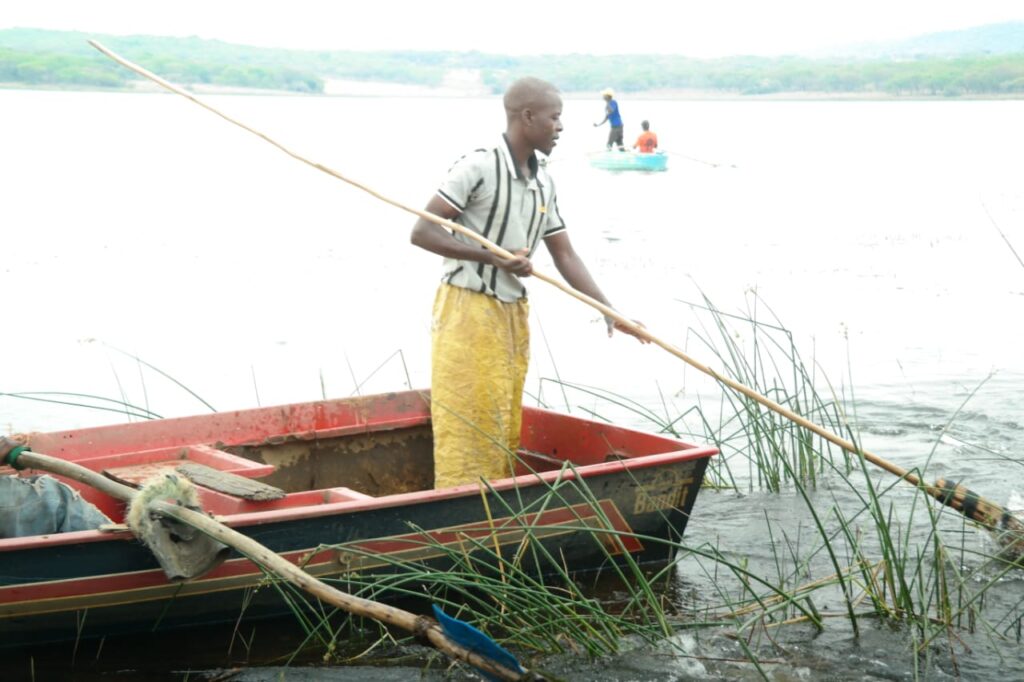
Mr Mtombeni said farmers were instructed not to harvest the fingerlings until after eight months to allow them to grow and mature, a requirement they followed.
“The fish were put in on January 15 and they have now completed their eight months, so we are harvesting,” he said.
Mr Mtombeni said the disciplined approach to stocking and harvesting allowed the fish to mature while giving the cooperatives time to establish a sustainable fishing operation.
The project is also benefiting communities beyond the cooperatives, with families from Riversdale, Zhaugwe North, surrounding settlements and nearby A2 farms buying fish directly from the dam, while some purchase for resale.
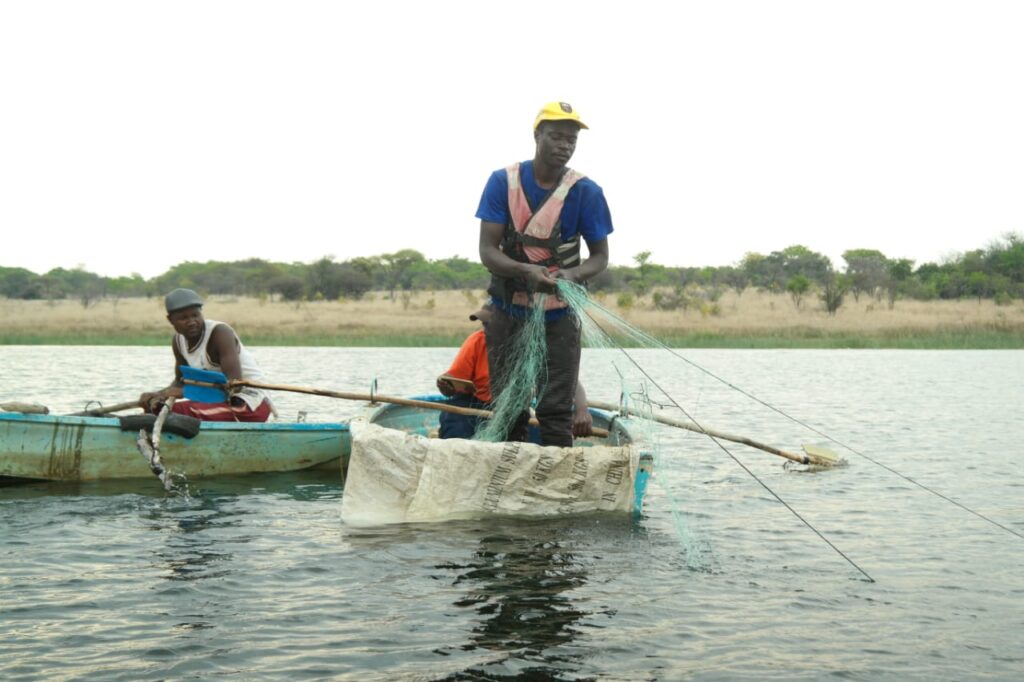
“Many families are benefiting from this programme. The surrounding farms and settlements are coming to buy and order fish for resale and supporting their families,” said Mr Mtombeni.
Income generated by the cooperatives has also enabled farmers to invest in equipment needed to expand the business.
Mr Mtombeni said the cooperatives bought boats, freezers, life jackets and fishing nets from the proceeds.
The project comes as climate variability continues to expose rural households whose livelihoods
depend heavily on rainfall to drought-related shocks.
Unlike rain-fed crop production, fish production from a dam provides an alternative livelihood stream during dry periods, provided water levels remain sufficient and fishing is sustainably managed.
The project has also opened a new avenue for women’s economic empowerment in surrounding communities.
Ms Sarudzai Chirimigana of Mtombeni Village said income from fish sales was enabling women to
meet household needs without constantly depending on their husbands.
“We are now able to buy our own clothes and whatever else we need. We are eating fish, something that did not used to happen here,” she said.
Beyond household consumption, proceeds from the project are helping families pay school fees and finance other community activities.
Ms Chirimigana said a certain percentage of income generated from the dam was going towards
supporting education and youth activities, including a local football team.
The project is also creating opportunities for young people.
“Instead of some of our youths turning to drugs or other harmful things, we are giving them jobs to go into the dam and catch fish. So the time they used to spend engaging in crime or bad behaviour around the village has reduced,” she said.
Ms Rejoice Chamunorwa said the fish project had helped women remain closer to their families instead of travelling to the diaspora in search of employment.
“We are now able to send our children to school and participate in savings schemes to empower ourselves as women,” she said.
She said women were contributing between US$30 a week and US$100 a month to savings schemes using in-come earned from the fish project.
“We thank our President for putting fish here for us. We plead with him to keep supporting us and for this project to continue moving forward,” Ms Chamunorwa said.
Livestock Specialist in the Ministry of Agriculture, Mechanisation and Water Resources Development in Ward 23, Shurugwi, Ms Ezra Svorai, said the farmers followed the training and technical guidance provided by Government.
“We asked them to preserve these fingerlings for eight months without harvesting. We want to thank them because they have adhered to the guidance. They are now able to harvest their fish,” he said.
Ms Svorai said the benefits were already visible at household level, with farmers using proceeds from fish sales to buy food and pay school fees.
The Presidential Fisheries Scheme has seen the number of households participating in fisheries rise from about 1 500 three years ago to more than 8 000, as Government seeks to grow fish and aquaculture into a US$1 billion industry by 2030.
According to Shurugwi South legislator Engineer Wilson Mhuri, the demand for better infrastructure highlights the next stage of the project of moving from simply harvesting fish to developing a sustainable rural value chain encompassing storage, processing, marketing and distribution.
He said the Gwenhoro project was also a practical demonstration of how the Presidential Fisheries Scheme was expanding the country’s aquaculture base.
“At Gwenhoro, the national ambition is taking shape in practical terms with fish moving from the dam into homes, markets, schools, savings groups and small businesses,” he said.
“Villagers are facing the uncertainty of El Niño-induced drought and the lesson is increasingly clear that resilience does not only come from waiting for the rains, but from making productive use of existing water re-sources, diversifying rural incomes and building livelihoods that can withstand the pressure of a changing climate.”