Chronicle Editor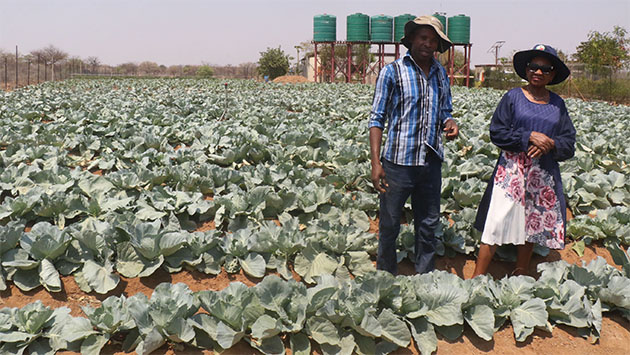
Peter Matika, [email protected]
THE transformation of the Jinjika community in Mangwe District, Matabeleland South Province through the Sekusile Makorokoro Presidential Horticulture Programme launched by President Mnangagwa in December 2021, has inspired locals based in the diaspora to set up nutritional garden projects at their homesteads.
Since President Mnangagwa’s launch of the project nearly two years ago, lives have been transformed beyond the agriculture projects.
Government is targeting the transformation of rural and urban economies through the enhancement of food, nutrition, markets, and jobs using value chains, including the horticulture sector, as a means of achieving a prosperous, inclusive, diverse, sustainable, and competitive agriculture sector.
Zimbabwe envisages an upper-middle-class economy by 2030 and agriculture is critical in the attainment of that vision, with the sector targeting to become an US$8,2 billion economy by 2025.
While the aim of the horticulture garden was to ensure crop production, Government deliberately installed a communal tap water system ending the village’s water distress for both people and livestock in the dry region which often experienced water challenges, especially during the dry season.
The Makorokoro scheme has 150 beneficiaries who work once a week in the garden, which contributes to local food security as the produce is also sold to locals at an affordable price.
Presently, beneficiaries have planted chomolia, cabbage, and tomatoes which are already being harvested.
The previously marginalised Makorokoro villagers now have access to products such as butternut which they previously accessed either in Bulawayo or Plumtree.
A smallholder farmer in the area, Mr Kuzalunga Ncube Mabuza (44), who replicated the Presidential scheme, said he was inspired to return from South Africa, after witnessing how beneficiaries of the Sekusile Makorokoro project were utilising the land productively.
Having spent 23 years working in South Africa, Mr Ncube Mabuza decided to return home and contribute to the country’s economic growth.
Through his own nutritious garden project, Mr Ncube Mabuza has created employment for local villagers at his homestead,
“I came back home a year ago and upon my return, I was inspired by the Sekusile Makorokoro Presidential Horticulture Programme. We are masters of our destiny and we have the land to make a change and contribute to the growth of our economy,” he said.
“I have always been into farming, even when I was in South Africa. My late father was a businessman and a war veteran, and he taught us that land was a major asset in life. He taught us various farming methods, and was hands-on.”
Mr Ncube Mabuza said he decided to return home last year to venture into farming.
“I injected R300 000 to kick-start my project on a 5-hectare piece of land. I drilled two solar-powered boreholes, bought sprinklers and water storage tanks, and started an irrigation farming project focusing on cabbages, and green vegetables such as chomolia, tomatoes, and onions,” he said.
“I also keep cattle, goats, and chickens, and my ultimate plan is to set up a thriving orchard. As you can see there are two boreholes that keep the plants moisturised. There is plenty of water and that is why I really want to expand this project having been inspired by President Mnangagwa’s initiative.”
Through determination and hard work, Mr Ncube Mabuza believes that one day, he will be recognised as one of the most successful farmers in the country.
He said despite the illegal sanctions imposed on the country, Zimbabwe is destined to conquer and thrive as its economic transformation lies in agriculture.
“If we nurture the youth and make them understand that we are masters of our destinies and that the key to creating wealth was through agriculture then as a country we will be on a good trajectory,” said Mr Ncube Mabuza.
As part of his future plans, Mr Ncube Mabuza said he is also working on a massive project where he intends to build a community dam.
“So far, I set up a community borehole just outside my fence where they fetch water, and it is open 24 hours a day. My next project is to build a dam that will cater for the community and we want this area to be known for providing quality fruits and vegetables in the country,” he said.
Mr Ncube Mabuza said through farming, he hopes to contribute significantly to the country’s economic growth.
Zimbabwe is an agrarian economy with most of the country’s sectors being directly and indirectly linked to the agricultural sub-sector.
Matabeleland South Provincial Affairs and Devolution Minister Dr Evelyn Ndlovu last Thursday toured Mr Ncube Mabuza’s project and she was impressed by the manner in which locals are embracing the Second Republic’s drive to reach an upper-middle income economy by 2030.
She said the Presidential Horticulture Scheme has also helped inspire youths, including those based in the diaspora to return and contribute to the country’s economic growth.
“This is amazing and it is heartwarming to learn that there are Zimbabweans who have hope in the country and are taking up the call to develop the economy. Such projects are life-changing and will go a long way in nation-building,” said Dr Ndlovu.



 Online Reporter