admin
admin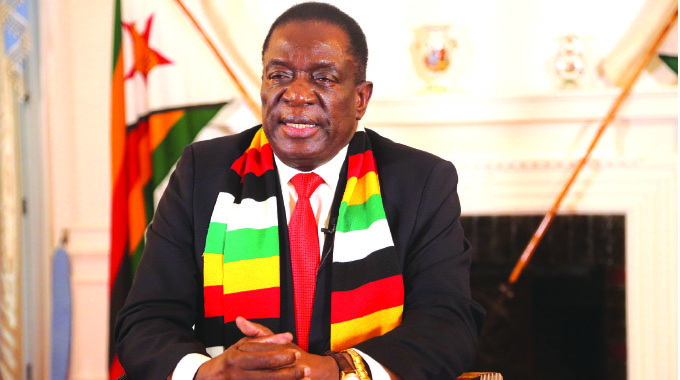
Grace Chekai Herald Correspondent
In an exemplary stride towards governmental accountability and efficiency, President Mnangagwa has instituted bi-annual review meetings with local authorities, signifying a pivotal shift in the administration’s oversight of local governance.
With Zimbabwe’s local authorities in a quagmire of operational deficiencies for over 20 years, marked by dismal service delivery, this initiative could not be more timely.
The persistent under-performance of local councils under the stewardship of CCC paints a troubling picture of administrative dysfunction, necessitating decisive action from the highest echelons of power.
President Mnangagwa’s proactive engagement, thus, is not only justified, but essential.
In these local authorities, corruption has become rife, governance structures were weakened by incompetence, and the stark reality of mismanagement was palpable in the daily struggles faced by residents.
The resulting erosion of the quality of life was a clarion call for the systematic dissection and reformation of the local governance framework.
Such pervasive issues have entrenched themselves in the civic administration, spawning an environment where inefficiencies were the norm and accountability has fallen by the wayside.
This dire situation warrants the kind of comprehensive review and rigorous restructuring that President Mnangagwa’s intervention promises to initiate.
Indeed, the President’s involvement is expected to bring a much-needed overhaul, casting a spotlight on the entrenched malpractices that have beset these councils.
The opposition-dominated local authorities have been plagued by a litany of governance failures, which have manifested in crumbling infrastructure, erratic public service delivery, and a clear disconnect between the authorities and the citizenry they are meant to serve.
The chronic inadequacies point to a systemic failure that goes beyond isolated incidents of maladministration. As life for the average citizen in these areas grows increasingly precarious, the necessity for a thorough clean-up operation becomes undeniable.
President Mnangagwa’s strategy to convene review meetings is envisioned as the first step towards a comprehensive reform process, one that will dismantle the existing flawed structures and pave the way for a governance model that is transparent, efficient, and, above all, accountable to the people it serves.
It is a decisive move that acknowledges the complexity of the challenges at hand and the need for sustained, top-level engagement to rectify the deep-seated ills that have long hindered progress in these communities.
Through President Mnangagwa’s direct engagement, these review meetings are poised to dissect the performance of these local bodies, unpack the complexities of their challenges, and chart actionable paths forward.
This level of executive attention is anticipated to revitalise public services, notably ensuring the provision of fundamental amenities such as potable water, reliable sanitation services, and effective waste management systems.
The water crisis, a glaring issue at the heart of urban distress, is a multifaceted problem fuelled by decaying infrastructure, underinvestment, and the looming threats of climate change.
Its repercussions are dire, leading to a reliance on unsafe water sources and subsequent disease outbreaks, with cholera and typhoid ravaging communities.
Such public health emergencies, have underscored the administrative failures within the CCC-led councils, particularly in the face of a cholera outbreak in 2023 that has already tallied a heart-breaking 4 106 cases and 112 fatalities.
Further complicating the landscape is the sanitation crisis. The neglect of sewer systems by the local authorities has resulted in a harrowing scenario of overflows and blockages, creating environmental pollutants and health hazards for the populace.
In a monumental move, President Mnangagwa’s unveiling of a local authority blueprint comes at a critical juncture.
Developed by the Ministry of Local Government and Public Works, this blueprint is an ambitious plan to enact a rigorous inspectorate department that will scrutinise and ensure adherence to service delivery standards and legal compliance.
It is a blueprint that promises a new dawn of accountability and quality assurance in local governance.
The President’s review meetings are envisioned not just as a platform for scrutiny, but also as an incubator for problem-solving.
They present an opportunity for urban centres to directly present their challenges and receive Government’s financial and technical support to implement remedial strategies effectively.
However, it is not only the water and sanitation sectors that will benefit from these review meetings.
A wide spectrum of public services, including roads, housing, and education, fall under the purview of local authorities. Many of these sectors have languished under CCC control due to resource constraints and limited administrative capacity.
President Mnangagwa’s proactive reviews will serve as a conduit for Government’s extended support, offering training to local authority staff and establishing policies to foster enhanced service delivery.
It must be acknowledged that CCC-dominated councils have demonstrated a distressing pattern of poor governance.
These forums offered by the President are anticipated to instil a newfound sense of responsibility in these councils, holding them accountable and equipping them to serve their communities better.
These bi-annual gatherings are more than a mere administrative exercise; they are a testament to President Mnangagwa’s commitment to a responsive and responsible Government.
By fostering open lines of communication and collaborative problem-solving between the Central Government and local entities, these meetings are a beacon for systematic change.
Key benefits stemming from this initiative include meticulous planning and astute budgeting, paving the way for well-conceived local development strategies.
Transparency and accountability are also anticipated to climb, with local authorities being held to account for their actions and decisions. Enhanced co-operation and streamlining of efforts will likely result from improved co-ordination, which, in tandem with capacity-building initiatives, will address competency gaps within local authorities.
President Mnangagwa’s bi-annual review meetings are a ground-breaking effort poised to catalyse a renaissance in local authority governance.
By tackling the multifaceted issues that plague local authorities and pledging robust support to elevate service delivery, the President’s approach heralds a promising era for the Zimbabwean populace, signalling an end to the chronic spread of preventable diseases and the dawn of a revitalised civic infrastructure.


 Online Reporter