admin
admin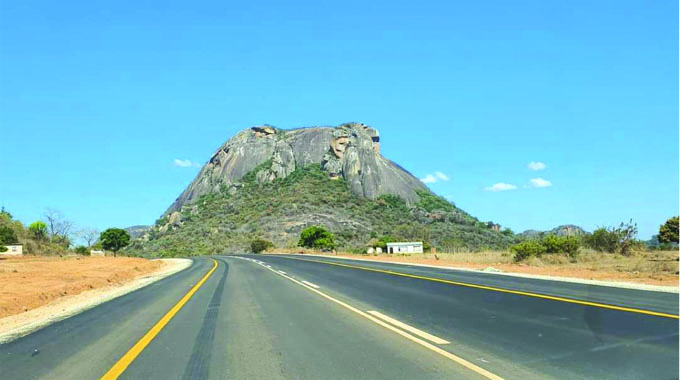
Lovemore Chikova
Development Dialogue
Since the advent of the New Dispensation led by President Mnangagwa in 2017, Zimbabwe has witnessed an extraordinary implementation of various developmental projects.
These developmental projects are being undertaken in all sectors of the economy, providing a strong foundation for economic development take-off.
President Mnangagwa’s emphasis on developmental projects has been inspirational to the cause of uplifting people from poverty through modernisation and industrialisation of the economy.
In this endeavour, and in line with the President’s thrust, no one and no place is being left behind since these developmental projects cut across all provinces, with their impact being felt far and wide.
There is a clear and eloquent vision in these actions, which recognises that projects are the vital building blocks of development.
In fact, without implementing projects, development plans are no more than wishes outlined in patterns and figures on paper.
And this has been one of the causes of some developing countries remaining stationary in their developmental plans; and in some cases regressing.
But the stance adopted by President Mnangagwa that implementation of developmental projects is fundamental for development has become the cutting edge Zimbabwe is enjoying even when compared to its peers in the region.
The magic in all this was that when President Mnangagwa assumed office, he publicly admitted that the country was lagging behind and needed to do extra work to catch up with other nations.
It was this admittance that set the ball rolling, and today, other African countries are peeping into Zimbabwe’s developmental projects with the intention of learning one or two things.
This has been the case in various sectors.
In agriculture, there has been delegations from fellow African countries to study how Zimbabwe has managed to turn around its fortunes through the Pfumvudza/Intwasa programme and the financial sector backed Command Agriculture.
These two programmes, with compliment from many other sub-sector initiatives in agriculture, have resulted in the country witnessing food self-sufficiency. Records were broken in wheat production, with the country realising self-sufficiency for the first time since colonialists started farming the cereal.
Last season, wheat harvest reached 375 000 tonnes for the first time in history, and there is a push that this season the harvest would be at 400 000 tonnes.
In January, President Mnangagwa was in Senegal for the Dakar 2 Feed Africa Summit, which saw various African countries expressing their interest in learning from practical steps taken by Zimbabwe to revolutionise its agricultural sector.
Commenting on the summit, Lands, Agriculture, Fisheries, Water and Rural Development Minister Dr Anxious Masuka said: “The major takeaway from Dakar is that Africa has woken up to the reality that it must feed itself, that it cannot outsource food sovereignty and Zimbabwe has taken the lead in this regard which is why our President won applause for his forward looking vision for agriculture.”
Before the summit, an eight member Senegalese delegation comprising women farmers, a mayor and Ministry of Agriculture officials were in Zimbabwe to have an appreciation of maize farming.
Malawi had also sent its delegation to study Zimbabwe’s successes in agriculture.
The fact is that projects are being increasingly cited in Zimbabwe in the process of economic and social development.
It is this realisation that projects translate development plans into action which has led Zimbabwe to be counted among some of the growing economies in Africa.
The projects have been coming in different sizes – small, medium and large – all with the purpose of uplifting lives of the people so that the country can achieve an upper middle income status by 2030.
This has translated Vision 2030 from a mere blueprint into a strategically planned developmental path to achieve the goal.
Through the implementation of projects, Zimbabwe has been able to create strong and diverse options that have been able to attract and keep talent, start and grow businesses and overcome problems that may arise in communities.
With the entrenching of development which President Mnangagwa is stressing, the country is set to realise less disparity between citizens, better jobs, a more talented workforce and less overall issues that impact the people.
At the moment, Zimbabwe has thousands of developmental projects that have been completed, while thousands others are still being worked on, with progress at various stages.
These projects are considered to be the backbone of the New Dispensation’s developmental goals.
They come in various sectors, including roads and transportation, mining, dams, housing, education, agriculture, aviation, rural development, urban development, health, and the list is endless.
These sectors have produced thousands of projects specifically targeting at uplifting people’s lives and being implemented even in the remotest parts of the country.
This indicates that development is no longer about slogans, but “action, action and action”, as President Mnangagwa would always say.
Through action, the Second Republic has scored highly on its development scoresheet.
In the aviation sector, the anchor project has been the upgrading of Robert Gabriel Mugabe International Airport, a move that has seen a completely new terminal being constructed.
This comes on the background of the upgrading of Victoria Falls International Airport which has seen internationally reputed airlines making a beeline to land at the airport.
Other airports like Joshua Mqabuko Nkomo International Airport, Hwange Airport, Kariba Airport, Binga Airport and Bufallo Range Airport have since been upgraded, while works are on-going at other smaller airports.
Work on Robert Gabriel Mugabe International Airport started with President Mnangagwa performing the ground-breaking ceremony in 2018. The US$153 million expansion of the airport is on course for completion, with the contractor expecting an official opening date in June.
For water and irrigation development, Lake Gwayi-Shangani remains the anchor project, with its pending completion set to change the status of the perennially drought stricken Matabeleland region into a greenbelt.
Situated about 6,5km from the confluence of Gwayi and Shangani rivers, the concrete gravity arch dam was designed and engineered by the Zimbabwe National Water Authority (Zinwa) and has a gross capacity of 650 million cubic meters.
The lake becomes the third largest inland dam after Tugwi Mukosi and Lake Mutirikwi, both in Masvingo.
Being part of the National Matabeleland Zambezi Water Project, the lake will, upon completion, provide a permanent water solution for Bulawayo and the Matabeleland region.
Irrigable land covering 10 000 hectares along the Gwayi-Shangani-Bulawayo pipeline has already been identified, and when the project is complete, the net result will be food security in these areas.
In road infrastructure, the upgrading of the Harare-Beitbridge Highway, with 421 kilometres of the nearly 580 kilometre stretch already opened to traffic, remains the biggest symbol of the New Dispensation’s serious intentions.
Construction work on the highway involves laying a completely new surface on the road, which is being widened from seven metres to 12,5 metres, coming with clearly marked lanes that make driving an enjoyable experience.
Linked to the Harare-Beitbridge Highway upgrade is the modernisation project for Beitbridge Border Post.
The revamping of the border post comes with a new village for workers, with completed projects being the freight, bus and light vehicles terminals and the Zimborders Maintenance offices, a fire suppression system and upgrading of roads.
A new state-of-the-art fire station and a sewer oxidation dam have also been completed, as is the 11,4 mega litres water reservoir and an animal and plant quarantine centre.
There have been numerous projects in the energy sector, but the Hwange Expansion Project remains the reference point for the New Dispensation’s efforts in tackling power shortages.
The Hwange Thermal Power Station Unit 7 has been completed and is already evacuating slightly above 300 megawatts of electricity to the national grid, a situation that has seen an improvement in power supplies.
Unit 7 is a component of the US$1,4 billion Hwange Unit 7 and 8 expansion project whose construction began in August 2018 following a ground-breaking ceremony by President Mnangagwa.
Work on Unit 8 is expected to be completed soon, with the two units expected to pump more than 600MW to the national grid when at full throttle.
Zimbabwe will never be the same again once the US$1,5 billion Manhize steel plant being constructed by Dinson Iron and Steel Company (Disco) comes online.
This is one of the biggest projects of that nature being implemented in Africa and the contractors have since targeted August as the production deadline.
The first phase of the project, which is touted as Africa’s biggest integrated steel works, will be processing 600 000 tonnes of carbon steel for both local and export markets.
The project will create 6 000 jobs directly and 30 000 others downstream while also adding impetus to the National Development Strategy 1 by fostering industrialisation and overall economic growth.
Projects in lithium mining are also expected to contribute greatly to economic development, especially after Government banned the export of raw lithium, encouraging the miners to set up production plants.
Feedback: [email protected]


 Online Reporter