Givemore Muzariri, Chronicle Correspondent
WHEN Siphosethu Tshabangu (39) walked out of Bulawayo Prison after serving a three-year sentence, he had just US$120, a determination to rebuild his life and an idea conceived behind bars.
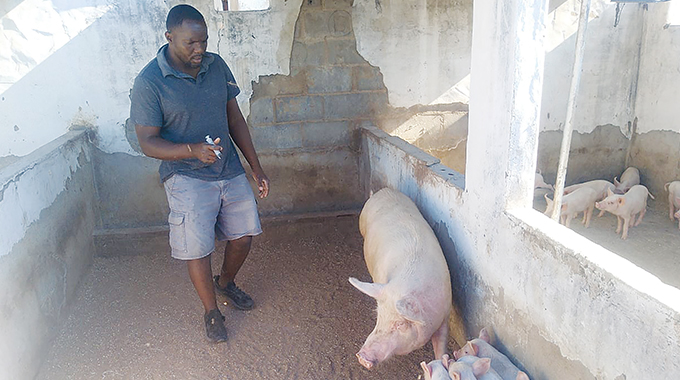
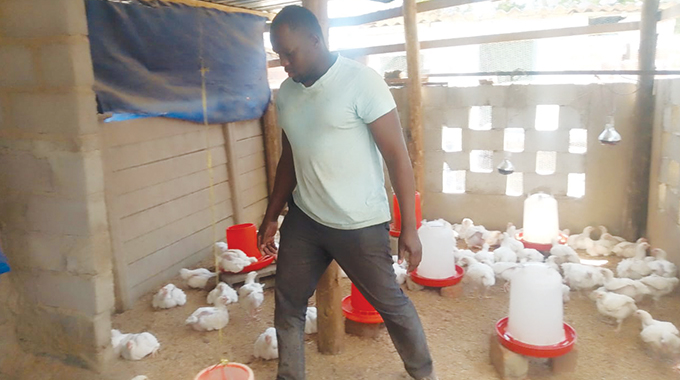
Today, the former motor mechanic has built a farming enterprise with 147 pigs and 200 broiler chickens, creating employment for three people and setting his sights on supplying markets across Zimbabwe and beyond.
His journey from convict to employer demonstrates how rehabilitation, mentorship and determination can help former inmates turn their lives around and contribute to economic
development.
Tshabangu’s agricultural dream began at Grey Prison, where conversations with a correctional officer opened his eyes to opportunities in piggery and poultry production.
Before his incarceration, he was a qualified motor mechanic operating from Kelvin North Industrial
Area in Bulawayo. However, an incident involving property entrusted to him changed the course of his life.
In 2019, a friend of his uncle asked to store some property at his workshop. Trusting their longstanding family ties, Tshabangu agreed.
The property owner subsequently disappeared for almost a year, while Tshabangu continued running his business and searching for work to sustain operations.
When Covid-19 lockdown restrictions disrupted business in 2020, he said financial difficulties forced him to relocate temporarily to South Africa in search of better opportunities.
During his absence, Tshabangu said his cousin continued operating the garage. It was during this time that more than US$43 000 worth of property reportedly went missing from a storeroom.
The owner returned in December 2020, discovered the loss and reported the matter to the police.
Tshabangu said he was later contacted by the police upon returning from South Africa. Believing he would have an opportunity to explain what had happened, he went to the police station but was detained as investigations continued.
He was subsequently convicted for failing to safeguard the property entrusted to him and sentenced to three years in prison.
“When I was sentenced to three years in prison, at first I thought it was a dream and it was hard for me to believe that for sure I was going to stay behind bars for a crime that I had not committed,” he said.
The sentence was a painful blow but Tshabangu eventually resolved to focus on rebuilding his life.
“At first it was hard to admit that I was going to spend three years in prison but with time I later convinced myself that it was time to pick myself up and move on with life,” he said.
At Bulawayo Prison, he developed an interest in agriculture after interacting with officers involved in farming. One of them, Assistant Principal Correctional Officer Chimucheka Tirivanhu, became a key source of guidance.
Their discussions exposed him to agricultural projects he could pursue after his release, with piggery and poultry emerging as his preferred ventures.
“The projects you’re seeing here today were ideas that I crafted whilst I was still in prison,” he said.
After completing his sentence, Tshabangu approached Tirivanhu with US$120 to buy a female pig.
Rather than demand a fixed price, the officer told him to pay whatever he had.
Tshabangu bought the pig, which he named Rose, and began his farming journey.
With no suitable space, he initially kept it in a fowl run in Pumula North, attracting complaints from residents. Determined to continue, he secured a plot to rent at Dunkirk Farm in Umguza District, Matabeleland North.
There, Rose gave birth to 19 piglets, boosting his confidence in the venture. Tirivanhu, who was transferring to Harare, further supported him by donating 10 piglets.
From that modest beginning, Tshabangu’s piggery has grown to 147 pigs. He has also ventured into poultry production, with 200 broilers at different stages of maturity.
The projects now sustain three employees who assist with daily operations, transforming Tshabangu from a job seeker rebuilding his life into an employer with ambitions to expand.
He said his piggery focuses on Large White and Jarocki breeds, targeting size and meat quality to meet market demand.
Although he already supplies several outlets in Bulawayo, he wants to expand production and reach markets nationally, regionally and internationally.
“Let me take this opportunity to call local business people to come and support us as we aim to grow and be able to supply the whole nation,” he said.
“At the moment I have a number of outlets that I am supplying here in Bulawayo but I aim to grow and support locally, regionally and internationally.”
Tshabangu’s story highlights the potential of rehabilitation programmes to prepare inmates for life beyond prison, particularly when training is complemented by practical guidance and support.
Today, Rose’s legacy is a growing enterprise providing jobs and offering Tshabangu a second chance to build a future beyond his prison sentence.