Online Reporter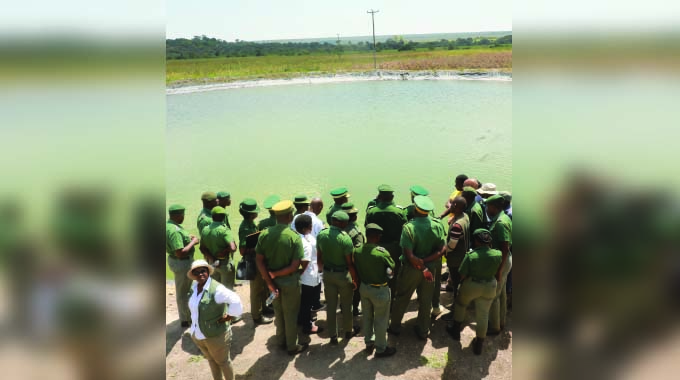
Raymond Jaravaza, [email protected]
WHEN Knowledge Mnkandla was sentenced to 30 months in prison for housebreaking and theft in July last year, he never imagined that his time behind bars would transform his life.
Not only has he acquired a new skill, but he is now playing a role in feeding fellow inmates across Zimbabwe and contributing to the country’s food security.
The repeat offender had resigned himself to a life of hardship in prison after a Bulawayo magistrate convicted him.
He was transferred to Anju Farm Prison, a correctional facility in Nyamandlovu, Matabeleland North, which houses inmates serving sentences of 36 months or less.
Expecting to spend his time in confinement idly, Mnkandla was surprised to find that inmates at Anju Farm Prison were not merely serving time — they were required to engage in practical skills training. The facility offers various vocational courses designed to equip prisoners with useful skills for life after incarceration.
“I initially enrolled in a mechanics course and enjoyed it, but I was always drawn to what the other prisoners were doing in the garden and on the farm. Farming intrigued me, so I requested to switch courses,” said Mnkandla.
The officers approved his request, and he joined an agriculture class, focusing on growing vegetable seedlings, and his decision paid off.
Last week, he had the rare opportunity to showcase his newfound expertise to Zimbabwe Prisons and Correctional Services (ZPCS) Commissioner-General Moses Chihobvu and a delegation that included Agricultural and Rural Development Authority (Arda) board chairman Mr Ivan Craig. They were touring Anju Farm Prison to assess its agricultural activities.
During the visit, Mnkandla impressed the delegation, particularly Mr Craig, with a detailed presentation on how inmates cultivate cabbage seedlings for sale to horticulture farmers in the region.
“We don’t plant the seeds in ordinary soil, which may contain diseases affecting growth. Instead, we use specially prepared soil placed in trays suspended a few inches above the ground,” he explained.
“Each tray holds between 200 and 240 seedlings, and currently, we have 42 000 seedlings ready for distribution.”
Anju Farm Prison has built two small greenhouses for the seedling project, with plans to expand and produce over 100 000 seedlings at any given time.
For Mnkandla, the project is more than just a prison activity. It’s a stepping stone to a brighter future. When released, he plans to replicate the project on his family’s land in Inyathi, Bubi District.
“The land is available, but my biggest challenge will be water access. If I can secure funds to sink a well, buy seeds, and purchase trays, I believe I can make a living from this,” he said.
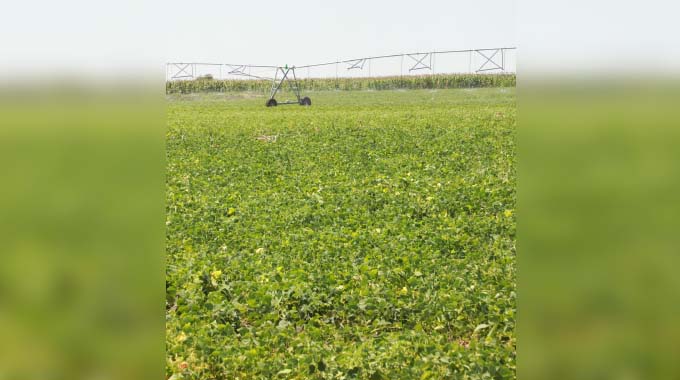
Beyond seedling production, Anju Farm Prison is heavily invested in crop cultivation, with 35 hectares under maize production. The field, nearly ready for harvesting, is a testament to the inmates’ dedication.
One of the prisoners, Charles Machipisa, nicknamed “Gokwe” after his hometown, spoke passionately about the maize project.
“Back home, we grew maize, but since coming to Anju Farm Prison, I’ve learnt so much more. Farming is a full-time job that requires patience and attention to detail. The support from prison authorities has been incredible, and I’ll leave here as a better farmer and a better man,” he said.
Anju Farm Prison exemplifies how correctional facilities can go beyond rehabilitation to foster self-sufficiency and skill development. The prison produces maize, winter wheat, sugar beans, cabbages, and butternuts, contributing significantly to food security.
The farm thrives year-round, supported by a centre-pivot irrigation system, five electric boreholes, and a 4-million-litre reservoir.
In 2016, ZPCS signed a memorandum of understanding (MoU) with Arda to enhance agricultural activities in correctional facilities across the country.
“The MoU that we signed with Arda some years ago means that ZPCS can leverage the labour that we have in the form of prisoners as part of the rehabilitation and reintegration process to venture into commercial farming with Arda supporting us with technical skills and expertise,” said Comm-Gen Chihobvu.
Beyond crop production, Anju Farm boasts projects in goat breeding, cattle rearing, poultry farming, and fisheries.
These ventures further diversify income streams while providing inmates with practical skills applicable after their release.