

 Chronicle Editor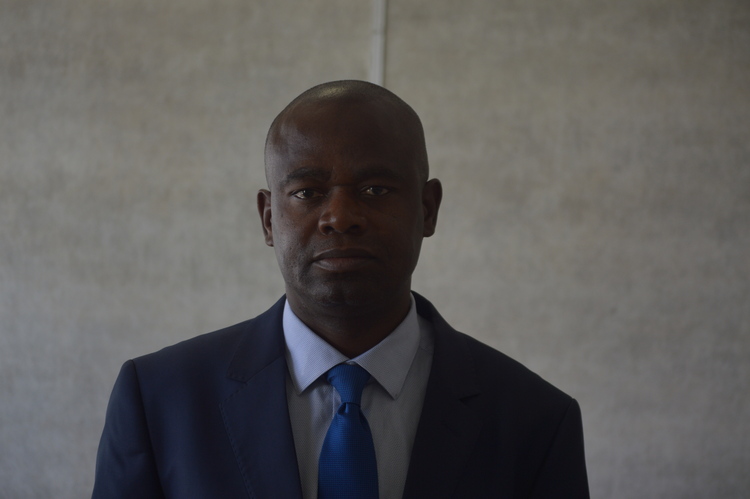
Leroy Dzenga Features Writer
With one of the most contentious legal battles the country has ever seen under his belt, Mr Charles Warara (48), is a man who can confidently speak on the fruits of perseverance.
When he took up Munyaradzi Kereke’s rape case, most people thought he was sprinting towards a dead end, pursuing an unattainable goal. His journey with the case, which had plausible results at the end, was a huge leap of faith.
The Herald sat down with Mr Warara and he shared the toll the six-year process took on him. He explained how he took the case up for sentimental reasons more than financial gain, since he had ties with the complainant’s family.
“I have been the Maramwidzes’ family lawyer since the early 2000s. We got to know each other and since we used to attend the same church, our friendship was long-standing,” Mr Warara said.
Being their family lawyer came with knowledge of intricate details, and this played a part in him taking up the case regardless of the hurdles it was to present.
“Naturally, being the family lawyer, when I was briefed of the issue I was devastated because I had known the girl since she was a baby.
“My pursuit of the case was no longer about them being clients, but about principle,” he said.
He revealed how the family initially made a report to the police, but the delayed reaction prompted them to seek Mr Warara’s legal counsel.
“When the Mwaramwidzes made the initial report to the police, they did not receive any tangible response for about two months and this is when they decided to consult me,” he said, describing the irregularities that initially surrounded the case.
Despite his emotions, he had to carefully scrutinise the case at hand to ensure its merits before committing to it.
“When I heard the case, I was hurt, but I had to set my emotions aside and assess my facts. One thing that surprised me was the hide-and-seek approach by the authorities,” he said of the approach by those who handled the issue in its initial stage.
Mr Warara said the longer the positive response took to come, the more he was convinced that Kereke could actually be guilty.
“There were irregularities that I noted, which gave me hope in my pursuit of the case. Firstly, the police seemed unwilling to investigate the case as is usually done in cases of a similar nature,” he explained.
The prosecution seemed to be dragging its feet in dealing with the case, a development which further frustrated Mr Warara and his client.
A series of letters followed.
These were addressed to the police and prosecutors requesting recourse on the matter. After delayed responses and half-hearted assurances, Mr Warara felt like he was headed for a gloomy tunnel end. His insistence of the case even put his career on the line as the battle lines were now drawn between him and the defence counsel.
“At some point a lawyer representing Kereke wrote to the law society,” said Mr Warara.
“The 14-paged long letter attacked me, suggesting that I should be removed from the bar because I had acted in an unprofessional manner.”
Informed by the letter, he was placed under investigation for child abuse, although the case was to die a natural death. At that time, Mr Warara was also slapped with a $5 million lawsuit from Kereke’s team for defamation. Despite all the troubles he faced in his quest for justice, his family remained resolute and supported him.
“I think what carried me through the difficult stages of the case was the fact that my family was praying for me. They stood with me throughout the trial and it was not easy for them either,” Mr Warara explained.
In 2012, Mr Warara decided to file an application with the High Court to get the then Prosecutor-General Johannes Tomana to act or furnish him with a certificate of prosecution.
Since the State had argued that the complainant had insufficient evidence, the ruling favoured Mr Warara and his client. Attaining the certificate of prosecution was not going to be easy, the victory presented even sharper asterisks in their path towards justice.
“After winning the court case in 2014, the challenge was now to get the certificate of prosecution issued.
“The Constitutional Court ordered the certificate of private prosecution to be released to us,” Warara said, describing the strain he faced in attaining it.
After persistent attempts to get the certificate issued had borne fruit, they faced a new set of challenges when the police officers were “not being cooperative”.
“When we finally got the certificate of prosecution, a new challenge emerged. The police were unwilling to help us, we had to get another court order to get them to assist us through serving court summons on Kereke,” he said.
The trial commenced in January this year and dragged until July. The outcome saw Kereke, the former Bikita West legislator, being sentenced to 14 years in jail for rape and this brought relief to Mr Warara and his team.
“There was intense anticipation and tension of the outcome,” he said.
“I had never felt that way about a case. It was a make-or-break case, I believe that if Kereke was to be acquitted, he would have gone to attack everyone.”
Had they lost the case, they would have been asked to pay all of the respondents’ the money they used in covering costs related to pursuing the case. Despite being the first person in independent Zimbabwe to pursue and win a private prosecution, Mr Warara insists that achieving such a remarkable feat does not come easy.
“Private prosecution is not an easy process. It is a very expensive exercise and the downside of it is that if you are not successful, you end up covering costs,” he said.
Private prosecution pre-existed public prosecution, but the State took over the role of prosecuting most cases and since then very few people have chosen to take that route considering the tough terrain it presents.
“The private prosecution was a humbling experience from which I came out with a lot of lessons. Even my colleagues from the profession started to respect me more, this is when I learnt that perseverance in chasing a worthy cause has rewards,” Mr Warara said.
For a man who became a lawyer primarily to serve people and pursue the trail of justice, Mr Warara said the challenges he faced during his six year pursuit of the case were not enough to deter him from his goal.
“The biggest challenge that I faced in this case was that some people thought that my client was not telling the truth,” he said.
“Kereke made it a point to try to make it seem like the case had undertones of a political nature.”
Beyond the celebrated lawyer who has been practicing for 23 years, is a soft spoken Christian man who is passionate about Christ and Ministry.
“Besides law, I am very passionate about the word of God, I fellowship at the AFM in Zimbabwe and I am heavily involved in church work,” he said, shedding light on his personal life.
A family man who draws inspiration from his wife and three children, Mr Warara is a man of humble beginnings.
“I was born in rural Zvimba, and I did my Primary School there. Never did I remotely think that I would be a lawyer. Things were not as rosy and our parents strived to ensure that we finished school,” he said.
He completed high school at Sandringham High in 1988 and proceeded to study law at the University of Zimbabwe, attaining his degree in 1992, followed by entry into the field a year later.
The Kereke case is not the only ground-breaking case Mr Warara has been involved in. In the 1990s he was part of the Charuma Blasting vs Prestone Case which changed the face of contractual property sale.
“I did the first case which decided the point that you cannot cancel a contract of sale of land in instalments, unless if you have given a 30 day notice. This saw the activation of the Section 8 of the Contractual Penalties Act,” he said.
Mr Warara is a passionate legal practitioner who joined the profession to seek and help people get justice. He is not motivated by financial rewards. He wants to serve the people and God through his profession.
A resilient lawyer who believes in principle, he says he will never back down from a case as long as his assessment shows him merit.
Feedback: [email protected]


 Online Reporter