admin
admin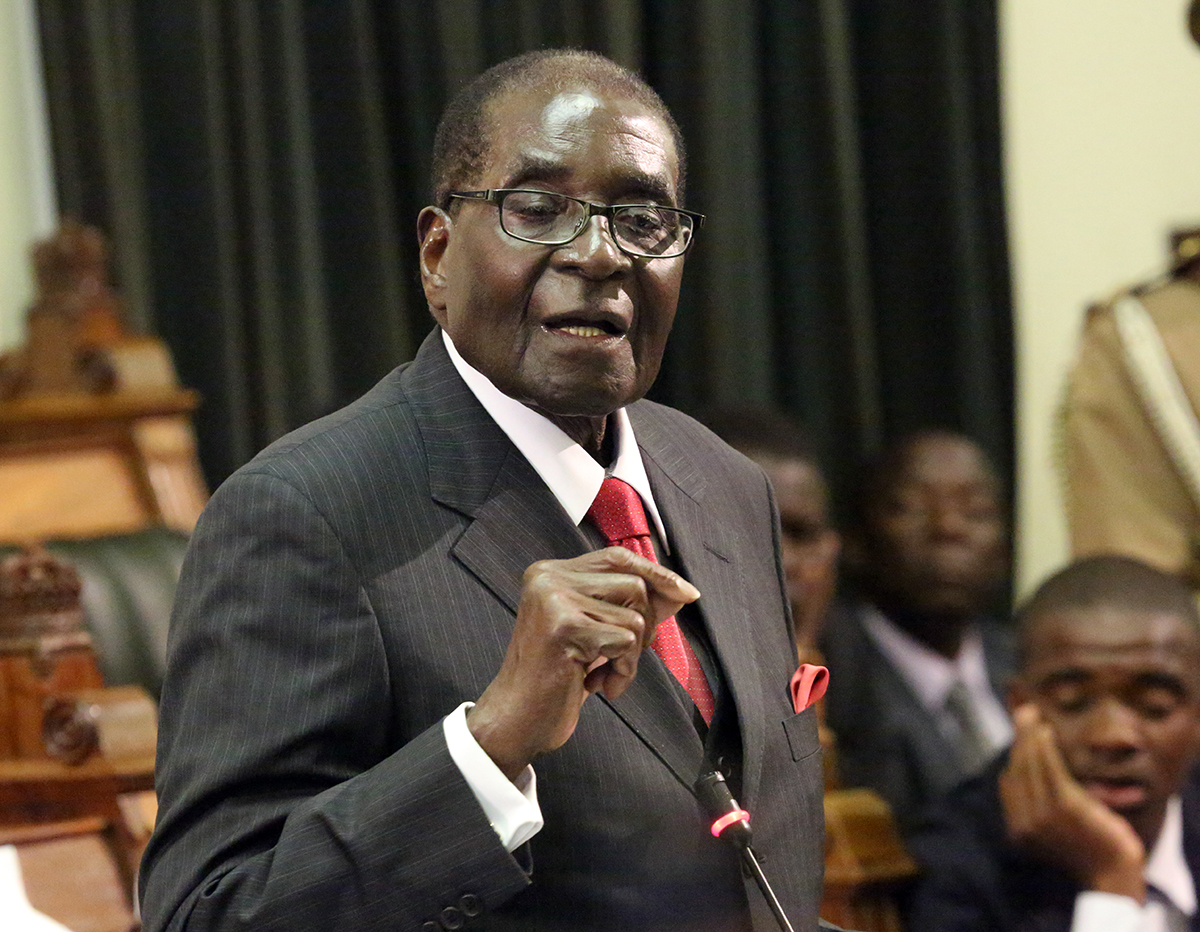

Joram Nyathi at the United Nations, New York
Africa’s private sector should invest more in social responsibility programmes to lessen the burden on governments in fighting diseases.
African Union Chair President Mugabe made these remarks at the High-Level United Nations International Ebola Response Conference in New York, the United States on Friday.
UN Secretary-General Mr Ban Ki-moon and the AU convened the conference to mobilise resources to speed up recovery of West African countries devastated by an Ebola virus epidemic.
President Mugabe praised the principle of “African solutions to African problems”, which is part of the broader 2063 African development agenda, telling the meeting that the private sector, via the AU Commission, had contributed US$32,6 million to the Ebola Fund to assist Guinea, Sierra Leone and Liberia recover from an epidemic that has killed thousands in the past two years, wreaking havoc on their economic, social and cultural architecture.
The AU and Sadc Chair said the Ebola outbreak exposed weaknesses in health infrastructure, and challenged the international community to up capacity to deal with such disasters.
President Mugabe was flanked by Presidents Ellen Johnson Sirleaf (Liberia), Alpha Conde (Guinea-Conakry) and Ernest Bai Koroma (Sierra Leone), who all gave chilling accounts of the devastation Ebola had wrought in their countries.
In stressing the need for collective responses to emergencies, President Mugabe said: “In that regard, it is important to recognise and emphasise the need to embrace inclusive and complementary Ebola-response mechanisms which should have realistic focus on capacity building to strengthening health delivery systems, improving access to safe water and sanitation, and reviving economic activities which have been disrupted by the outbreak.”
President Mugabe said the private sector should invest more in the lives of the communities they operate in.
“We also call for increased social responsibility on the part of the private sector, particularly those companies engaged in extraction of natural resources,” he said.
“As they benefit from their access to these natural resources, they must make investments that will contribute to building and social resilience in their host countries.”
He said Africa’s leadership was also seized with the emergency response at policy level. “In addition to the above initiatives, and in the spirit of Africa taking a leadership role in addressing its own challenges, the African Union will convene an international conference on Ebola in Malabo, Equatorial Guinea, from 20-21 July 2015,” said the President.
Mr Ban commended the AU for “galvanising African leaders, businesses and communities in solidarity with the affected countries”; while President Mugabe warned that the weaknesses which led to, and exacerbated, the Ebola outbreak still existed.
Present were representatives from the African Development Bank, the European Union, the Islamic Development Bank, UNDP, the United States, the United Kingdom, China and Sweden. Mr Ban’s special envoy on Ebola, Mr David Nabarro, said an estimated US$3,2 billion was required for the post-emergency reconstruction effort for affected countries to reach the state they were before the outbreak.
Countries made financial and material pledges to the effort, with the EU promising to contribute 450 million euros over 24 months.
President Mugabe said of the pledges: “Supporting the implementation of the recovery plans will give the three affected countries a head start as we look forward to implementing a robust post-2015 development agenda.”
The AU Chair called for debt cancellation for the three affected countries as this would free their resources for use in recovery from the outbreak.
“We must remember that as long as the Ebola virus is not contained in West Africa,” President Mugabe warned, “no part of our interconnected world is safe from an outbreak.”



 Online Reporter