admin
admin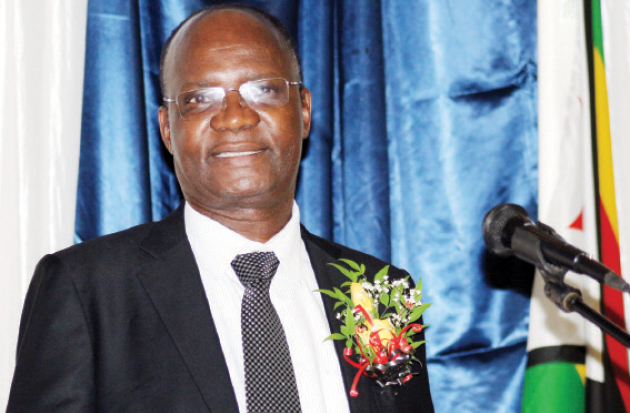
Nduduzo Tshuma Political Editor
THE minister of Higher and Tertiary Education, Science and Technology Development, Professor Jonathan Moyo, will soon engage his Public Service, Labour and Social Welfare counterpart, Prisca Mupfumira, to address the plight of more than 100 employees struck-off the government pay roll.
The employees, who include lecturers, stopped getting their salaries after they were found absent from their various work stations during a staff audit of all civil servants carried out by the Public Service Commission.
The salaries issue was raised during an interactive meeting between the minister and staff at the United College of Education on Friday evening. It was the third such meeting after the Bulawayo Polytechnic held another one earlier on the same day and the Hillside Teachers’ College on Thursday.
Prof Moyo is leading a team from his ministry on a visit to each institution under the ministry following earlier engagements with vice chancellors of state universities, principals of polytechnics and teachers’ colleges and students’ representative council members among others.
He said his ministry fully understood the objectives of the civil service audit.
“There were, as the ministry of Public Service, Labour and Social Welfare has explained, some mischievous elements who were not reporting for duty, in fact who were not doing their work and some of them who actually don’t even live in Zimbabwe and when they got that information they thought they needed to do the reasonable thing which is an empirical audit of who is in what post.
“In the process of doing the right thing, there are some employees or civil servants who were not on duty on the day but for perfectly explainable reasons, perhaps they were on official leave, perhaps they were ill or perhaps they had encountered an emergency of one sort or another on the day but all these reasonable cases are subject to verification and those affected can then get the redress they need,” said Prof Moyo.
“We’ve some 100 or so such cases that have come to our attention, including those that came forward in the discussion today when the matter was raised and the affected individuals, working with the affected institutions and through us the parent ministry, are committed to working on this matter to correct it and intercede on their behalf with the civil service.
“These are people who are doing a good job and they shouldn’t be tarnished or painted with this brush of the rotten elements who were caught out. This is what it’s all about, it’s a question of legitimate cases that have gone unresolved for longer than is necessary and the livelihood of these people being affected.
“It’s not fair on them nor is it fair to the system. We’re taking it upon ourselves to assist them to resolve this issue because we have evidence that they were not in the wrong basket.”
Prof Moyo said the consultative interactions, which started five weeks ago, were supposed to come up with a strategic plan to address challenges in the sector within 100 days of his appointment.
One of the most critical challenges is the failure by lecturers at State universities to get their salaries on time.
“The consultative interactive process that we started five weeks ago to look at urgent issues affecting the higher and tertiary education science and technology development sector and the long term issues, should be concluded or find some comprehensive expression to say we’ve identified the following challenges which are urgent and we’re providing the following solutions to those challenges. Going forward this is our policy framework and strategy,” he said.
“It’s important to do that and we anticipate this should be possible around mid-October. We would have concluded this in 100 days. It so happens that I was appointed on July 6 and both the higher and tertiary education component of the ministry as well as the science and technology component had strategic plans that expire this year, having run from 2012 to 2015.
“Although the ministry has had within a relatively short period of time since 2013, three ministers, there’s the fact that we’ve been guided by the strategic plan that ran for the period 2012 to 2015. Going forward at least to 2018 but beyond within a framework of say 10 years, we need to now restrategise and these engagements are going to input into the process of restrategising and we will therefore produce within 100 days, the strategic plan.”
Prof Moyo said the higher and tertiary education science and technology development sector not only needed an instrument of engagement but that instrument should be within a time frame.
He said there were some very urgent issues in the sector that have gone unresolved or unattended for a long time.
“We’ve a sector in which lecturers or infact all staff in the higher education and state universities don’t know when their salaries will be paid.
“They suffer that uncertainty on a monthly basis and yet they’ve very important obligations to attend to, not just on a personal level but these are the people who must produce the human capital that the country needs to implement its reform programme. At the very least we must make it possible for them to plan their lives and the most basic requirement for anyone to plan their lives is to know when their due income will be paid,” said Prof Moyo.
“When you engage people like this who know that you’ve a fixed date announced in advance when you get your salary but they don’t, the imbalance isn’t conducive to constructive discharge of your responsibilities.
“There’re students issues around accommodation, around their learning materials, there are issues of infrastructure that’s key to the teaching of higher and tertiary education programmes that has remained incomplete going back to the early 1990s and some of these institutions have started teaching programmes that are outside their core mandate simply because they can’t use or don’t have the facilities that are necessary to discharge that core mandate.”
Added Prof Moyo: “You can’t teach science without laboratories for example and so what do you do. If you have shells that look like laboratories without the equipment, you can use them to teach commercial subjects and that distorts immediately the purpose and that distortion impacts on the economic programme of the country.
“The whole idea that the higher and tertiary education science and technology are treated like social services is very problematic. This is not a social service, this is a fundamental economic activity. Human capital development isn’t a social service, it’s a primary economic requirement because that’s the means by which we create wealth in any country so it’s for that reason that we’ve to clarify our programme of action within 100 days.”



 Online Reporter