Oliver Kazunga
Senior Reporter
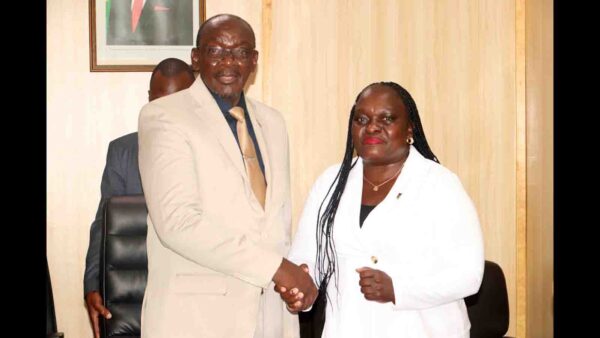
FOREIGN Affairs and International Trade Minister Professor Amon Murwira has called on African countries to resist geopolitical rivalries, resolve conflicts through home-grown solutions and prioritise economic development, warning that insecurity continues to undermine regional integration and deepen poverty.
Addressing the 21st Meeting of the Common Market for Eastern and Southern Africa (COMESA) Ministers of Foreign Affairs Meeting at the New Parliament Building in Mt Hampden, Prof Murwira said Africa must focus on its own development priorities rather than become entangled in competing geopolitical interests.
“We are Africa. And as Africa, we should resist being part of geopolitical contestations,” Professor Murwira said.
“We have a continent to manage. We have our people to feed. We have our people to keep. We have our people to give respect to.
“We neither look east, nor look west, nor look south, nor look north. We look at ourselves, and we must help ourselves.”
Prof Murwira said the continent needed to strengthen its capacity to resolve its own challenges through dialogue, preventive diplomacy and cooperation among regional institutions, arguing that peace and security were essential prerequisites for sustainable development.
His remarks placed the fight against poverty at the centre of COMESA’s regional integration agenda, which he described as a strategy for improving the livelihoods of people across member States.
“COMESA is a strategy to eradicate poverty. Poverty is our enemy and prosperity is our objective,” Prof Murwira said.
He warned that armed conflicts were destroying infrastructure, disrupting trade, discouraging investment, displacing communities and weakening productive capacity, creating a vicious cycle in which insecurity fuels poverty and poverty, in turn, compounds instability.
“Peace and security are the bedrock for sustainable development, economic integration and shared prosperity,” he said.
Prof Murwira urged African countries to address the underlying political, social and economic causes of conflict instead of concentrating solely on responding to crises after they erupt.
He called for greater investment in early-warning and early-response systems, preventive diplomacy, mediation and dialogue, saying regional stability required sustained and coordinated action.
In one of his strongest messages, Prof Murwira questioned the continued flow of weapons into conflict-affected areas, arguing that African communities needed tools for production and development rather than instruments of destruction.
“We don’t need guns, but ploughs,” he said.
Prof Murwira questioned where the weapons fuelling African conflicts were manufactured and who was supplying and supporting the fighting, challenging regional leaders to confront the external and internal factors prolonging violence.
“Do our people deserve it?”
He said COMESA could not remain indifferent while conflicts continued to threaten lives and livelihoods across the region.
He called on all parties involved in conflicts to cease hostilities, protect civilians, embrace dialogue and ensure unhindered humanitarian access to affected communities.
“We already fought our wars of liberation. That was it. That must be the end. Now it’s time for peace, not to turn against each other,” he said.
He also urged African leaders to protect vulnerable populations, emphasising that leadership should be founded on peace, trust and responsibility towards citizens.
Prof Murwira said regional integration must go beyond expanding markets, increasing investment and facilitating trade to deliver tangible improvements in people’s living standards, particularly for young people.
He called for a continent where people could work, trade, invest and reside freely across national borders, with boundaries serving administrative purposes rather than obstructing economic activity.
“Let our borders be administrative, not trade borders. One market, one future,” he said.
The minister urged COMESA member States to deepen economic cooperation and strengthen intra-African trade, regional value chains, infrastructure connectivity, energy cooperation and food security.
He said these measures could help address structural vulnerabilities that leave countries exposed to economic shocks and instability.
No country, Prof Murwira added, could effectively shield itself from global disruptions by acting alone, making collective regional responses increasingly important.
He said Africa needed to move away from a cycle of perpetual crisis management towards building resilient societies and economies capable of withstanding emerging challenges.
The minister warned that Africa’s security environment was becoming increasingly complex, with terrorism, violent extremism, organised crime, human and drug trafficking, cyber threats, illicit financial flows and climate-related insecurity crossing national borders.
He called for stronger cooperation in intelligence and information-sharing, improved border management and measures to address socio-economic vulnerabilities, especially among young people.
Prof Murwira said regional peace efforts must be linked directly to economic development, with citizens experiencing security through improved livelihoods and greater opportunities.
“Peace must ultimately deliver tangible dividends to our people. Our citizens must experience peace not only as the absence of conflict but as a driver for prosperity,” he said.
Prof Murwira called for closer cooperation between COMESA, the African Union, regional economic communities and other relevant partners to end conflicts and strengthen the continent’s collective response to insecurity.
Against the backdrop of what he described as an increasingly complex geopolitical environment, Prof Murwira urged African countries to avoid bloc politics and concentrate on continental peace, security and economic initiatives.
He said Africa’s strength lay in its shared markets, heritage, productive capacity, human capital and infrastructure.
The minister invoked the legacy of African liberation leaders and founding fathers, including Julius Nyerere, Kwame Nkrumah and Kenneth Kaunda, urging present-day leaders to pursue the vision of a more integrated and prosperous continent.
He challenged leaders to manage their emotions, contain tensions and respond to citizens’ demands for peace.
“Let’s manage our anger. Let’s manage our emotions. Let’s give in to the demands of our people for peace and let’s lead from that perspective,” he said.
The meeting brought together foreign affairs ministers and other representatives from COMESA member States to deliberate on regional cooperation, peace and security, and the economic integration agenda.
Prof Murwira’s message was that regional integration could not succeed without peace, and that lasting peace would require African countries to confront the root causes of conflict while creating economic opportunities for their people.